

What Makes CVD SiC a Smarter Choice for Demanding Semiconductor Components?
2026-05-12
When I evaluate advanced materials for high-temperature, plasma-facing, or precision semiconductor environments, I do not only look for a material that sounds impressive on paper. I look for stability, purity, machining reliability, and long-term process value. That is why I have paid close attention to Semicorex Advanced Material Technology Co.,Ltd. and its work with CVD SiC, especially for applications where ordinary ceramic or coated graphite parts may not deliver enough consistency under harsh operating conditions.
In semiconductor production, the smallest material weakness can become a costly process issue. A component that sheds particles, reacts under aggressive chemistry, or deforms under heat may affect yield, tool uptime, and maintenance planning. From my perspective, CVD SiC stands out because it brings together high purity, strong chemical resistance, excellent thermal performance, and a dense structure that supports demanding process environments.
Why Do I Consider CVD SiC Important for Semiconductor Manufacturing?
I see CVD SiC as more than a specialty material. It is a practical answer to several problems that engineers and purchasing teams often face when selecting parts for etching, deposition, epitaxy, diffusion, and other semiconductor-related processes.
Many production environments expose components to high temperature, corrosive gases, plasma, and repeated thermal cycling. In these conditions, material stability directly affects equipment reliability. If a part cannot maintain dimensional accuracy or surface integrity, the tool may require more frequent cleaning, calibration, or replacement.
That is where CVD SiC becomes valuable. Because it is produced through chemical vapor deposition, the material can form a dense, high-purity silicon carbide structure. This helps reduce contamination risks while supporting stable performance in environments where cleanliness and durability matter.
- I choose it when high purity is a priority.
- I consider it when thermal stability is critical.
- I recommend it for plasma-facing or chemically aggressive environments.
- I see it as a strong option when long service life matters more than the lowest initial cost.
What Problems Can CVD SiC Help Solve in Real Production?
In my experience, material selection often becomes urgent only after a problem has already appeared. A process part wears too quickly. A component begins to contaminate the chamber. A surface becomes unstable after repeated heating and cooling. These issues may look small at first, but they can create real losses over time.
With CVD SiC, the value is not limited to one single feature. Its advantage comes from the combination of purity, hardness, thermal conductivity, corrosion resistance, and structural density. For semiconductor manufacturers, that combination can support smoother operation and better control over process quality.
| Common Production Concern | How CVD SiC Can Help | Why It Matters to Buyers |
| Particle contamination | Dense and high-purity structure helps reduce unwanted material release | Supports cleaner processing and better yield control |
| Thermal stress | Strong thermal stability supports repeated high-temperature exposure | Helps improve component reliability during demanding cycles |
| Chemical attack | Excellent resistance to corrosive process gases and harsh environments | Reduces premature wear and replacement pressure |
| Dimensional instability | Rigid material performance helps maintain shape under tough conditions | Supports process consistency and tool performance |
| Frequent maintenance | Longer-lasting parts may reduce downtime and maintenance frequency | Improves total cost control beyond the initial purchase price |
Which Applications Make CVD SiC Especially Useful?
I usually look at CVD SiC for parts that must survive difficult process conditions without becoming a source of instability. In semiconductor tools, many components are exposed directly or indirectly to heat, plasma, reactive gases, or wafer-adjacent environments. These are not places where weak materials perform well for long.
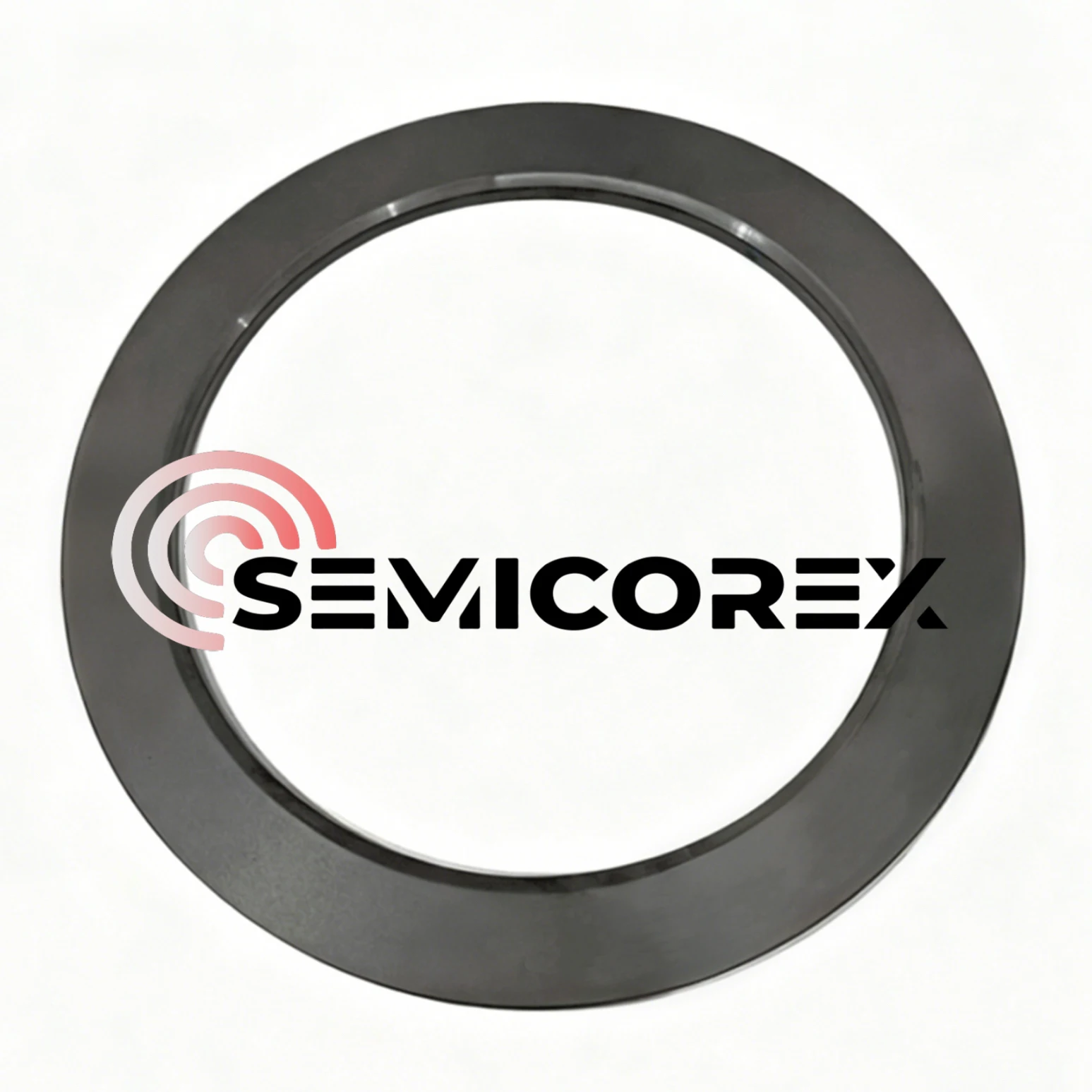
Depending on design requirements, CVD SiC may be used for components such as rings, plates, showerhead-related parts, susceptors, wafer carriers, furnace-related parts, and other precision components. The exact application depends on the equipment design and the process environment, but the purchasing logic is often similar: the buyer needs a cleaner, stronger, and more stable material solution.
- Etching environments where plasma resistance and cleanliness are important.
- CVD and deposition tools where thermal performance and surface stability matter.
- Epitaxy processes where wafer support components need high purity and consistency.
- High-temperature furnaces where thermal shock resistance and durability are valuable.
- Precision semiconductor parts where contamination control cannot be treated casually.
Is CVD SiC Better Than Traditional Ceramic or Coated Materials?
I would not say one material is automatically better for every situation. That would be too simplistic, and frankly, it would not help buyers make a serious decision. What I can say is that CVD SiC often becomes the better choice when the process environment is too demanding for ordinary materials.
Traditional ceramics may offer good hardness and thermal resistance, but they may not always provide the same purity, density, or surface performance required in advanced semiconductor applications. Coated graphite can be useful in many thermal applications, but when the coating is damaged or the structure is not suitable for a specific process, the risk of particle generation or contamination may increase.
For buyers, the question is not only “Which material is cheaper?” The better question is “Which material keeps the process stable for longer?” When I look at cost this way, CVD SiC can become a more attractive option because it may help reduce downtime, unexpected replacement, and quality risk.
| Selection Factor | Traditional Material Concern | CVD SiC Advantage |
| Purity | Some materials may introduce unwanted impurities | High-purity structure supports cleaner process environments |
| Surface stability | Coatings or porous structures may degrade over time | Dense deposited structure helps maintain reliable surface behavior |
| Heat resistance | Repeated heating may cause stress or deformation | Strong thermal performance supports demanding operating conditions |
| Service life | Lower-cost materials may need more frequent replacement | Durability can support better long-term value |
How Do I Judge Whether CVD SiC Is Worth the Investment?
When I advise a buyer or review a material option, I do not stop at the unit price. A low-cost part that fails early can become more expensive than a higher-grade component. The real cost includes downtime, cleaning, inspection, process interruption, yield risk, and emergency replacement.
That is why CVD SiC should be evaluated through total operating value. If a part is used in a low-stress environment, a simpler material may be enough. But if the component sits inside a high-value process tool, faces plasma, supports wafers, or operates in a high-temperature chamber, I would rather prioritize stability.
I usually ask these questions before making a decision:
- Will the component be exposed to high temperature or rapid thermal cycling?
- Will the part contact corrosive gases or plasma?
- Is particle control important for this process?
- Will dimensional accuracy affect tool performance?
- Would unexpected downtime create a larger cost than the component itself?
- Does the supplier understand semiconductor-grade material requirements?
If several answers are yes, then CVD SiC is usually worth serious consideration.
What Should I Look for in a CVD SiC Supplier?
A good material is only part of the decision. The supplier behind that material matters just as much. For advanced semiconductor components, I want a supplier that understands precision manufacturing, surface quality, application requirements, and customization needs. A standard part may not always match the tool, chamber, or process perfectly.
This is one reason I would consider Semicorex Advanced Material Technology Co.,Ltd. when reviewing CVD SiC sourcing options. The company’s product direction is closely connected with semiconductor material applications, and that matters when buyers need more than a generic ceramic component.
For procurement teams, I recommend looking beyond the product name. Ask about material consistency, processing ability, customization support, inspection control, and whether the supplier can communicate clearly about the intended use environment.
| Supplier Factor | Why I Care About It |
| Material knowledge | The supplier should understand why CVD SiC is used in high-purity, high-temperature, and plasma-related environments. |
| Customization ability | Many semiconductor components require specific dimensions, surfaces, and application-driven designs. |
| Quality control | Consistent performance is essential when parts are used in sensitive production tools. |
| Application communication | A capable supplier should help buyers match the material to real operating conditions. |
| Long-term support | Reliable supply and technical communication can reduce procurement risk over time. |
Why Does Surface Quality Matter So Much for CVD SiC Parts?
Surface quality is one of the details I never ignore. In semiconductor applications, a surface is not just a surface. It can affect particle behavior, cleaning performance, gas flow, thermal contact, and how the part responds to repeated process exposure.
A well-made CVD SiC component should support stable use in demanding environments. The material’s dense structure is useful, but the final performance also depends on processing, finishing, and whether the component is designed for the actual tool conditions. This is why I prefer suppliers that can discuss both material properties and component-level requirements.
For buyers, it is smart to provide drawings, operating conditions, temperature range, process gas exposure, and any surface finish requirements when requesting a quote. The more clearly the application is described, the easier it becomes to select the right CVD SiC solution.
How Can CVD SiC Support Better Long-Term Process Stability?
Long-term stability is where CVD SiC becomes especially interesting to me. In high-value manufacturing, every component inside the tool has a job to do. If one part becomes unstable, it can affect the entire process. Better material stability can help reduce surprises.
For example, if a chamber component resists corrosion better, it may need replacement less often. If a wafer support part maintains its shape and surface condition, process repeatability may improve. If a plasma-facing part generates fewer particles, cleaning pressure may decrease. None of these benefits should be viewed in isolation. Together, they can support a more predictable production environment.
This is why I see CVD SiC as a material choice for buyers who think beyond short-term purchasing. It fits companies that care about process reliability, equipment efficiency, and consistent manufacturing results.
What Information Should I Prepare Before Requesting CVD SiC Components?
When I contact a supplier for CVD SiC, I prefer to prepare enough technical information from the beginning. This makes the conversation faster and helps avoid misunderstandings. Even if the buyer does not have every detail, sharing the core application requirements can make a big difference.
- Component drawing or sample images
- Required dimensions and tolerance expectations
- Operating temperature range
- Process environment, such as plasma, gas, or vacuum conditions
- Surface finish or cleaning requirements
- Expected quantity and delivery schedule
- Current material problems or failure reasons
With this information, a supplier can better judge whether CVD SiC is the right choice and how the component should be produced or customized.
Which Buyers Are Most Likely to Benefit from CVD SiC?
I believe CVD SiC is especially suitable for buyers who cannot afford unstable material behavior. These buyers may work in semiconductor equipment, wafer processing, advanced ceramics, high-temperature systems, or precision manufacturing. Their needs are usually not casual. They want parts that can support strict process control and repeatable operation.
Typical buyers may include:
- Semiconductor equipment manufacturers
- Wafer fabrication facilities
- Research laboratories working with high-temperature processes
- Companies replacing worn chamber components
- Procurement teams seeking more durable material alternatives
- Engineering teams developing custom semiconductor process parts
For these buyers, the right material can influence more than component life. It can affect confidence in the whole process.
Is CVD SiC the Right Material for My Next Project?
If I were selecting a material for a demanding semiconductor-related component, I would put CVD SiC high on my review list. It offers the kind of purity, density, heat resistance, chemical stability, and durability that modern process environments often require. It is not a casual material choice, and that is exactly the point. It is made for serious applications where performance matters.
For buyers comparing suppliers, Semicorex Advanced Material Technology Co.,Ltd. is worth considering because its product focus aligns with advanced semiconductor material needs. If your current parts are wearing too quickly, creating contamination concerns, struggling under high temperature, or failing to meet process expectations, it may be time to review whether CVD SiC can provide a better solution.
If you are looking for a reliable CVD SiC component supplier for semiconductor, high-temperature, or precision process applications, I recommend sending your drawings, application details, and material requirements for review. To discuss custom options, request a quotation, or get support for your next project, please leave an inquiry or contact us today.