

Wholesale Massage Gun Buying Guide for Retailers and Wellness Brands
2026-11-16
Stocking massage guns isn't just about picking the loudest motor or the sleekest case. For retailers and wellness brands, every unit on your shelf tells a story about quality, margins, and customer trust. This guide walks you through the specs that actually move product—and why sourcing from established names like XINGBU can be the difference between a one-time order and a lasting partnership.
Start With the Motor, Not the Marketing
A glossy ad campaign can promise smooth acceleration, but it can't fake what happens when the pedal goes down. The electric motor is the product. Everything else—brand colors, taglines, influencer placements—is decoration. Skip the motor and you're already building on sand.
Look at the stator winding, the magnet spacing, how heat is pulled away under sustained load. These are the details that determine whether a vehicle feels quick at a stoplight or just looks quick in a photoshoot. A motor that runs cool and delivers torque without lag will beat any clever copy.
Get the motor right and the marketing becomes easy because the performance speaks for itself. Get it wrong and every slogan is just noise trying to cover a fundamental mismatch. That's why the first question should never be 'what should we say?' but 'what did we actually build?'
Read the Specs Like a Physical Therapist
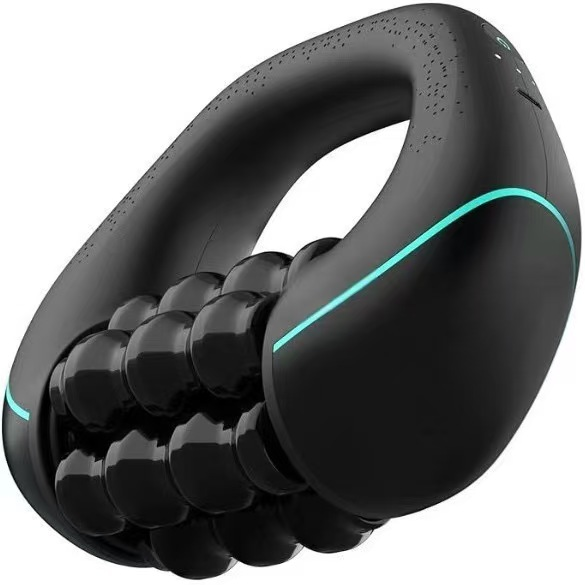
When you first look at a list of specifications, it’s easy to get lost in raw numbers—clock speeds, storage capacities, pixel counts. But a physical therapist doesn’t just read a chart; they assess how each muscle and joint works together under real stress. In the same way, don’t treat specs as isolated facts. Ask how the battery life holds up under mixed usage, or whether that thin chassis affects thermal throttling during sustained workloads. The goal is to see the device as a living system, not a collection of bullet points.
Think about the relationship between components the way a therapist thinks about movement chains. A high-resolution display means little if the GPU struggles to drive it at native refresh rates. Generous RAM doesn’t help if the storage is slow enough to bottleneck every application launch. By tracing these connections, you can identify weak links before they cause pain—like a therapist spotting poor hip mobility that will eventually strain the lower back.
Finally, consider real-world tolerance. A therapist knows that a joint’s range of motion on paper may not match functional strength. Likewise, a laptop’s claimed 20-hour battery may only deliver six under brightness and multitasking. Test specs against scenarios you actually encounter: commuting, video calls, photo editing on the go. If the numbers can’t hold up under your daily routine, they’re just abstract measurements—not useful guidance for a purchase.
Vet Suppliers Beyond the Sample Box
Many clinics get stuck flipping through sample boxes, but real vet suppliers earn trust through order consistency and transparent sourcing. A sample can impress once; what matters is whether the same batch arrives intact six months later, with paperwork that matches the label. Look beyond the freebies and ask how a supplier handles backorders, recalls, or sudden demand spikes.
The best vet suppliers act like an extension of your practice. They know your most-used items, flag shortages before they hit, and don't disappear when a shipment goes wrong. That kind of reliability shows up in small ways: a rep who returns calls, cold-chain packaging that stays cold in August, invoices that don't need corrections. Sample boxes are fine for a first date, but long-term supply relationships are built on boring, consistent logistics.
Build a Brand, Not Just a Logo
A logo is a mark, a quick visual cue. A brand is the entire gut feeling someone carries after interacting with your business. If your logo is elegant but your customer service feels robotic, the brand cracks. Think of it as the difference between dressing sharply for a first date and actually being a good listener on that date. The logo gets attention; the brand keeps trust.
That trust is built through repetition across every touchpoint. The tone of your emails, the way a package arrives, the words on a receipt, the pause before a support agent says "I can help with that" — these tiny moments layer into something larger than any icon. Color and typography matter, but they only work when they echo a consistent personality.
A useful exercise is to write three adjectives you want customers to use about you, then audit whether your current logo, website copy, and packaging all point to those same words. If you find a mismatch, you've found the gap between owning a logo and building a brand.
Margins Matter More Than MSRP
The sticker price gets all the attention, but what a dealer actually pays for a vehicle rarely lines up with that number. Invoice cost, holdback, volume bonuses, and factory-to-dealer incentives can shift the real margin by thousands of dollars. Even two cars with identical MSRPs can sit on the lot with very different profit structures, which is why focusing on the suggested price alone often misses the more important story.
Margins reveal where flexibility actually exists. A slow-selling model with rich dealer cash or a high day supply might carry enough margin to support a deal well below MSRP, while a high-demand vehicle with almost no hidden money leaves little room to move. Understanding this lets a buyer gauge whether a discount is genuinely strong or just a small trim off an inflated sticker.
The smarter approach is to evaluate the transaction price against a realistic margin, not against MSRP. A big percentage off an artificially high sticker can still be a weak deal, whereas a modest discount from a lean, incentive-free price might be exceptional. Margins, more than the printed number, tell you who is really giving ground.
Prepare for Post-Sale Reality
Closing the deal feels like the finish line, but the real work begins the moment funds transfer and keys change hands. Buyers often underestimate how quickly the emotional high fades into a list of maintenance tasks, utility setups, and unexpected repairs. Walking through the property with a notepad right after closing helps you catch small issues before they become expensive ones, and setting aside a realistic reserve for the first few months prevents panic when the water heater or roof demands attention.
Sellers face their own adjustment period, especially if they have lived in the home for years. The empty rooms and new routines can trigger second-guessing or even grief. A practical way to smooth this transition is to leave behind a simple folder with appliance manuals, paint colors, and local service contacts. It is a small gesture that reduces back-and-forth questions and gives the new owners a head start, while also giving you a clean mental break from the property.
Financially, both sides should revisit their budgets within the first thirty days. Buyers need to account for property taxes, insurance adjustments, and any immediate furnishings that are truly necessary rather than aspirational. Sellers should confirm mortgage payoff, escrow refunds, and capital gains implications before making large purchases with the proceeds. Treating the post-sale phase as a deliberate project rather than an afterthought keeps stress low and decisions clear.
FAQ
Look past the brushed aluminum casing and focus on three things: stall force (needs to stay above 30 lbs under load), brushless motor quality (cheap brushed motors burn out fast), and the battery cell source. Reputable suppliers will name the cell manufacturer—LG, Samsung, or Panasonic—rather than just saying "high-capacity lithium battery." If a factory hesitates to share tear-down photos or torque curves, walk away. The noise level is another tell: anything above 55 decibels at the highest setting usually means poor internal damping and will feel cheap the moment a customer turns it on in a quiet room.
Most mid-tier factories will quote 200–500 units for a stock model with your logo printed on it. For fully custom molds, expect 1,000+. You can often shave 20–30% off the stated MOQ if you're willing to pay a small setup fee, take slower shipping, or commit to a second order within 90 days. But the better play is to ask for a mixed SKU trial: 150 percussion guns plus 50 mini massage guns. Factories that care about long-term retail partners will usually flex on that.
Yes—battery shipping and charger certification trip up more first-time buyers than anything else. For the US, the massage gun itself falls under general consumer electronics, but the lithium-ion battery inside must meet UN38.3 testing, and if the battery is over 100Wh, you'll need a dangerous goods declaration. The wall charger should have UL or ETL certification; customs can flag uncertified adapters. In the EU, you'll need CE marking plus RoHS and possibly WEEE registration depending on the country. Ask the supplier for current test reports, not just a PDF from three years ago.
Start with a hybrid approach. If you're a wellness studio, gym, or clinic with a loyal local following, private labeling a stock model with your logo makes sense because your customers already trust your brand—you don't need to build national recognition overnight. But if you're selling on Amazon or through multi-brand retail shelves, an existing brand's wholesale program gives you marketing assets, warranty infrastructure, and lower risk while you learn which price points and features actually move. The real differentiator is after-sales: whichever route you pick, make sure you can offer at least a 12-month replacement warranty without eating the cost yourself.
Stall force, battery swappability, and quiet operation are the three specs that create word-of-mouth. A customer who uses the gun daily will notice when the motor bogs down against their back—that's stall force. If the battery is removable, they'll buy a spare and recommend the brand. If it's loud enough to drown out a podcast at level three, they'll never gift one. Everything else—app connectivity, heated tips, RGB lights—looks nice in a product photo but rarely justifies a higher wholesale price. Skip the gimmicks unless your specific niche (like physiotherapy clinics) explicitly asks for them.
Don't compete with the $39.99 Amazon specials—you'll lose. Your margin comes from bundling and service. A $38 landed cost unit can retail at $119–$139 if you include a two-year warranty, a carrying case with a real zipper, and a quick-start guide written by a licensed massage therapist. Position it as a recovery tool, not a gadget. For wholesale to other retailers, keep your own margin at 40–50% and give them room for keystone pricing. If a competitor is selling the identical gun for $79, you need a different model or a stronger brand story; price-matching on featureless hardware is a race to zero.
Ask for the latest production batch photos, the actual cell manufacturer and voltage, a torque curve or stall force test video (with a scale, not just narration), and the lead time for a reorder once you're in production. Also ask if they offer drop shipping from a domestic warehouse—many suppliers now have US or EU fulfillment, which changes your cash flow entirely. If they won't answer a direct question about defect rates (real factories know their numbers, usually under 2%), treat that as a red flag.
Yes, but the cost curve is steep. A stock model with silk-screen or laser-engraved logo adds $1–$3 per unit and can ship in 7–10 days. Changing the color of the housing or the silicone grip usually requires a 500-unit order and adds $4–$8 per unit. Full custom tooling—new outer shell, different motor mount, custom battery pack—starts at $10,000–$30,000 in mold fees and takes 60–90 days. For most first-time retailers, the smart move is custom logo plus a unique accessory kit (e.g., a cold therapy head or a travel case with your brand colors) that sets you apart without risking huge upfront capital.
Conclusion
Too many buyers get pulled in by a polished website and a familiar-sounding name, then end up with a device that overheats after three minutes. Start with the motor: brushless, with a real stall force rating, not just a vague 'high torque' claim. Read the spec sheet the way a physical therapist would—amplitude, frequency range, and noise under load matter more than the number of attachments. A higher price tag doesn't guarantee a better motor; cheap units often hide weak internals behind aggressive branding. And don't trust a sample box alone. Ask for teardown reports, warranty data, and references from other retailers who have reordered.
The real work starts after you choose a unit. Slapping your logo on a generic shell doesn't build a brand; you need consistent colorways, a clear user manual, and packaging that explains the product without a salesperson. Margins should be calculated from landed cost plus returns, not from MSRP optimism. If your supplier can't provide a clear restocking path for returned units, you'll be the one absorbing the cost. Finally, plan for what happens after the sale: spare parts, battery replacement, and a simple warranty process keep customers from turning into chargebacks. A wholesale order is not the finish line—it's the first test of your supply chain.
Contact Us
Contact Person: Hannah
Email: [email protected]
Tel/WhatsApp: +86 18266954198
Website: https://www.okmassager.com/