

Weatherproof Silicone Sealant from China Provides Lasting Protection in Harsh Conditions
2026-11-27
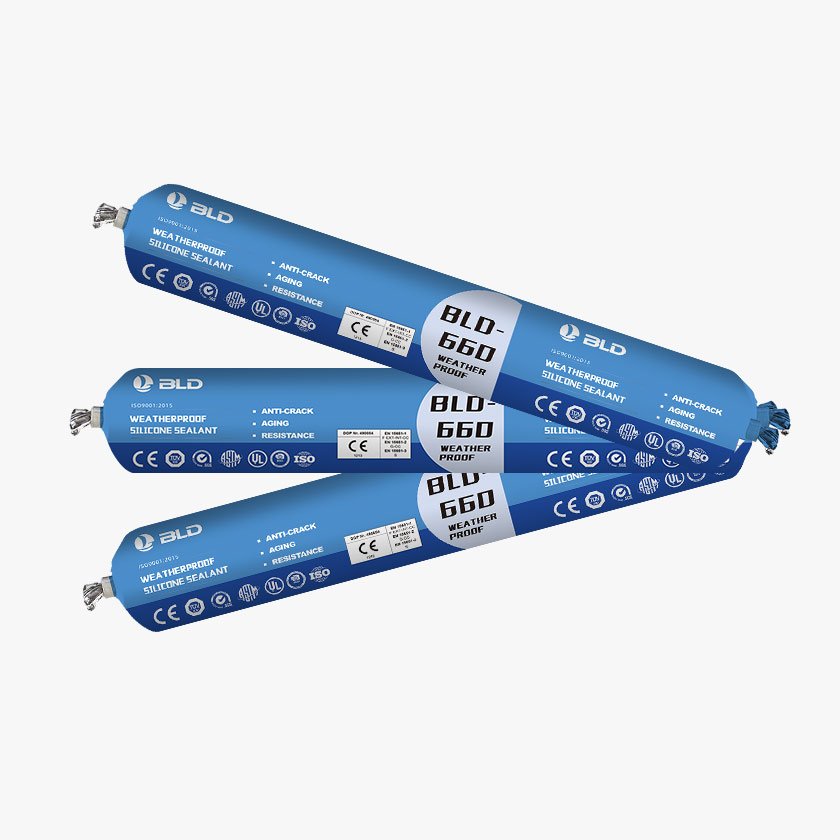
When seals fail, everything from moisture to temperature swings finds a way in. That’s why choosing the right silicone sealant matters more than most people expect. Baolongda Group has built a reputation around weatherproof silicone sealants designed for the kind of conditions that ruin ordinary products. But what actually makes their formula hold up when the weather turns extreme? This post breaks down the materials, testing, and real-world performance behind a sealant that refuses to quit.
Where Harsh Weather Finds the Weak Points First
A roof that never leaked in summer starts showing its age after the first ice dam forms along the eaves. The real issue was never the shingles; it was the slight dip in the gutter line, the flashing nail that loosened a fraction of an inch. Winter just pulled at those small failures until they became impossible to ignore.
The same logic applies to gear and vehicles. A door seal that feels fine in mild weather turns brittle in a cold snap, and a battery that starts easily at noon won't turn over at six in the morning. Harsh conditions don't create weaknesses; they strip away the tolerance that disguised them.
Watch what fails first. That's usually where the original design, the last repair, or the daily habit was already falling short.
The Difference Between Sticking to a Surface and Staying Sealed
A strip of tape can cling to a countertop without stopping a single drop of water from traveling underneath it. Adhesion is mostly a surface phenomenon—it depends on contact area, surface energy, and how well a material wets the substrate. Sealing, by contrast, is about filling the path itself. A gasket or sealant has to occupy voids, bridge scratches, and resist pressure-driven flow through the interface. Being stuck is about staying put; being sealed is about blocking passage.
Think of a label on a bottle. It adheres strongly, but it never becomes part of the barrier between the liquid and the outside air. The bottle cap liner, on the other hand, may not feel aggressively sticky at all. It works because it deforms under compression, pressing into the microscopic grooves around the rim until the continuous leak path disappears. The difference shows up whenever pressure, temperature, or vibration changes: a purely adhesive joint can hold position while still allowing gas to slip along the boundary.
That is why so many reliable closures rely on both mechanisms at once. The adhesive keeps the component from shifting during assembly or use, while a separate sealing element—an o-ring, a bead of cured compound, a crushed washer—handles the actual containment. If the two jobs are confused, the result is often a part that looks firmly attached but leaks slowly under a pressure test.
What Happens After Repeated Freeze-Thaw Cycles
With each pass from frozen to thawed, the damage rarely announces itself all at once. The first cycle might leave only faint stress lines, but those weak points become preferred pathways for water migration. Tiny ice lenses grow a little larger every time the temperature dips, pushing apart fibers or cell walls that had already begun to relax during the thaw.
After enough cycles, the structure starts to lose its ability to recover. Materials that once flexed become brittle; tissues that held moisture well begin to weep liquid the moment they warm. In food, this shows up as a mealy texture and a pool of exudate in the tray. In concrete or masonry, the surface pits and scales, exposing the softer interior to still more water.
The cumulative effect matters more than any single freeze event. Repeated cycling can shift bound water into free water, concentrate solutes in unfrozen pockets, and widen cracks that were invisible after the first thaw. By the time the changes are obvious, the internal architecture has usually been quietly rearranged many times over.
Why Flexibility Matters More Than Strength in a Sealant
Sealant strength often gets more credit than it deserves. A rigid, high-strength bead may hold up in a controlled test, but real joints move constantly with temperature swings, wind loads, settling, and traffic vibration. If a sealant cannot stretch and recover, it ends up fighting the building. That fight usually ends with adhesive failure or a split down the middle, while the surrounding substrate stays perfectly intact.
Flexibility is what allows a sealant to absorb movement without transferring stress to the bond line. In practice, a lower-modulus product with high elongation keeps a weather seal intact through seasonal expansion and contraction. This is especially true on materials like aluminum, vinyl, and fiber cement, where thermal movement never really stops. The sealant has to behave more like a durable rubber band than a brittle glue line.
That does not mean strength is irrelevant, but it has to be the right kind. Tear resistance and recovery matter more than raw tensile numbers. A sealant that stretches far and returns to its original shape will outlast a stronger one that permanently deforms or tears at the edges. When comparing products, it makes more sense to look at movement capability, modulus, and long-term elasticity before focusing on maximum strength.
Handling UV Exposure and Salt Mist Without Chalking
Coatings that sit outdoors near coastal or industrial zones get hit by two aggressive forces at once: ultraviolet light breaking down the binder and salt-laden moisture attacking the film. Once the resin at the surface starts to erode, pigment particles lose their grip and the finish turns chalky. Preventing that chalk layer means slowing the photo-oxidation of the binder far enough that rain or condensation removes only the already-degraded material, not intact film.
The more practical route is to combine inherently weather-resistant resin chemistry with tightly packed, UV-stable pigmentation. High-performance fluoropolymer or polysiloxane binders resist chain scission better than standard acrylics or alkyds, while treated rutile titanium dioxide helps avoid photocatalytic breakdown at the pigment-binder interface. Keeping pigment volume concentration below the critical point also matters, because a resin-starved film will shed pigment quickly under salt spray even if the binder itself holds up.
Salt mist complicates things by depositing fine crystals that pull moisture into the film and increase surface conductivity, which accelerates corrosion and undermines adhesion at the edges. A slightly more hydrophobic surface, good edge coverage, and an adequate dry film thickness reduce the amount of time ion-laden water stays in contact with the coating. Combined with a binder that does not micro-crack from repeated UV cycling, the finish can keep its color and gloss without developing that dusty, faded look.
Long-Term Sealing in Places That Are Hard to Reach
Sealing joints or gaps that sit behind equipment, under structural overhangs, or inside narrow cavities rarely gets the same attention as visible surface work, yet those hidden points often cause the slowest failures. The real challenge is not just reaching the spot once, but making sure the material stays flexible and bonded after months of thermal movement, vibration, and occasional contact with moisture or cleaning chemicals. Instead of relying on a thick bead alone, the best approach combines careful surface preparation with a sealant chosen for its elongation and adhesion on the specific substrate, even when inspection access is limited.
Long-term performance in these areas depends on how well the sealant handles movement without tearing away from the edges. In tight locations, tooling the joint properly may be difficult, so using a self-leveling or low-sag product that matches the joint depth can reduce the risk of air pockets and thin spots. It also helps to clean the surfaces with a solvent that leaves no residue, since oil, dust, or old adhesive films are common reasons a repair looks fine at first and then opens up weeks later.
For maintenance teams, the practical rule is to choose a sealant that can be applied in one pass and does not require constant reapplication. Polyether and high-quality silicone formulations often perform better than basic acrylic caulk in these hidden, hard-to-reach zones, especially where repeated movement or humidity is expected. Building in a small access point or leaving a clear record of the sealed location can also save future work, because the next inspection is just as likely to miss the spot as the original installation did.
FAQ
The cured rubber remains flexible and won't chalk or crack after prolonged sun exposure. It also resists standing water, so joints stay sealed even when they're constantly damp.
Yes. It keeps its elasticity from sub-zero winters to intense summer heat. That movement capability matters more than initial bond strength on expansion joints.
Glass, aluminum, ceramics, painted wood, and most rigid plastics. For very porous surfaces like raw concrete or limestone, a thin primer coat improves the bond noticeably.
It skins over within about half an hour, but wait at least 24 hours before direct water contact. Thicker beads need longer because moisture has to work through the outer skin.
It works well there once the area is clean and dry. Tool it into the seam so it grips both edges, and avoid leaving thick lumps that can trap water.
No. It is a neutral-cure silicone, so paint will bead up on it. Pick a matching color before application instead of planning to paint over the cured joint.
A properly prepped joint can remain watertight for 10 years or more. The usual causes of early failure are trapped moisture, surface contamination, or overstretching a narrow bead.
The plant runs batch-level quality checks on cure time and adhesion. What reaches you should behave like any premium neutral-cure silicone, with predictable tooling and reliable long-term performance.
Conclusion
Harsh weather has a way of finding the weak points in a seal before anything else. A bead can look tidy right after application, yet the real test is whether it keeps working when a joint expands, contracts, or gets wet for days. Many failures come from products that stick to a surface without staying sealed through movement. This weatherproof silicone sealant from China pays attention to that difference. It holds to concrete, metal, glass, and coated wood, but it also moves with the substrate. After repeated freeze-thaw cycles, the cured joint stretches and recovers instead of tearing away from the edges. That flexibility matters more than raw hardness because a sealant that cannot give a little will eventually crack or pull loose. Even when temperatures swing sharply, the material keeps its elasticity rather than becoming stiff.
Under strong UV light and salt mist, ordinary sealants often chalk, fade, or turn brittle within a season or two. This product is formulated to resist that kind of surface breakdown, so outdoor joints do not develop fine cracks that invite moisture. The benefit becomes clearer in hard-to-reach places: high facades, roof flashing, vent penetrations, and industrial housings where repeated maintenance is difficult or unsafe. Once applied, the silicone forms a lasting barrier that handles standing water, sea air, and direct sun without routine touch-ups. Instead of a short-term patch that looks fine on day one and fails quietly later, it provides a more durable seal that holds through seasonal extremes and keeps the structure dry over time.
Contact Us
Contact Person: Charles
Email: [email protected]
Tel/WhatsApp: +86-0536-3350888
Website: https://www.baolongda.com/