
Top Lauryl Alcohol Ethoxylate Benefits and Applications in Modern Cleaning Solutions
2026-11-16
If you've ever compared two all-purpose cleaners and noticed one blasts through grease while the other just smears it, you've likely encountered the difference a high-quality ethoxylate can make. Lauryl Alcohol Ethoxylate is the quiet powerhouse behind many of today's most effective cleaning products—and at POLYKEM, we've spent years helping formulators unlock its full potential. In this post, we're breaking down the top benefits and practical applications that keep this surfactant in high demand across household, institutional, and industrial cleaning.
Why Lauryl Alcohol Ethoxylate Earns Its Place in Modern Formulations
Lauryl alcohol ethoxylate has quietly become a workhorse in all kinds of cleaning and personal care products, and the reasons go beyond just being cheap or easy to source. Its real strength lies in how adaptable the molecule is. By tweaking the number of ethylene oxide units, formulators can shift its behavior from a low-foaming wetting agent to a high-foaming, grease-cutting surfactant. That flexibility means one basic building block can serve shampoos, hard surface cleaners, laundry detergents, and even industrial degreasers without a complete reformulation. For a product developer juggling performance targets and cost constraints, that kind of versatility is hard to ignore.
Another factor that keeps lauryl alcohol ethoxylate in the mix is its forgiving nature in hard water and across a wide pH range. Many traditional anionics, like linear alkylbenzene sulfonates, lose effectiveness when calcium and magnesium ions build up or when the formula shifts too acidic. Lauryl alcohol ethoxylate, being nonionic, doesn't carry a charge that binds to those minerals, so it keeps working even in rinse waters that would defeat other surfactants. That reliability translates into consistent cleaning results for end users, whether they're washing dishes in a region with very hard tap water or using a mildly acidic bathroom spray.
Perhaps most importantly, lauryl alcohol ethoxylate pairs well with nearly every other surfactant class. It acts as a foam booster or foam suppressor depending on the ratio, helps solubilize fragrances and oils, and can improve the mildness of harsher primary surfactants by reducing their critical micelle concentration. In modern formulations where skin compatibility and environmental profiles are under constant scrutiny, having a component that lets you lower the total surfactant load while keeping performance intact is a genuine advantage. That's why, despite the rise of newer bio-based or specialty surfactants, lauryl alcohol ethoxylate still earns its spot on the bench sheet.
Breaking Down Grease: The Practical Side of Lauryl Alcohol Ethoxylate
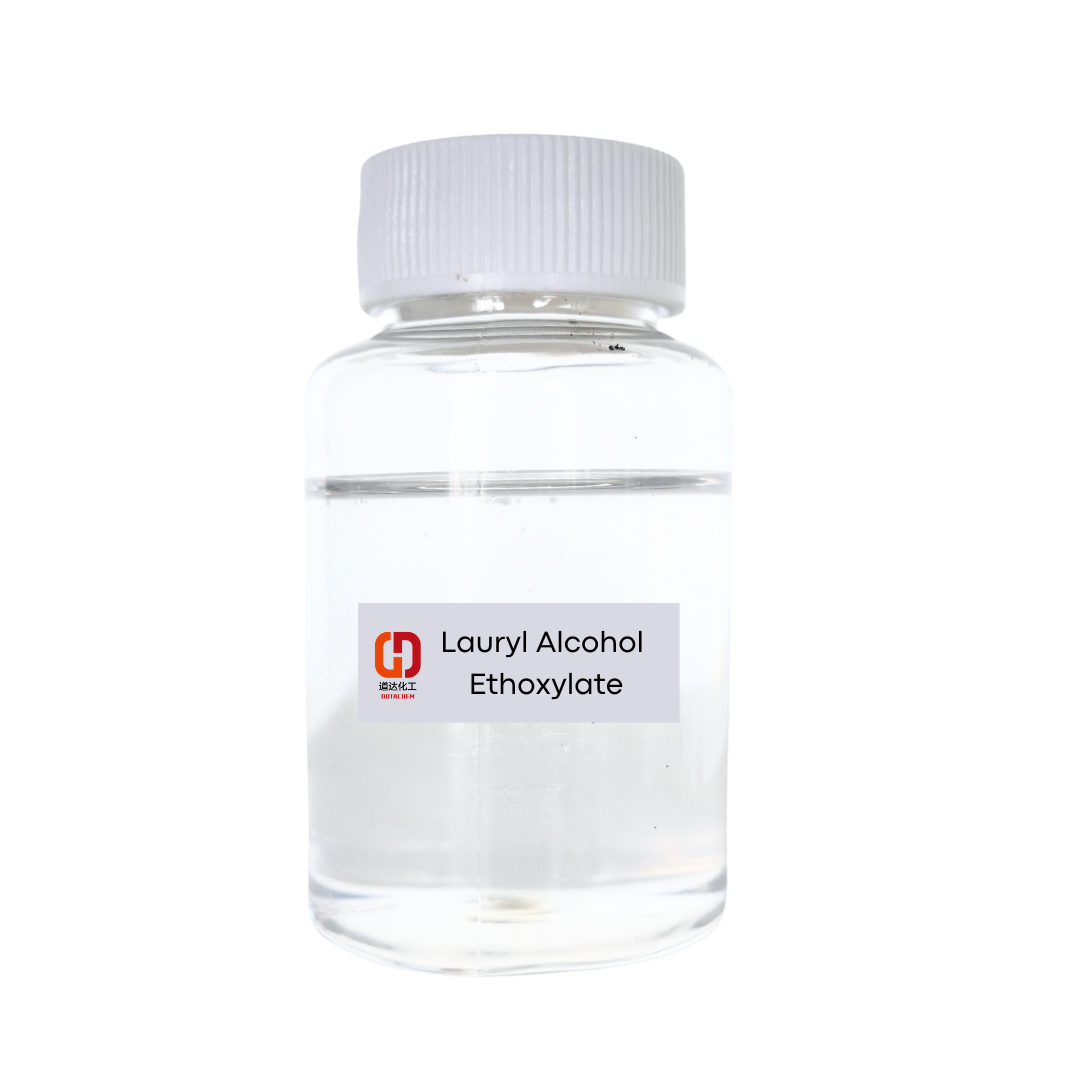
Anyone who has scrubbed a greasy pan or wiped down a sticky stovetop knows that water alone just moves the mess around. Lauryl alcohol ethoxylate changes that by letting water get a real grip on oils and fats. Instead of repelling each other, the two mix into a milky rinse that lifts residue off surfaces without endless scrubbing. This is why it shows up in so many everyday cleaners, from dish soaps to degreasers used on kitchen counters and range hoods.
The real value comes from how it handles different types of grime. Light cooking oils, butter smears, and even heavier deposits from frying all break down more readily because the molecule has one end that grabs onto grease and another that pulls it into water. That dual action means you can use less product per wash, and the cleaned surface doesn't keep a slippery film behind. In practice, this translates to faster cleanup in home kitchens, restaurant prep areas, and even workshop floors where oil splatters are common.
A less obvious benefit is how forgiving it is with hard water. Many cleaners lose effectiveness when minerals are present, but lauryl alcohol ethoxylate keeps working because it doesn't rely on building a heavy foam structure. You get steady grease removal whether the water is soft or full of calcium and magnesium. That reliability under real-world conditions, not just in ideal lab tests, is what makes it a quiet workhorse in formulations meant for daily, repeated use.
From Laundry to Hard Surfaces: Where This Surfactant Shines
In the laundry room, this surfactant gets under the surface of fabrics, loosening body oils, food spills, and ground-in dirt that ordinary detergents often leave behind. Even in cold water, it keeps working where many cleaners slow down, breaking the bond between grime and cotton or synthetic fibers. And because it prevents loosened soil from settling back onto clothes, whites stay brighter and colors don’t turn dull after repeated washes.
Move to the kitchen or bathroom and the same molecule proves just as useful on non-porous surfaces. A quick spray on a greasy stovetop or soap-scummed tile lets it cut through films that water alone can’t touch. It wets the surface fast, emulsifies oily residue, and rinses away without leaving streaks or haze on glass, stainless steel, or sealed stone.
What makes this dual performance possible is a balanced structure that works well in high-foam laundry cycles and low-foam hard-surface sprays alike. It stays active in hard water, resists breaking down in concentrated formulas, and plays nicely with builders, enzymes, and solvents. That kind of flexibility means one surfactant can anchor a whole line of cleaners, from a heavy-duty laundry pod to a ready-to-use kitchen degreaser.
Balancing Performance and Skin Mildness in Everyday Cleaners
Many everyday cleaners either scrub hard enough to strip paint or go so gentle they barely lift grease. The real challenge sits in the middle: getting surfaces genuinely clean without leaving hands raw or triggering flare-ups for people with sensitive skin. It's not just about pH levels or surfactant choice, though those matter. It's about how the formula behaves during those ten minutes of wiping down counters and scrubbing sinks.
A few practical shifts make a difference. High-foaming agents aren't always necessary for effective cleaning, yet they're often blamed for that tight, dry feeling after washing dishes. Replacing some of them with milder, non-ionic alternatives can maintain degreasing power while cutting irritation. Likewise, keeping the pH closer to skin's natural range reduces the need for heavy buffering systems that can feel slippery or filmy.
There's also the overlooked role of rinseability. Residue left behind isn't just a streak problem; it can prolong contact between cleaning agents and skin. Formulating for faster, cleaner rinsing means less exposure and fewer complaints, even with daily use. The best everyday cleaners don't feel like a compromise—they just feel like they work, without demanding you pay for it with your hands.
How It Boosts Foam Profiles Without Overdoing It
Foam is a tricky thing to get right. Push it too far and you end up with a stiff, almost meringue-like cap that sits on top instead of blending in. What this does instead is work at the bubble wall itself—strengthening it just enough to keep the structure stable without adding that overly thick, artificial quality. The result is a foam that holds its shape and lingers, but still breaks down cleanly on the palate.
Rather than flooding the formula with heavy stabilizers, it nudges surface tension into a sweet spot where bubbles form densely and evenly. You get a tighter, creamier head that doesn’t collapse in seconds, yet it never crosses into the territory of a foamy pillow that feels detached from the liquid beneath. It’s the difference between a quick, airy lift and a long-lasting but still delicate froth.
For anyone working on a formulation, that balance means fewer compensatory tweaks. You don’t have to mask an off-taste or fix a chalky texture later because the foam wasn’t forced. It just quietly improves the profile—keeping the product itself intact while giving the foam a bit more confidence.
Cold Water, Hard Water, No Problem: Real-World Cleaning Wins
Anyone who has scrubbed a greasy pan in cold water knows the frustration—soap barely lathers, residue sticks around, and you end up using twice as much product for half the result. Throw in hard water, and the minerals seem to glue the grime to every surface. But that changed the first time I used this cleaner on a sink full of last night's dishes. The suds actually built up, the film on the glasses vanished, and I didn't have to crank the tap to scalding just to get a decent rinse.
The real test came in my parents' farmhouse, where the well water is so hard you can practically see the calcium floating. I brought a bottle along and tackled a grimy stovetop that had been ignored for weeks. With cold water and a single wipe, the grease lifted without leaving that dull white haze hard water usually leaves behind. No pre-soaking, no scrubbing until my arm ached—just clean.
It's easy to promise performance in perfect lab conditions, but real homes rarely offer soft, warm water on demand. That's why these small, unglamorous wins matter: cold tap water, mineral-heavy plumbing, and a cleaner that simply gets on with the job.
FAQ
Its ability to cut through oily soils while staying gentle on fabrics and surfaces sets it apart. The ethoxylation level can be tuned, so formulators get precise control over foaming and rinsing behavior.
It lowers the interfacial tension between water and grease, letting the surfactant penetrate and emulsify fats quickly. Even in hard water, it keeps working where some anionics would form scum.
Yes, it helps prevent soil redeposition, so clothes stay brighter over multiple washes. Its compatibility with enzymes and builders also means a smaller dose can deliver the same performance.
Certain ethoxylation levels produce low-foaming grades ideal for machine parts washers and CIP systems. They reduce foam-related downtime while still lifting heavy oils and metalworking fluids.
It is readily biodegradable under aerobic conditions, and many grades meet OECD screening tests. The main environmental concern is the aquatic toxicity of the nonylphenol ethoxylates it often replaces, not LAE itself.
LAE is generally milder to skin and less prone to stripping natural oils. It also performs better in cold water and doesn't need as much thickening agent to build viscosity.
Blending it with anionic surfactants like LAS or SLS creates a synergistic effect—better foam stability, lower critical micelle concentration, and improved hard water tolerance. This lets formulators cut total surfactant use.
Conclusion
Lauryl alcohol ethoxylate has quietly become a workhorse in modern cleaning because it handles the messes that other surfactants struggle with. When a greasy pan hits cold tap water, most cleaners turn sluggish, but this molecule keeps pulling oil and food residue into suspension without demanding a pre-rinse or a hot cycle. Hard water minerals that typically bind to anionic surfactants and form scum barely slow it down, which means fewer streaks on glass and less buildup in washing machines. The foam story is also refreshing: instead of whipping into an unmanageable foam mountain, it delivers a controlled, creamy lather that signals cleaning power without overtaxing rinse cycles.
Across laundry liquids, dish soaps, and all-purpose sprays, formulators lean on it to bridge the gap between aggressive degreasing and skin tolerance. A heavy-duty cleaner that leaves hands cracked after one use is a nonstarter for daily chores, but LAE lowers irritation potential while still attacking oily stains on collars, cuffs, and countertops. That balance lets a single product work from delicates to tile without smelling harsh or requiring gloves. In real terms, it means a spray that cuts through kitchen film on a cold morning, a laundry detergent that performs in a basement with hard well water, and a hand dish liquid that doesn't feel like sandpaper after a sink full of dishes. That kind of quiet reliability is why it keeps showing up in formulas that aim to feel mild yet clean thoroughly.
Contact Us
Contact Person: Levi
Email: [email protected]
Tel/WhatsApp: +86 532 84688720
Website: https://www.polykem-intl.com