

Top DC Circuit Breakers for Reliable Electrical Protection and Enhanced Efficiency
2026-07-26
In modern electrical systems, the right DC circuit breaker isn't just a safety device—it's the backbone of reliable protection and operational efficiency. Whether you're safeguarding solar arrays, battery banks, or industrial DC networks, a poorly chosen breaker can lead to costly downtime or even catastrophic failure. At Chang Song, we understand that every ampere counts. Our advanced DC circuit breakers are engineered to deliver precise interruption, minimal power loss, and long-term dependability. In this post, we'll explore key features that set top-tier breakers apart, helping you make an informed choice that boosts both safety and system performance.
The Unseen Guardians: Why DC Circuit Breakers Matter More Than You Think
In the quiet hum of a solar farm at dawn or the steady rhythm of an electric vehicle charging station, a critical component often escapes notice. DC circuit breakers are the silent sentinels that stand between smooth operation and catastrophic failure. Unlike their AC counterparts, these devices must tackle the unique challenge of interrupting direct current—a relentless flow that doesn’t naturally cross zero to self-extinguish an arc. Their role isn’t flashy, but without them, the systems we’ve come to rely on would be vulnerable to overloads and short circuits that can escalate in milliseconds.
What makes DC breakers truly fascinating is the blend of precision engineering and raw physical forces they manage. When a fault occurs, the breaker must stretch and cool the arc, often using magnetic blowouts or arc chutes, to force it into submission. This isn’t just about flipping a switch; it’s a controlled battle against ionized gas that can reach thousands of degrees. The materials inside are chosen not only for conductivity but for their arc-resistant properties, and the design must ensure reliable performance over thousands of cycles. It’s this meticulous craftsmanship that keeps battery storage systems, industrial machinery, and renewable energy installations safe around the clock.
Beyond the hardware, there’s an emerging story of how these breakers are quietly enabling the green energy transition. As we shift toward decentralized power grids, where DC microgrids and electric transport dominate, the demand for robust, compact, and intelligent circuit protection has never been higher. Innovations like solid-state DC breakers, which use semiconductors to interrupt current in microseconds, are rewriting the rules of what’s possible. Yet, even with advanced tech, the core mission remains unchanged: to guard against the unseen, to act before a flicker becomes a fire. That’s why these unassuming devices matter far more than they’re given credit for.
Beyond Basic Protection: Features That Boost Efficiency and Safety
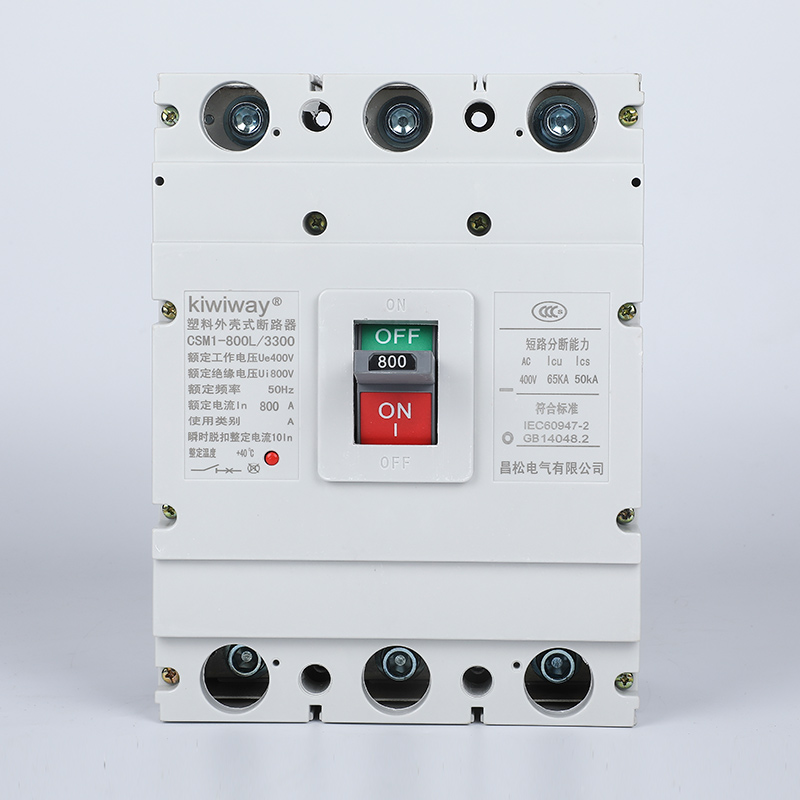
When it comes to modern security systems, the conversation often starts and ends with protection. But what if your defenses could do more than just lock things down? Imagine a system that not only wards off intruders but also streamlines your daily operations, cutting down on wasted time and human error. This is where the next generation of smart security features comes into play—blending vigilance with seamless efficiency.
Take automated access logs, for instance. Instead of manually tracking who enters and exits, the system captures this data in real time, creating an unalterable record that doubles as both a security asset and a time management tool. Pair that with adaptive alarm triggers that learn your routines, reducing false alerts while ensuring genuine threats are never missed. These features shift the focus from reactive safeguarding to proactive optimization.
Safety isn't just about keeping the bad out—it's also about creating a responsive environment that protects people in the moment. Instant lockdown protocols that can be triggered from a smartphone, or environmental sensors that detect smoke, gas leaks, or even unusually high temperatures, add layers of physical safety that extend far beyond a simple burglar alarm. Together, these capabilities transform a standard setup into an intelligent guardian that watches over both productivity and well-being.
Finding Your Perfect Match: A Practical Guide to Choosing DC Breakers
Picking a DC breaker isn’t just about matching amps and volts—it’s about taming a different beast than its AC cousin. Direct current doesn’t have the natural zero-crossing point that helps extinguish an AC arc, so the breaker has to muscle through a sustained, stubborn arc when tripping. That means you need to check the DC voltage rating carefully, not just assume a 240V AC breaker will work at 48V DC. Look at the interrupt capacity too; under a fault, DC can feed a fire longer than you might expect if the breaker isn’t built to smother it fast.
The installation environment can throw curveballs that datasheets don’t always emphasize. If your breaker is going into an enclosure that sees direct sun, a battery compartment, or a dusty solar combiner box, temperature derating becomes real. A breaker rated for 63A at room temperature might nuisance-trip at half that load when ambient temps climb. Also think about polarity—many DC breakers have a marked “+” and “—” for a reason. Reversing them can turn the protective device into a hazard because the arc chute was designed for flow in one direction. And if you’re stacking multiple breakers in a panel, leave breathing room; heat buildup between tightly packed units can silently pull down their performance.
Don’t fall into the trap of buying based on price alone or treating a breaker as a generic commodity. Test certifications matter—look for UL 489B, CSA, or IEC equivalents that specifically cover DC operation, not just a repurposed AC rating. A reputable brand forces internal arc‑extinguishing magnets and wide air gaps that no‑name copies often skip. Finally, verify trip curves against your load: a motor starting surge might need a time‑delay curve, while sensitive electronics demand fast‑acting protection. When in doubt, prototype your worst‑case fault scenario before trusting the main system. A couple of hours on a test bench beats a rebuild after a meltdown.
Keeping the Flow: Simple Maintenance Practices for Long-Term Reliability
A little attention goes a long way when it comes to keeping systems in top shape. Start with the basics: regular cleaning of filters, vents, and intake areas prevents gradual buildup that silently chokes performance. It is not about following a rigid schedule but developing a feel for when components need a quick refresh. A clogged filter here, a dusty sensor there—these small oversights often snowball into expensive repairs. Making this a casual habit rather than a chore changes everything.
Moving parts love consistency, so do not overlook periodic lubrication and tightening. A quick check for leaks, unusual vibrations, or slight alignment shifts can catch problems while they are still easy to fix. Keep a simple log of what you have done and when—it does not need to be fancy, just a notebook or a note on your phone. Over time, you will begin to spot patterns and anticipate needs before they become headaches.
Finally, tune your upkeep to the seasons. Temperature swings, humidity, and usage patterns change throughout the year, and your maintenance routine should flex with them. Something as simple as clearing debris before a wet season or recalibrating settings when workload peaks can prevent unexpected downtime. When you treat maintenance as an ongoing conversation with your equipment, reliability stops being a goal and becomes the norm.
What's Next? Emerging Technologies in DC Circuit Breaker Design
The future of DC circuit breakers is being shaped by the push for higher efficiency and smarter grid integration. One exciting direction is the adoption of wide-bandgap semiconductors like silicon carbide (SiC) and gallium nitride (GaN) in solid-state breakers. These materials handle higher voltages and temperatures with far less energy loss than silicon, enabling faster switching and more compact designs. As renewable energy systems and electric vehicle charging stations demand more robust protection, these semiconductor-based breakers are moving from lab prototypes to commercial viability.
Another trend gaining momentum is the use of digital twins and embedded intelligence. By integrating sensors and real-time data processing, next-generation breakers can predict faults, adjust tripping characteristics on the fly, and communicate with central energy management systems. This opens the door to adaptive protection schemes that not only isolate faults but also help stabilize DC microgrids. With machine learning algorithms, these devices can learn normal operating patterns and distinguish between transient events and genuine hazards, drastically reducing nuisance trips.
Looking further ahead, hybrid topologies combining mechanical and solid-state elements are likely to dominate, especially in medium-voltage applications. These designs exploit the low on-state losses of mechanical contacts and the arc-free interruption of power electronics. Meanwhile, research into advanced arc suppression techniques—such as magnetic field manipulation and environmentally friendly gases—promises to improve the longevity and environmental footprint of traditional breakers. The roadmap also includes standardization efforts that will accelerate interoperability, a critical step as DC becomes the backbone of modern power distribution.
Where the Action Is: DC Circuit Breakers in Critical Applications
In data centers, hospitals, and telecom facilities, DC circuit breakers are the silent sentinels that keep operations running smoothly. When alternating current isn’t an option — or where uninterrupted power is non-negotiable — these devices step in to isolate faults instantaneously, protecting sensitive equipment from cascading failures. Their role in battery storage systems and renewable energy installations has expanded dramatically, turning them from niche components into backbone protectors of modern critical infrastructure.
What sets DC breakers apart in these settings is their ability to handle arc extinction without the natural zero-crossing that AC relies on. Advanced designs employ magnetic blowouts, arc chutes, or hybrid solid-state mechanisms to quench arcs swiftly, even in high-voltage scenarios. This technical edge makes them indispensable in railway traction power, electric vehicle charging hubs, and marine propulsion systems, where space is tight and reliability is measured in milliseconds.
Beyond mere current interruption, today’s DC circuit breakers integrate smart monitoring features — temperature sensing, ground-fault detection, and communication interfaces that feed into building management systems. Facility engineers can now track wear, predict maintenance intervals, and remotely reset breakers, shifting from reactive triage to proactive asset management. This intelligence layer ensures that when action is needed, the breaker isn’t just present — it’s already thinking ahead.
FAQ
Unlike AC breakers that benefit from natural current zero-crossings to quench arcs, DC circuit breakers must forcefully extinguish arcs since the current never naturally drops to zero, often using magnetic blowout coils, arc chutes, or hybrid solid-state designs to dissipate the constant arc energy.
High-end DC breakers incorporate low-resistance contacts and advanced trip mechanisms that minimize conduction losses, and some use intelligent monitoring to reduce unnecessary trips, ensuring that the solar array stays connected and delivers maximum power without wasteful interruptions.
Battery storage systems can deliver extremely high fault currents that rise almost instantly, so the breaker must have a breaking capacity well above the maximum prospective short-circuit current to safely interrupt the fault without welding contacts or causing arc flash incidents.
Advanced DC breakers continuously analyze the current signature for telltale high-frequency noise of arc faults; upon detection they trip in milliseconds, isolating the faulty segment before the arc can ignite nearby combustible materials, a feature vital for rooftop solar systems and RV setups.
Periodically exercising the breaker by manually toggling it under no-load conditions prevents mechanical seizing, while checking terminals for corrosion and ensuring the IP-rated enclosure remains intact protects against salt spray or high humidity that could degrade insulation and trip accuracy.
Yes, reputable breakers for PV systems are typically tested to IEC/EN 60947-2 or UL 489B, with certifications that validate their ability to handle the unique challenges of DC photovoltaics, such as bidirectional currents, high ambient temperatures, and continuous operation near rated current.
Hybrid designs combine traditional mechanical contacts with solid-state switches: the mechanical path carries the load with low loss, while during a fault the solid-state electronics take over the current in microseconds and then commutate back to a mechanical gap, drastically reducing contact wear and arc time while enabling thousands of operations.
It’s essential to cascade breakers with graduated trip curves and adequate time-current discrimination so that only the breaker closest to a fault opens, keeping the rest of the system operational; this requires analyzing the DC power supply impedance, battery contribution, and branch cable lengths to prevent nuisance tripping of upstream breakers.
Conclusion
DC circuit breakers serve as the unseen guardians of modern electrical systems, quietly ensuring safety and reliability in everything from solar arrays to data centers. While often overlooked, these devices are the first line of defense against overloads and short circuits, preventing catastrophic failures that could lead to costly downtime or fire hazards. What sets top-tier DC breakers apart is their ability to combine robust protection with features that actively enhance efficiency—think arc fault detection that minimizes energy loss, compact designs that save precious space in crowded panels, and advanced trip mechanisms that react in milliseconds without nuisance tripping. By intelligently isolating faults, they keep the rest of the system running smoothly, turning a potential disaster into a non-event.
Selecting the right breaker means moving beyond generic specs and finding your perfect match for the specific application, whether it’s a harsh industrial environment or a sensitive renewable energy setup. Key considerations include voltage ratings, breaking capacity, and environmental resilience, but don’t overlook the importance of form factor and ease of maintenance—features like visual status indicators and tool-free resetting save time and reduce human error. Regular maintenance, such as cleaning contacts and testing trip functions, can double the lifespan of these devices and prevent performance drift. Looking ahead, the field is evolving with solid-state and hybrid breakers that promise near-instantaneous interruption and digital connectivity for real-time monitoring. From electric vehicle charging stations to microgrids, the next generation of DC breakers will not only protect but also communicate, optimize, and adapt, solidifying their role as critical enablers of our electrified future.
Contact Us
Contact Person: Tonglun Chen
Email: [email protected]
Tel/WhatsApp: 8618906642555
Website: https://www.cncsele.com