

Top 10 Solar Farm Companies from China Powering the Global Renewable Revolution
2026-08-06
China now leads the global solar revolution, and a handful of companies are at the heart of this transformation. From sprawling desert installations to cutting-edge bifacial modules, these top 10 Chinese solar farm developers are reshaping energy landscapes worldwide. At Topfencesolar, we recognize their pivotal role, which is why we partner with the best to deliver high-performance fencing and mounting solutions for solar farms. Curious to see who powers the change? Let’s dive in.
Sunrise Superpowers: Meet the Companies Shaping the Solar Century
A handful of companies have quietly shifted from panel manufacturers to full-blown energy architects, weaving solar into the fabric of modern life. They aren't just chasing efficiency records—they're redesigning how power flows from rooftop to grid, making solar stubbornly practical for homeowners and industries alike. Their approach often blurs the line between technology and infrastructure, embedding photovoltaic intelligence into building materials and storage systems that learn from weather patterns.
In boardrooms from Shanghai to San Jose, strategies diverge wildly: some bet on ultra-thin films that cling to curved surfaces, others on massive desert farms paired with green hydrogen plants. Yet the real magic happens where software meets silicon, as algorithms now predict cloud cover and trade excess power in milliseconds, turning homes into micro-utilities. These pioneers understand that solar's next chapter isn't about panels—it's about making energy invisible, autonomous, and eerily adaptive.
What sets the leaders apart is an almost obsessive focus on the mundane obstacles that kill solar adoption: a two-week permitting process, a clunky billing interface, a battery that degrades in humidity. They've realized that the solar century won't be won by the strongest sunbeam, but by whoever solves the unglamorous friction between human habits and an ancient star's relentless gift.
Cost Curves and Kilowatts: The Economics of Chinese Solar Farms
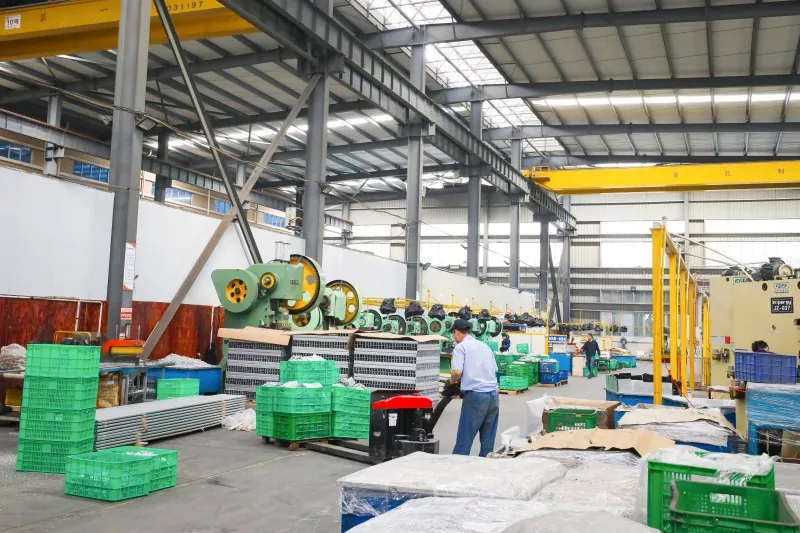
China's solar boom isn't just about shiny panels stretching across deserts—it's a story of collapsing costs and relentless scale. A decade ago, building a solar farm here was a pricey bet; now, module prices have plummeted by over 90%, driven by breakneck manufacturing expansion and process innovations. The cost curve bent dramatically, turning solar from a subsidy-dependent experiment into the cheapest source of new electricity in many regions.
Yet the kilowatt-hour sticker price only tells part of the tale. Behind the scenes, Chinese developers juggle land-use fees, grid connection bottlenecks, and curtailment risks—where generated power gets wasted because the infrastructure can't handle it. The real economics hinge on squeezing out every efficiency gain, from bifacial panels that catch reflected light to tracker systems that follow the sun, all while navigating a maze of provincial policies and fluctuating tariff rates.
What's often missed in the headlines is the financing puzzle. While state-backed banks offer cheap loans, private investors eye returns cautiously, factoring in equipment degradation, maintenance costs, and the ever-present chance of policy shifts. The result is a landscape where massive solar parks coexist with rooftop installations, each project a careful calculation: how many kilowatts per yuan, and for how long, before the next cost curve leap reshapes the game again.
From Desert to Coast: A Tour of Landmark Installations
Stretching across contrasting landscapes, landmark installations bridge the gap between arid deserts and vibrant coastlines, transforming natural borders into cultural statements. In the desert, massive sculptures rise from the sand like ancient sentinels, their weathered surfaces telling stories of time and resilience. These works harness the stark beauty of the dunes, playing with light and shadow as the sun traverses the open sky.
Moving toward the water’s edge, the installations shift in character, embracing the fluidity of the coast. Intertidal pieces emerge and submerge with the tides, blurring the line between art and nature. They may respond to the wind, salt spray, or shifting sands, creating an evolving dialogue with the environment. Observers become part of the experience as the sea alters the work’s appearance throughout the day.
This journey from desert to coast highlights how context reshapes artistic expression. Inland pieces evoke solitude and permanence, while coastal works celebrate flux and impermanence. Together, they invite reflection on our own place within these elemental extremes, reminding us that art can anchor memory in a world of constant change.
Innovation’s Edge: The Tech That Gives China Its Lead
China’s technological surge rests on a deliberate fusion of state-backed research and agile private enterprise. Government initiatives have channeled billions into foundational sciences, from quantum computing to artificial intelligence, creating an ecosystem where breakthroughs migrate swiftly from lab to market. This is not just top-down planning; it’s a symbiotic relationship. State-funded infrastructure lowers entry barriers, while companies like Huawei and Tencent iterate at dizzying speeds, embedding advanced tech into daily life—think facial recognition payments or 5G-connected factories that recalibrate supply chains in real time.
A less visible advantage lies in data and scale. With over a billion users generating a constant stream of behavioral insights, Chinese firms train algorithms on datasets that dwarf those of Western counterparts. This fuels everything from precision medicine to autonomous driving, where real-world feedback loops sharpen accuracy far faster than simulated environments ever could. Coupled with a regulatory approach that often allows experimentation before codifying rules, the country has turned its massive internal market into a live laboratory. The result? Innovations that aren’t just theoretical but battle-tested at scale before they ever reach a global audience.
Perhaps the boldest differentiator is systemic patience. While quarterly earnings pressure can throttle long-term research elsewhere, Chinese tech giants and state bodies routinely pursue decade-spanning roadmaps. Semiconductor self-sufficiency, space-based internet constellations, and next-gen nuclear reactors are pursued with a continuity that transcends political cycles. This strategic stamina, backed by a workforce that produces the world’s largest number of STEM graduates, creates resilience—a quiet, grinding capability that turns ambitious blueprints into operating reality, steadily widening the gap in domains where persistence matters as much as brilliance.
Global Footprints: How These Firms Are Rewiring Energy Abroad
Across continents, a quiet revolution is taking shape as energy companies stretch their operations far beyond home borders. From the sun-scorched deserts of the Middle East to the wind-whipped coasts of Northern Europe, these firms are not just exporting technology—they are reengineering entire grids, forging unexpected partnerships, and adapting to local quirks that range from regulatory labyrinths to cultural nuances. It’s a high-stakes gambit where a miscalculation in one region can ripple back to headquarters.
What’s striking is the shift away from mere infrastructure exports toward genuine co-creation. Instead of dropping in ready-made solutions, these pioneers are blending their expertise with on-the-ground insight, sometimes letting local teams drive the design. The result? Hybrid systems that fuse cutting-edge storage with community-scale microgrids, or offshore wind farms that double as marine habitats. Profit and principle are clashing and merging in unpredictable ways, pushing some to abandon fossil-linked projects altogether.
The real story, though, is how these moves are redrawing supply chains and geopolitical alliances. Energy-hungry nations once reliant on a single superpower’s technology are now hosting a polyglot mix of European, Asian, and North American firms, each vying to set the standard. This isn’t just business—it’s a reshaping of influence, with every wind turbine and solar array quietly carrying the fingerprints of its maker’s regulatory and operational philosophy. The firms that thrive are the ones that treat local grit and global vision as two sides of the same coin.
What’s Under the Solar Hood: The Supply Chain Story
Behind every gleaming solar panel lies a tangled web of materials, factories, and logistics that few people ever see. The journey starts deep underground, where quartz is mined and transformed into high-purity polysilicon, the foundational ingredient for most photovoltaic cells. But polysilicon production is energy-intensive and concentrated in just a handful of countries, making it a geopolitical chokepoint. From there, the silicon is sliced into ultra-thin wafers, doped with precise chemical treatments, and assembled into cells—a process that demands both cleanroom precision and massive capital investment.
The real intricacy, though, is in the global choreography of components. A single solar module might contain glass from Malaysia, ethylene-vinyl acetate encapsulants from South Korea, aluminum frames from China, and junction boxes from Vietnam—all converging at an assembly plant that could be in any of a dozen nations. This fragmentation isn't accidental; it's the result of decades of trade policy, tariff wars, and relentless cost optimization that have pushed each step to the lowest-cost jurisdiction. The result is a supply chain that's remarkably efficient but also brittle, vulnerable to disruptions from factory lockdowns, shipping bottlenecks, or sudden regulatory shifts.
Lately, the industry has been grappling with a push to “friend-shore” or regionalize production, especially in the US and Europe, where policymakers worry about overdependence on a single region for energy transition hardware. Building out domestic solar manufacturing means reconstructing an entire ecosystem—not just panel assembly, but the upstream polysilicon and wafer plants, specialty chemical suppliers, and the skilled workforce to run them. It's a multi-year, multi-billion-dollar puzzle, and while new gigafactories are being announced with fanfare, the supply chain's hidden layers remind us that a solar panel is never just a simple product; it's a story of global interdependence etched in silicon and glass.
FAQ
Chinese solar companies lead in both technology and scale, delivering cost-effective solutions that many Western manufacturers struggle to match. Their vertically integrated supply chains and continuous innovation in panel efficiency have driven down global solar costs, making clean energy accessible to more countries.
Trina Solar built its name through decades of R&D and a string of record-breaking cell efficiencies. Beyond panel manufacturing, the company has delivered turnkey solar farm projects in Europe, Latin America, and Asia, combining reliability with strong local partnerships.
LONGi has transformed itself from a monocrystalline silicon specialist into one of the world’s largest solar farm solution providers. Its focus on high-efficiency modules and massive production capacity has enabled gigawatt-scale solar parks in arid regions like India and the Middle East.
Risen Energy often flies under the radar but has over 15 years of experience in solar project development. They’ve commissioned large-scale farms across Asia, Australia, and South America, and recently pushed into energy storage integration, giving them an edge in hybrid projects.
PowerChina brings unparalleled engineering and construction expertise to international solar projects. From Vietnamese floating solar farms to vast desert installations in MENA, they handle everything from land preparation to grid connection, often completing projects ahead of schedule with local workforce training.
JinkoSolar has consistently raised the bar with its Tiger Neo panels using N-type TOPCon technology, which boosts energy yield and durability. Their global sales network and financing solutions help developers secure competitive tariffs, making JinkoSolar a go-to partner for utility-scale projects.
While primarily known for inverters, Sungrow’s complete power conversion and storage systems are crucial for modern solar farms. Their 1500V string inverters and liquid-cooled storage containers enable higher performance and lower LCOE, often co-deployed with panels from other Chinese manufacturers in a single project.
Conclusion
China’s top solar farm companies are at the vanguard of the global renewable revolution, combining massive scale with relentless innovation and cost mastery. Their vertically integrated supply chains—from polysilicon to final modules—have driven down the cost curve so steeply that utility-scale solar now outcompetes coal across much of the world. Innovations like bifacial modules, smart tracking, and AI-driven maintenance give these firms a technological edge that is hard to replicate. Domestically, they have turned vision into reality with landmark installations stretching from the arid Tengger Desert to the coastal floating solar farms in Anhui, proving that no terrain is off-limits.
This domestic expertise has fueled an aggressive global expansion, with Chinese companies now developing, financing, and operating solar farms from Kenya to Chile. Their global footprints are not merely export plays; they involve local manufacturing, job creation, and technology transfers that are literally rewiring energy systems abroad. Underpinning this success is a supply chain story of remarkable resilience and efficiency, which ensures rapid scalability and stable pricing. As these sunrise superpowers continue to push the boundaries of what solar can achieve, they are shaping a solar century that promises clean, affordable, and strategically independent energy for all.
Contact Us
Contact Person: Nancy
Email: [email protected]
Tel/WhatsApp: +86-13365923720
Website: https://www.topfencesolar.com/