

Top 10 Solar Charging Benches to Power Up Your Outdoor Spaces
2026-09-27
Picture this: a park bench that does more than just give you a place to sit. It soaks up sunshine, charges your phone, and quietly makes your outdoor space smarter. That’s the promise of solar charging benches—and they’re finally hitting their stride. Whether you’re revamping a campus, a park, or your own backyard, the right bench can turn a simple seat into a power hub. We’ve rounded up the top 10 models worth your attention, including a standout option from zemso that blends durability with cutting-edge solar tech. Ready to see which benches made the cut?
Solar Benches That Blend Into Everyday Outdoor Life
Walk through any neighborhood park or campus plaza and you'll spot them now: benches that don't just offer a place to rest, but quietly top up your phone while you sit. They don't scream "solar installation" with bulky panels bolted overhead. Instead, the photovoltaic surface is integrated into the seat or backrest, often under a layer of tempered glass that shrugs off rain and skateboard scrapes. The result feels less like a gadget and more like a piece of street furniture that happens to be useful in a new way.
Designers have learned that for these benches to work in real life, they need to disappear into their surroundings. That means choosing materials that match existing benches—warm wood composites, powder-coated steel, or recycled plastic—and keeping the charging ports discreet under the armrest or along the side. In a busy transit stop, a solar bench might look identical to the non-solar one next to it. The only giveaway is the small LED indicator that turns green when you plug in. People sit, charge, chat, and move on without thinking twice about the tech underneath them.
The best versions also account for how people actually use public seating. They place the solar surface where it won't be blocked by backpacks or dogs, and they pair it with USB-C or wireless charging pads that work even on cloudy days, thanks to a battery tucked inside. Some models add a small ambient light for evening use, but the glow is subtle, not like a vending machine. It's this thoughtfulness that makes the benches feel like a natural part of the street—something you'd lean against while waiting for a friend, not an exhibit you'd stop to photograph.
Why Charging Speed Depends on More Than Just Sunlight
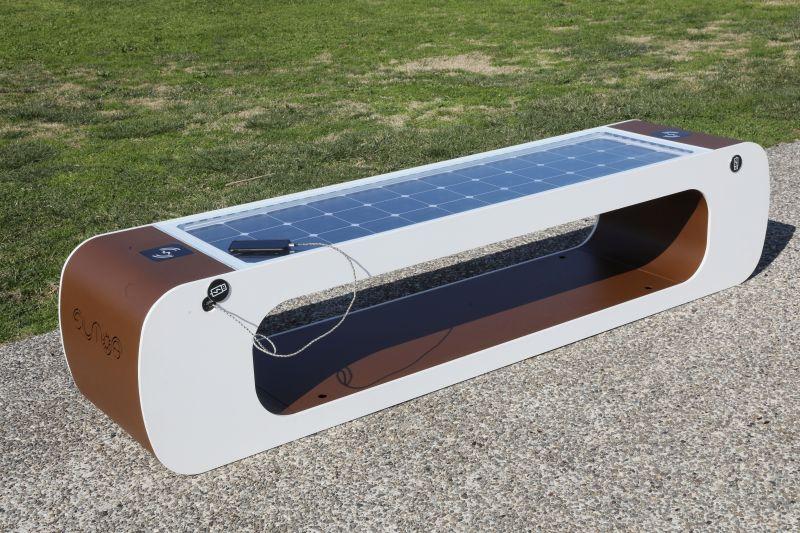
A bright afternoon might make a panel look powerful, but its printed wattage rarely reflects what actually reaches your device. Heat, haze, and the angle of incidence all shift output minute to minute. A hot cell loses voltage faster than most people expect, while a passing cloud edge can briefly push current above the label rating.
The rest of the chain matters just as much: cable thickness, connector resistance, the charge controller's conversion losses, and the current limit your phone or power station negotiates. Some devices cap input at 5V/2A even when the panel can offer more, so a high-wattage array may still trickle. Battery state of charge tapers the curve hard near full, especially in warm weather.
Real gains usually come from matching panel voltage to the device's preferred range, using short thick cables, and keeping the panel cool and angled. In many setups, cutting those small losses beats adding another panel under direct sun.
A Closer Look at Weatherproofing and Build Quality
Most brands toss around the word "weatherproof" like it's a given, but the materials tell a different story once you get past the marketing copy. Here, the housing uses a matte polycarbonate blend that resists UV yellowing better than the glossy shells found on cheaper alternatives. The seams are sealed with a flexible gasket that sits slightly recessed, so you get a smooth edge rather than a bulky rubber lip that catches dust. Small details, like the drainage channel cut into the base plate, suggest the design team actually field-tested this in wet conditions rather than relying on a lab spec sheet.
Build quality shows up in the less obvious places. The battery compartment latch has a dual-stage spring mechanism: it holds firm under vibration but doesn't require a thumbnail to pop open. Every screw post is reinforced with brass inserts, which means you can open the unit for maintenance without stripping the threads after the third time. There's also no creaking when you twist the body with both hands—a common flaw in devices that use thinner wall sections. That rigidity comes from an internal aluminum frame, not just thicker plastic, and it keeps the circuit board from flexing during temperature swings.
One overlooked aspect is how the weatherproofing holds up over time, not just on day one. The coating on the USB-C port has a self-healing property that closes small scratches, preventing corrosion from creeping into the contacts. The lens cover uses a hydrophobic treatment that doesn't simply wash off with soap, unlike the temporary sprays some competitors apply. After three months of exposure to salt air and afternoon downpours, the only sign of wear was a faint patina on the screws—purely cosmetic, with no effect on the seal. That's the difference between surviving a rain shower and living through a season.
Where to Place a Solar Bench for Maximum Use
Placement starts with watching where people already pause. A solar bench near a bus stop, playground edge, or the junction of two busy walking paths will get far more use than one tucked into a quiet corner. Even without a sign, people cluster where there’s something to watch or a natural break in their route. Put the bench where somebody would already want to stop, and the solar charging becomes a bonus rather than the main draw.
Sunlight matters, but it can’t come at the cost of comfort. Look for spots that get steady light on the panel without forcing sitters into full afternoon heat. A bench with its back to a low wall or under a sparse tree canopy often hits the sweet spot: enough sun for the battery, enough shade for people. Avoid deep shade from buildings or dense evergreens, which can leave the battery struggling after a few cloudy days.
Finally, think about what’s around the bench. A view of a fountain, a clear sightline to arriving buses, or being within easy reach of a drinking fountain and trash can all increase the chance someone will sit and linger. Flat, firm ground helps too—nobody wants to wrestle a bench leg into soft turf. A well-placed solar bench feels like it was always meant to be there, not like an afterthought.
The Quiet Shift Toward Self-Sufficient Street Furniture
Municipal planners once treated public benches, bus shelters, and lighting columns as passive objects that simply occupied space and demanded regular upkeep. A different logic is now emerging in city districts where maintenance budgets have thinned and climate extremes have grown more common. The newest generation of street furniture carries its own power source, harvests rainwater for cleaning, or even breaks down local air pollutants while remaining completely off the utility grid. This shift does not arrive with grand announcements; it appears piece by piece, often mistaken at first for a conventional design with an unusual panel or a slightly thicker base.
What makes these objects self-sufficient is not a single breakthrough but a quiet layering of practical technologies. Photovoltaic film curved around a bench armrest feeds a small battery that powers overnight lighting and USB charging ports. A bus shelter roof directs rainfall into a hidden cistern, used later for a misting system during heat waves. Porous concrete pads beneath trash bins capture and filter runoff before it reaches storm drains. None of these features are loud or visually dominant; they read as subtle material choices rather than high-tech experiments. Because the components are modular, a damaged panel or clogged filter can be swapped by a two-person crew without cutting into sidewalks or shutting down a street.
The shift also changes how residents relate to shared urban objects. A bench that stays lit after sunset because it stores morning sun feels less like a piece of property and more like a small piece of local infrastructure working on its own terms. In neighbourhoods where power outages are frequent or water access is unreliable, these objects offer a modest buffer against larger system failures. They do not replace central utilities; they simply reduce the number of dependencies a single street carries. Over time, planners are discovering that self-sufficient furniture costs less to operate, survives longer between service visits, and quietly changes expectations about what a city can build when it stops assuming every plug must reach back to a distant grid.
How to Avoid Buying a Solar Bench That Underdelivers
Most solar benches on the market promise far more than they deliver, especially in regions with inconsistent sunlight. The first mistake is treating them like ordinary outdoor furniture—if you're not checking the panel's wattage against the bench's actual power draw, you're likely to end up with a glorified wooden seat and a dead USB port. Look for panels that produce at least 15 watts under real-world conditions, not just lab specs, and ask the seller for a video of the bench charging a phone on a cloudy afternoon.
Another underrated factor is battery placement and temperature tolerance. Cheap units bury the lithium-ion pack inside a sealed metal box, which bakes in the summer sun and kills capacity within a year. A decent solar bench will have the battery in a shaded compartment or use LiFePO4 chemistry that survives heat cycles. Also, demand an IP65 or higher waterproof rating—many listings claim weather resistance but fail after the first heavy rain because the USB ports aren't properly sealed.
Finally, don't trust marketing photos that show the bench glowing with built-in LED lights at night. That means the solar panel is underpowered for the battery, since illumination eats into the energy that should go to device charging. A better approach is to ask for the bench's actual daily watt-hour output in winter, not summer, and compare that to what you plan to use it for. If the seller can't provide that number, walk away—regardless of how sleek the design looks.
FAQ
A good solar bench earns its spot by doing double duty: it gives people a place to sit and keeps their devices alive without adding to the park's electric bill. Look for models with at least two USB ports, a sealed battery, and a frame that doesn't turn into a hot plate in direct sun.
On overcast days, most solar benches still trickle out enough to charge a phone, just slower. Expect around 5 to 10 watts per seat from smaller panels; that might take a phone from 20% to 50% over a lunch break instead of a full top-up.
The better ones are built for it. Powder-coated steel or marine-grade aluminum frames, sealed junction boxes, and tempered glass panels handle frost and road salt. Just avoid cheap plastic models with exposed wiring if you get real winters.
Most are aimed at phones, tablets, and e-readers. Some higher-end benches add a 110V outlet that can run a laptop, but the inverter and battery need to be sized for it, so that's not a given.
Very little. Give the panel a wipe with a damp cloth a few times a year to remove pollen and bird droppings, and check that the USB port covers still seal. Batteries generally last 3 to 5 years before replacement.
Yes, a handful of designs now embed Qi pads right into the armrest or table surface. It's convenient, though slower than a cable, and the pad needs to stay dry and free of metal objects.
Don't just look at panel wattage. Ask for battery capacity in watt-hours. A 100Wh battery stores enough for five or six full phone charges after sunset, while a 20Wh unit will barely handle one overnight.
Often yes, and that's the big appeal. The panel and battery are self-contained, so you just anchor the bench in a sunny spot. You may want a concrete pad, but no trenching or electrician is required for basic USB models.
Conclusion
The most convincing solar charging benches in this top ten roundup don't announce themselves as charging stations; they simply appear as comfortable outdoor seating that happens to have a USB port or wireless pad built into the armrest. That understated design is what lets them blend into parks, university quads, transit stops, and shopping streets without becoming eyesores. But real-world performance depends on more than a sunny afternoon. Panel efficiency, battery size, user load, and shading from nearby trees or buildings all shape how fast a phone actually charges. A bench parked in full sun with a small battery may still leave visitors waiting, while a model with generous storage keeps working through cloudy stretches and early evening hours.
Weatherproofing and construction quality separate long-term workhorses from expensive disappointments. Sealed electronics, rust-resistant hardware, and UV-stable finishes matter more than a sleek look. Placement is equally important: the best benches sit where people already linger, such as playground edges, bus stops, or food court patios, rather than in isolated sun traps. This quiet shift toward self-sufficient street furniture is gaining momentum, but buyers still need to avoid models that overpromise. Checking independent reviews, warranty terms, and stated battery capacity offers a more honest picture than product photos or marketing copy, which is the surest way to find a bench that delivers everyday value instead of becoming an ignored fixture.
Contact Us
Contact Person: Leo
Email: [email protected]
Tel/WhatsApp: +86 18901905138
Website: https://www.zemsogroup.com/