
Smart Street Furniture Suppliers Are Redefining Connected Public Spaces
2026-11-27
The hum of the city is changing. Once passive benches and flickering lamps are now waking up, sensing their surroundings and talking back to the networks that run our streets. At the center of this quiet revolution, zemso and a handful of forward-thinking suppliers are proving that the next great urban upgrade won't happen above our heads—it will be bolted to the sidewalk. This shift raises a simple question: what happens when the furniture we ignore every day becomes the smartest object on the block?
The Sidewalk Hardware You Never Notice Is Doing the Most Work
A city block is full of muted metal and concrete pieces that rarely earn a second glance. The ridged plate around a tree, the small round cap set into the pavement, the joint that lets a sidewalk expand without buckling—these are the parts actually holding the street together. They absorb the weight of delivery carts, strollers, wheelchair wheels, and thousands of footsteps without ever announcing themselves. The work is constant, but the presence is easy to miss.
When rain pours through a grate or a utility cover stays flush after years of traffic, nobody thinks about the engineering that made it dull enough to ignore. That is exactly the point. Good sidewalk hardware does not ask for attention; it simply prevents a bad fall, a flooded curb, or a cracked edge from becoming someone's daily obstacle. Most of its successes are invisible because nothing dramatic happens.
We tend to notice this hardware only when it fails—a loose cover clanks under a tire, a missing bolt leaves a tripping hazard, a sunken collar turns a dry morning into a puddle. The quiet reliability of these small parts shapes how an entire streetscape feels. They do not get names or plaques, but they keep the public walkway from becoming a series of small disasters.
Benches Built to Listen Without Looking Like Cameras
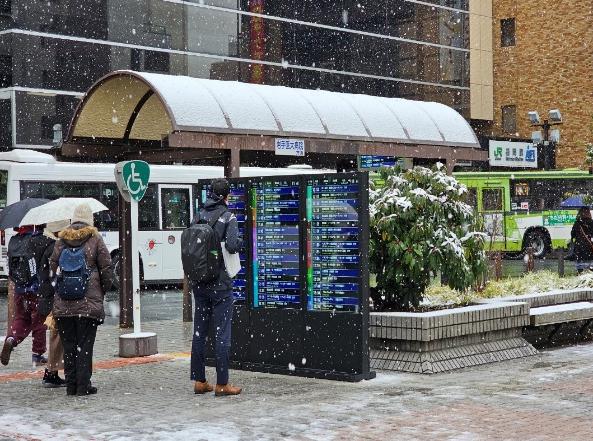
A bench like this earns trust by looking almost unfinished. The backrest is slightly too thick, the seam along the spine a touch wider than it needs to be. Nobody notices. What they notice is the shade, the place to sit, the relief of putting a bag down. While they settle in, a thin acoustic membrane behind that seam picks up the rhythm of conversation without needing a visible lens or hole. There is no dark glass, no tilting head, no red recording dot. Just the kind of weathered surface that collects heat in the afternoon and lets voices pass through.
Most of the real work happens in the details people ignore on purpose. The drainage slots near the feet double as air intakes for the electronics. The armrests are shaped more for posture than for resting a coffee cup, since a spilled drink could damage the microphones hidden inside. Even the mounting bolts are placed where a sitter’s hands naturally fall, not to capture fingerprints but to keep the hardware grounded and quiet. The result is street furniture that behaves like a listener, not a watcher. It invites the exact behavior that a camera discourages, and that invitation is what makes the recording feel less like surveillance and more like something the city simply heard while waiting.
Streetlights Now Carry More Than Illumination
Most people still think of a streetlight as a bulb on a stick, but the pole beneath it has quietly become one of the most useful pieces of public infrastructure. Cities no longer judge a light only by how much of the road it reveals.
Fix an old sodium fixture and you may find a small environmental sensor reading particulate matter, a radio that links water meters, or a camera that helps emergency crews spot a crash before a phone call comes in. In some districts, the base of the pole hides a charger for delivery bikes, while the arm above carries an antenna that fills a dead zone for a few surrounding blocks.
Because the hardware is often painted the same dull gray as the pole, none of this announces itself. Residents simply get a corner that feels a little safer, a bus stop with a working connection, and an alert system that knows when the street floods. The light remains, but it is now the least ambitious part of the fixture.
Why Suppliers Are Talking About Maintenance Before Launch
Maintenance used to be an afterthought, something bolted on once a machine was already in the field. That line is blurring fast. More suppliers now bring up serviceability during design reviews, not because clients asked for it, but because they have seen the cost of ignoring it. A component that cannot be reached without dismantling half the frame turns a thirty-minute fix into a two-day ordeal. And when that happens on a launch timeline, the delay does not stay in engineering; it ripples through commissioning, training, and the first production run.
The reason for the shift is simple: early conversations about access panels, sensor placement, and wear-part replacement change how a line performs in its first ninety days. If a bearing is hidden behind a welded cover, the team learns that lesson during a midnight breakdown. If it is behind a bolted hatch with a spare listed in the BOM, the same failure is a scheduled stop. Suppliers are pushing this because their reputations now live or die on that difference. A launch that stumbles due to poor maintainability reflects on everyone, but the supplier is the one who gets the call at 2 a.m.
Modular Designs That Let Cities Avoid the Pilot Graveyard
Many city pilots die because they are built as one-off experiments: custom hardware, proprietary dashboards, and wiring that only one contractor understands. Modular design flips that pattern. When a smart bench or traffic sensor is assembled from standard components with documented connections, a single failed part no longer drags the whole project into a storage room. The city can swap a sensor module, move a solar panel to another site, or reuse the same mounting bracket for a different vendor's device. That kind of reuse is what keeps small trials from ending up as abandoned prototypes.
Modularity also changes the shape of procurement. Instead of asking a vendor for a complete, sealed product, cities can buy separate layers: the physical mount, the power module, the communications unit, and the sensing payload. If the pilot succeeds, the city scales only the layers it needs. If one part underperforms, the contract can be reissued for that component without restarting the entire project. This lowers the stakes and makes iteration feel routine rather than like a public failure.
The long-term benefit is memory. A modular pilot leaves behind reusable pieces, drawings, and connector standards that the next team can pick up. Even a project that technically fails can still donate its wiring harnesses or pole attachments to a future deployment. That turns the pilot graveyard into a parts library, where cities stop burying ideas and start salvaging what still works.
Where Public Space Data Feels Like a Streetscape, Not Surveillance
A sensor tucked under a bench records how many people pause there, not who they are. Along the same path, a small counter embedded in the cobblestones tracks footfall, while a lamppost unit samples air quality and noise. None of these devices ask for a name, a face, or a phone signal. They behave more like street furniture than security infrastructure: they register the rhythm of the block without turning passersby into suspects.
The difference comes down to posture. A surveillance camera usually waits above eye level, fixed and deliberate, often accompanied by signs that announce its authority. Data collection in a streetscape works best when it sits lower and quieter, close to the textures people already ignore: the gap under a planter, the edge of a curb, the underside of a bus shelter. You notice the shifting light or the crowd near a food stall long before you notice the equipment. The equipment, in turn, only cares about volume, movement, and change over time.
That restraint keeps a public space social. When sensors gather patterns rather than identities, they can tell a city that a weekend market raises the ambient sound by a few decibels, that joggers thin out after dusk, or that a sudden rain empties the benches in minutes. The result reads less like a monitoring file and more like an annotated map of ordinary life, useful to planners but unremarkable to the people moving through it.
FAQ
Benches with charging ports and sensors, bus shelters with live arrival displays, lighting that adjusts to foot traffic, waste bins that signal when they need emptying, and kiosks that share local information. The common thread is that each piece collects or responds to data instead of just sitting there.
Traditional makers often treat a bench or a bollard as a one-off purchase. Specialist suppliers tend to offer modular designs, software support, and maintenance agreements that keep the hardware useful beyond installation day. Cities want partners who understand connectivity, not just fabrication.
It shifts the space from passive to responsive. Lighting can brighten when someone lingers late at night, a bench can show a neighborhood map or let a phone charge, and a shelter can tell you whether the next bus is delayed. The environment starts to answer needs in real time instead of waiting for a maintenance crew.
Sensors record movement, occupancy, air quality, noise, and usage patterns. Planners then adjust layouts, cleaning schedules, and even event programming based on how people actually use the space rather than assumptions. Good suppliers make that data accessible and useful without drowning a city in dashboards.
Yes, and they are usually addressed through edge processing, anonymization, and clear signage. Many deployments avoid facial recognition and keep raw footage off public networks. The more careful suppliers bake privacy into the hardware itself, so the furniture doesn't become an open surveillance tool.
Budget cycles, coordination between departments, vandalism, and the need for reliable power and connectivity all create friction. Some cities also face procurement rules that make it hard to buy a service with ongoing software updates instead of a physical product. Successful projects tend to start small and prove value before scaling.
Expect more interoperability between different vendors, greater use of renewable energy and recycled materials, and quieter integration into existing streetscapes. The focus will move from novelty features to dependable, low-maintenance infrastructure that blends into daily life.
Conclusion
The unassuming panels and posts along a sidewalk are quietly taking on responsibilities that most pedestrians never register. Suppliers are embedding environmental sensors, footfall counters, and connectivity nodes into drainage grates, bollards, and bus shelters, turning ordinary street hardware into the connective tissue of a smart district. A bench no longer just offers a place to sit; it can gauge usage patterns and local air quality through discreet modules that avoid the unsettling look of a camera. Streetlights, already spaced evenly through urban blocks, now double as small communication hubs, carrying Wi-Fi backhaul, real-time lighting adjustments, and even electric vehicle charging relays without altering the familiar silhouette of the street.
What separates durable deployments from short-lived pilots is the supplier’s focus on maintenance before the first unit ships. Modular housings let cities swap out a failing sensor or upgrade a radio without replacing the entire bench or pole, which helps public works teams avoid the so-called pilot graveyard. This practical mindset extends to how data is presented: instead of dashboards that feel like a security control room, residents and planners see layered street views showing noise, shade, and foot traffic as part of the streetscape. Because the information arrives in a visual language closer to urban design than surveillance, adoption feels less invasive. In that shift, connected public space becomes less about technology on display and more about infrastructure that simply works.
Contact Us
Contact Person: Leo
Email: [email protected]
Tel/WhatsApp: +86 18901905138
Website: https://www.zemsogroup.com/