

Rotary Concrete Reclaimer for China Concrete Batching Plants: Boosting Efficiency and Sustainability
2026-08-31
Every cubic meter of concrete wasted is money down the drain—and a missed step toward greener production. For China’s fast-paced batching plants, the rotary concrete reclaimer has become a quiet game-changer. It spins, separates, and recovers aggregates and slurry that would otherwise end up as costly sludge. But not all reclaimers are built for the demands of high-output Chinese sites. That’s where Sinou steps in—engineering rotary reclaimers that turn cleanup into a competitive advantage. In this post, we’ll explore how the right reclaimer boosts both efficiency and sustainability, and why plant managers are making the switch.
Why China's Concrete Plants Are Rethinking Slurry Disposal
Concrete plants across China generate thousands of liters of slurry every day from washing mixer trucks and cleaning production equipment. For years, the standard practice was to pump this waste into settling ponds, let the solids sink, and then haul the leftover sludge to landfills. But tightening environmental rules and rising disposal costs have forced plant managers to question that approach. Landfill space near urban construction hubs is shrinking, and local authorities now frequently inspect runoff for pH levels and suspended solids. A single violation can halt production for days, making the old “dump and forget” model far too risky.
The shift toward rethinking slurry disposal isn’t driven by idealism alone—it’s about recovering materials that were previously thrown away. Modern filter presses and cyclone separators can squeeze water out of slurry, returning clean water to the batching process and leaving behind a dry cake of fine sand and cement particles. That cake, once considered waste, can be blended back into low-strength concrete or used as road base. Some plants in Jiangsu and Guangdong have already cut their fresh water intake by 30% and eliminated off-site sludge hauling entirely. The payback period on a mid-sized dewatering system often lands under two years, which makes the investment easier for owners to justify.
What’s really pushing the change, though, is the way slurry handling now affects a plant’s operating license and customer relationships. Large construction firms increasingly ask suppliers for environmental compliance records before signing contracts. A concrete plant that still leaves slurry ponds open to rain and overflow looks like a liability. In contrast, a closed-loop system with real-time monitoring of water recycling rates becomes a selling point. Engineers on the ground report that the hardest part isn’t the equipment—it’s retraining workers who are used to hosing down floors without thinking about where the water goes. Once that habit changes, the technical side falls into place quickly.
The Rotating Drum That Turns Wet Waste Back into Usable Material
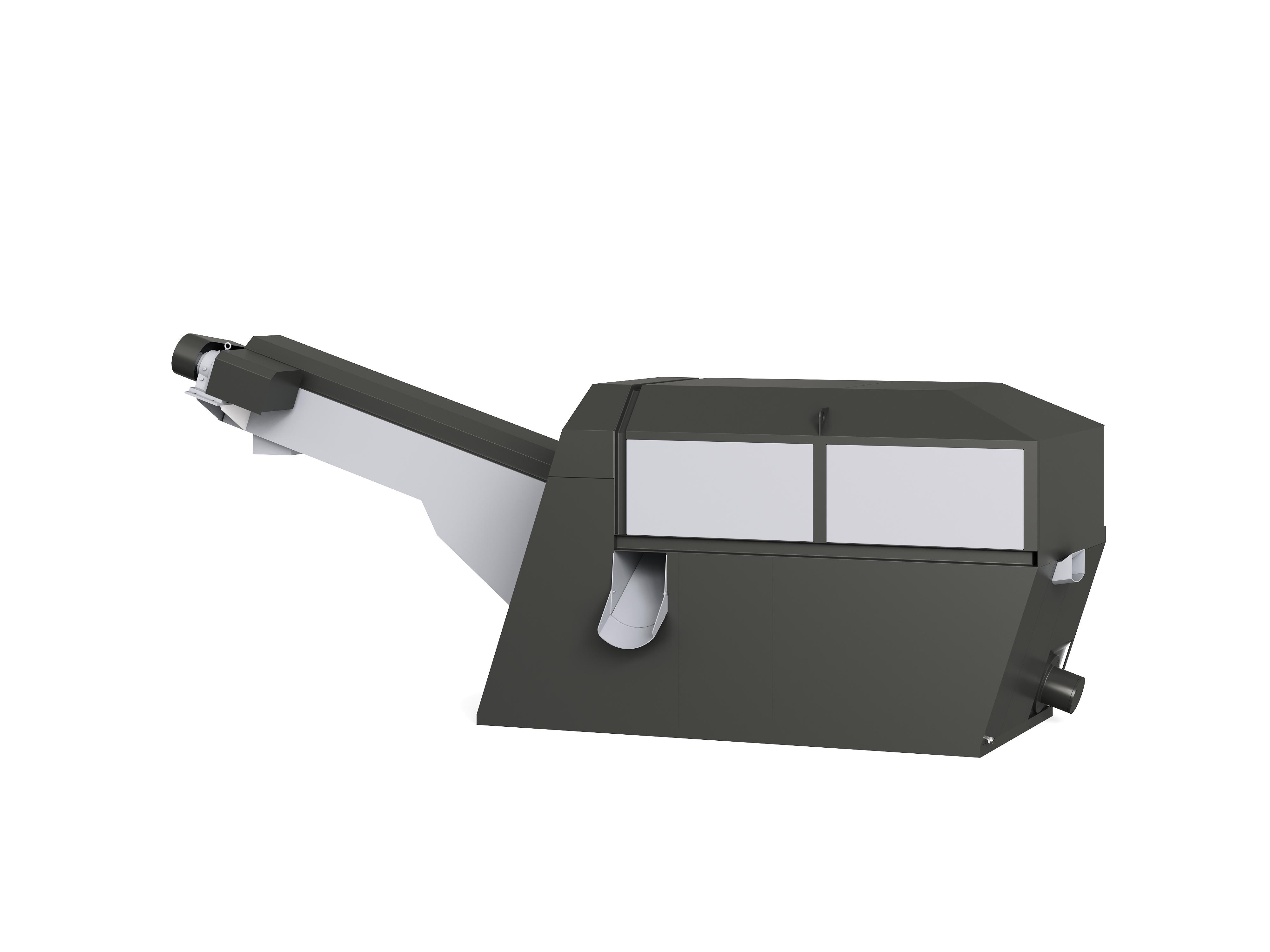
Wet waste is notoriously difficult to handle — landfilling it creates leachate, while incineration demands a huge energy input just to drive off the water first. The rotating drum sidesteps both problems by gently tumbling the material inside a slowly turning cylinder. As the drum revolves, the wet mass is repeatedly lifted and dropped, constantly exposing fresh surfaces to airflow. Depending on the feedstock, the drum may be kept at a modest temperature either by external heating or by capturing the heat released from microbial activity within the waste itself. Within hours to a few days, what was once sticky, odorous sludge becomes dry, crumbly particles that can be stored or transported without mess.
The real cleverness lies in the drum's internal design. It is usually mounted at a slight incline, so waste enters at the higher end and gradually works its way toward the outlet with each rotation. Internal lifters or spiral flights prevent the material from balling up and ensure that every portion gets equal exposure to heat and air. For high-fiber inputs like kitchen scraps or yard trimmings, operators often mix in a small amount of dry bulking agent to stop the wet mass from sticking to the walls. By the time the material exits, its volume can shrink by more than half, and its moisture content drops below 15% — ideal for pelletizing or direct use as a soil amendment.
Compared to static composting or open-air drying beds, this approach compresses weeks or even months of treatment into just a few days. The enclosed drum also keeps odors and pests under control, which matters a great deal at urban processing sites. It accepts a wide range of feedstocks — sewage sludge, food processing residues, source-separated organics — as long as the moisture level is within a workable range. Some farms even pair the drum with a small biogas system, using the dried output as livestock bedding or biomass fuel. In that sense, the rotating drum does more than just dry wet waste; it closes the loop on materials that would otherwise be lost.
The Water Savings Your Batching Plant Is Probably Missing
Most batch plant operators track water usage on the main mixing line, but the real waste often hides in plain sight: washdown hoses left running between trucks, poorly adjusted spray bars on aggregate belts, and holding ponds that overflow after a heavy rain. These small leaks add up fast, yet they rarely show up on a monthly utility bill because the water is drawn from a well or recycled source that isn't metered per process.
Take a close look at your slump rack area. A single driver rinsing a chute for an extra thirty seconds per load can push 200 gallons a day down the drain. Multiply that by a dozen trucks, and you're losing enough water to batch several extra yards of concrete every week. The fix isn't high-tech—a simple foot pedal or spring-loaded shutoff valve on each hose keeps water flowing only when someone is actively using it.
Another overlooked spot is the reclaiming system. Many plants assume their settling ponds and filter presses are working at full efficiency, but fine cement particles gradually clog the return lines, forcing the system to dump excess water rather than recycle it. A quarterly backflush and a check on weir plate heights can recover hundreds of gallons per shift without any capital spending.
Payback Math That Makes Plant Owners Rethink Their Setup
Most plant owners don’t actually run the numbers until a major breakdown forces their hand. But when you sit down with a simple spreadsheet—not the fancy lifecycle software, just real-world energy bills, maintenance logs, and downtime records—the pattern jumps out fast. A legacy system that “still works fine” often bleeds 15–20% more per operating hour than a modern retrofit once you factor in unplanned stoppages, overtime labor, and parts chasing. The payback on a well-scoped upgrade frequently lands under two years, which flips the conversation from “why spend now?” to “why did we wait this long?”
A practical example: one food processing plant we reviewed ran two aging air compressors that cost roughly $38,000 a year in electricity and emergency repairs. Swapping to a single variable-speed unit with heat recovery cut that to $22,000, but the real kicker was avoided downtime—three unplanned stops per quarter, each costing about $4,500 in lost throughput. That’s another $54,000 a year the old math never showed on a capital request form. Total captured savings: $70,000 against a $112,000 installed price—payback in nineteen months, not the six years the original proposal assumed.
The trap is treating payback as a fixed number instead of a decision trigger. Smart owners recalculate it every time energy rates shift, labor costs climb, or a critical component reaches end-of-life. They also stop comparing “repair versus replace” and start comparing “replace now versus replace later under rushed conditions.” That second framing usually reveals the hidden premium of waiting: expedited shipping, weekend install crews, and production lost at the worst possible moment. None of that shows up in a standard ROI template, but it’s exactly what makes the payback math compelling enough to rethink an entire setup.
Meeting Discharge Limits Without Halting a Single Batch
Achieving permit compliance at the final outfall used to mean slowing production or diverting problem streams into costly storage. At this facility, the operations team shifted to a different approach: live sensor feedback on total suspended solids, pH, and residual metals now drives automated chemical dosing adjustments every few minutes. When a spike is detected, a small side-stream polishing loop kicks in rather than shutting down the main process. The result is that discharge stays within the mandated ceiling even as upstream batch chemistry swings from one product to the next.
The real safeguard, though, is the buffer lagoon that doubles as a balancing reactor. Operators feed high-strength rinse water into it at a controlled rate, letting retention time do the heavy lifting before final discharge. A simple predictive model—built from historical batch logs—flags which production runs are likely to stress the system, so the team can pre-adjust polymer feed or route a portion of flow through the activated carbon beds. No batch has been halted for compliance reasons in over eighteen months.
Retiring the Settling Pond in Favor of Continuous Reclaiming
The traditional settling pond has long been a staple in mining and industrial water treatment, but its days are numbered. Static, space-hungry, and prone to sludge buildup, it demands periodic shutdowns for dredging and disposal. Continuous reclaiming flips this model on its head, pulling solids out of the water stream in real time and returning clean water to the process without interruption. The result is a smaller footprint, lower labor costs, and a system that adapts to fluctuating loads instead of buckling under them.
Shifting away from the pond isn't just a matter of swapping one piece of equipment for another; it changes how operators think about water management. Instead of treating clarification as a batch job, continuous reclaiming treats it as an integrated part of the circuit. Fine particles that would otherwise settle at the bottom of a pond are captured by hydrocyclones, thickeners, or specialized clarifiers and sent back to the process or to dewatering. This keeps the water chemistry more stable and reduces the risk of accidental overflow or seepage into surrounding soil.
Retrofitting an existing operation may sound daunting, but the payoff is immediate. With no pond to clean, maintenance windows shrink, and the site avoids the regulatory headaches tied to large open water bodies. Continuous reclaiming also opens the door to higher recoveries, since valuable minerals that once ended up in pond sludge can now be recovered before they're lost. For operations squeezed by space constraints, water scarcity, or environmental scrutiny, retiring the settling pond isn't just an upgrade—it's the only sensible path forward.
FAQ
A rotary concrete reclaimer is a drum-based separation unit that uses rotation and water to wash returned concrete, separating aggregates and sand from cement slurry. Unlike basic settling ponds or manual washing, it recovers reusable materials automatically and keeps the water in a closed loop, which matters a lot for busy batching plants in China where space and discharge limits are tight.
It speeds up truck turnaround because drivers can discharge returned concrete directly into the reclaimer instead of waiting for manual cleaning. The machine continuously separates material, so plants can process multiple trucks in a short window. It also cuts labor for yard cleaning and reduces the mess around the washout area.
Yes, in most cases the payback comes from three areas: recovered aggregate and sand reduce raw material purchases, recycled water lowers fresh water consumption, and less waste sent to landfill cuts disposal fees. Many plants see a return within 12 to 24 months, depending on concrete return volumes and local material costs.
It directly supports zero-discharge goals by turning leftover concrete into reusable components. The cement slurry water can be reused in batching after proper treatment, which reduces both fresh water demand and alkaline runoff. For plants in regions with strict environmental inspections, this equipment helps avoid fines and keeps operations running.
Most units are designed as compact add-ons that fit near the truck washout lane. They need a sloped collection pit, power supply, and water line, but major civil works are usually not required. Installation can often be completed during a planned maintenance break without halting production for long.
Routine checks include greasing bearings, inspecting the drum screen for wear, clearing any buildup on the spray nozzles, and monitoring the slurry pump. With a simple daily and weekly checklist, the machine can run for years without major overhauls. Using wear-resistant liners helps extend service intervals.
Look for a drum size matched to your daily returned concrete volume, a robust drive system that handles variable loads, and easy access to internal screens. Also check whether the control panel can integrate with the plant's existing batching software, so recycled water and aggregates are tracked automatically.
The rotating drum and adjustable water flow can process a range of mixes, but fibrous concrete may require a larger screen opening or an additional fiber separation step. High-slump mixes generally wash out faster because they break down more easily, while stiff mixes may need slightly longer residence time.
Conclusion
Across China, concrete batching plants have long relied on settling ponds to handle the slurry left over from truck washout and mixer cleaning. But rising water costs, tighter environmental enforcement, and the sheer amount of space those ponds consume are pushing plant managers to look for a better way. A rotary concrete reclaimer changes the equation by using a rotating drum to scrub and separate wet waste on the spot. Instead of letting fines settle out over days, the drum washes the material continuously, returning clean aggregate and cement-rich slurry water straight back into the production cycle. That means less fresh water pulled from the mains and far less sludge accumulating on site.
The financial case is just as compelling as the operational one. Plants that switch to continuous reclaiming typically see payback through lower water bills, reduced aggregate purchases, and the elimination of regular pond dredging and waste hauling. At the same time, the system keeps pH and suspended solids within discharge limits without forcing a single batch to stop, which is critical when regulators inspect or when production schedules are tight. Over time, the settling pond becomes obsolete—replaced by a compact, automated loop that turns yesterday’s waste into today’s raw material. For Chinese batching plants facing both cost pressure and sustainability targets, that is a rare win on both fronts.
Contact Us
Contact Person: HaiYan
Email: [email protected]
Tel/WhatsApp: +86 18957325588
Website: https://www.senyoubeton.com/