

Reliable Steel Pallet Import Suppliers for Efficient Shipping Solutions
2026-07-26
In the world of logistics, the right pallet can make or break your shipping efficiency. Whether you're moving heavy machinery or delicate electronics, steel pallets offer unmatched durability and load-bearing capacity. But finding a reliable supplier isn't always straightforward—especially when you need consistent quality and on-time delivery. That's where Lanyuda comes in. With years of expertise and a global network, they've become a go-to source for businesses that refuse to compromise on their supply chain. In this post, we'll dive into what sets top steel pallet import suppliers apart and how choosing the right partner can transform your shipping operations.
Why Steel Pallets Outperform Traditional Wood in Global Shipping
Steel pallets bring a level of durability that wood simply cannot match, especially in the demanding environment of global shipping. They resist impact damage, won't splinter, and can carry heavier loads without bowing or breaking. This translates into fewer cargo claims and less downtime from pallet failure when shipments travel across oceans and through multiple handling stages.
Unlike wood, steel pallets are immune to mold, rot, and pest infestations, which makes them instantly compliant with international phytosanitary regulations like ISPM 15. You avoid the cost and delay of heat treatments or fumigation certificates, streamlining cross-border logistics and preventing rejected shipments at customs checkpoints around the world.
Their consistent dimensions and integral strength mean steel pallets can be reused hundreds of times, lowering the total cost per shipment over the long run. They’re also fully recyclable at end of life, aligning with sustainability goals without sacrificing performance. In returnable-pool systems, steel’s longevity and easy-to-clean surfaces give it a clear advantage over wood, which degrades rapidly after repeated cycles.
Key Certifications That Signal a Trustworthy Supplier
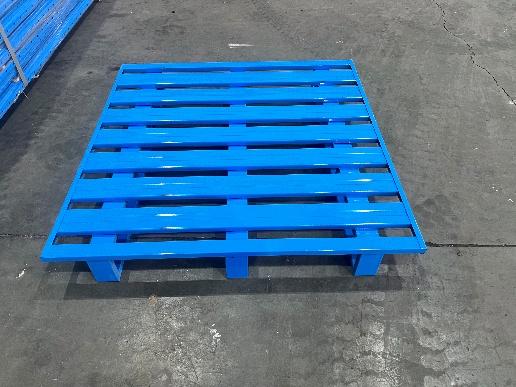
A supplier’s commitment to quality often becomes apparent through the certifications they hold. Look beyond the basic ISO 9001—while it’s a solid baseline, it doesn’t tell the whole story. Industry-specific credentials like IATF 16949 for automotive or AS9100 for aerospace demonstrate a deeper understanding of sector challenges and regulatory demands. These aren’t just badges on a website; they reflect a culture where processes are scrutinized and refined continuously.
Environmental and social responsibility certifications add another layer of trust. ISO 14001 signals a systematic approach to minimizing ecological impact, while SA8000 or BSCI membership shows genuine investment in worker welfare. In an era of heightened scrutiny, a supplier who voluntarily submits to audits on these fronts is less likely to cut corners in ways that could jeopardize your supply chain. It’s about partnering with a company whose values align with your own, not just one that meets minimum compliance.
Product-specific marks like CE, UL, or FDA approval are non-negotiable for regulated markets, but the best suppliers go further. Check whether their testing labs are ISO 17025 accredited—this ensures the results on their spec sheets are more than just marketing. Also, watch for certifications that reflect resilience, such as ISO 22301 for business continuity. A trustworthy supplier doesn’t just promise quality today; they prove they can maintain it through disruptions, safeguarding your operations when it matters most.
Hidden Costs to Watch for When Importing Steel Pallets
What often gets overlooked are the incidental charges that pile up long before the pallets reach your warehouse. Customs brokers might quote a flat fee, but then add surcharges for document processing, bond fees, or even “handling” in bonded zones. Carriers, too, can tag on extra costs for things like chassis splits or weight discrepancies that only surface once the container is already at the port. It’s those vague line items on the invoice that catch first-time importers off guard.
Then there’s the matter of detention and demurrage—two words that seem interchangeable but hit your wallet in very different ways. Demurrage starts the moment the container sits beyond its free time at the terminal; detention kicks in when you hold the carrier’s container too long after pickup. Both ramp up fast, especially if customs holds the shipment for an exam or if your logistics team misjudges lead times. A five-day delay can morph into a four-figure penalty that wasn’t part of anyone’s budget forecast.
Don’t underestimate how much can go wrong with the product itself. If the steel pallets arrive with rust, bent runners, or non-compliant coatings, you might be forced into costly rework or even return freight. Some suppliers cut corners on protective wrapping to save a few dollars per unit, leaving you with a shipment that deteriorates in transit. Factor in the potential for quality disputes, legal fees, and the sheer time lost in back-and-forth negotiations—these are the hidden costs that often eclipse the per-unit price you negotiated so hard to get.
How Top Suppliers Customize Designs for Diverse Cargo
Every shipment tells a story, and the best suppliers know that a one-size-fits-all approach rarely works when cargo varies from fragile glassware to heavy machinery. They start by digging into the specifics—type of goods, transit duration, climate conditions, and handling points—before sketching a single design. Instead of defaulting to standard crates, they might prototype ventilated containers for perishables or shock-absorbent cradles for electronics, using real-world testing to confirm their choices.
Flexibility sits at the core of this process. Suppliers often maintain a library of modular components—adjustable braces, layered cushioning, moisture barriers—that can be combined in fresh ways for each project. A shipment of vintage furniture, for example, might get a custom steel frame with foam cutouts mapped to every curved leg, while a batch of industrial pumps receives bolted steel bases and corrosion-inhibiting wraps. The goal is never just containment, but preserving the exact condition of the cargo from origin to destination.
What truly distinguishes leading suppliers is their habit of learning from the field. They collect feedback from warehouse crews and drivers, track damage trends, and refine designs proactively. If a particular container style shows scuffing at the corners after six trips, they reinforce that area without being asked. This constant tweaking keeps their solutions one step ahead of the diverse, ever-changing demands of global freight.
Streamlining Logistics from Factory to Final Destination
Moving goods from a production line to a customer's doorstep involves a series of carefully orchestrated steps that often go unnoticed until something goes wrong. Every delay, miscommunication, or mishandling along the way chips away at profitability and customer trust. To streamline this journey, companies are rethinking traditional supply chain models, integrating real-time data from every touchpoint—from warehouse sensors to delivery vehicles—so they can anticipate disruptions before they cascade into costly problems. The goal isn't just speed; it's creating a seamless flow where inventory levels adjust dynamically, routes optimize themselves based on traffic and weather, and each handoff between modes of transport happens without friction.
A streamlined operation requires more than technology—it demands a mindset shift toward treating logistics as a competitive advantage rather than a cost center. This means breaking down silos between procurement, warehousing, and last-mile delivery so that everyone works from the same playbook. For instance, when production schedules align with real-time demand signals and shipping capacity, factories can avoid overproduction while carriers reduce empty miles. Collaborative platforms that let manufacturers, 3PLs, and retailers share forecasts and inventory levels turn what was once a series of disconnected transactions into a synchronized ecosystem. The payoff shows up not just in lower costs, but in the ability to promise—and consistently hit—narrower delivery windows.
Ultimately, the factory-to-final-destination pipeline is only as strong as its weakest link, and that link is often the last mile. Innovations like micro-fulfillment centers tucked into urban areas, dynamic delivery zones, and flexible fleets that mix traditional vans with gig-economy couriers are reshaping how products reach end users. But true streamlining means looking at the entire chain backwards—starting with the customer's expectation and engineering every upstream process, from packaging design to pallet configuration, to support a flawless arrival. Companies that master this don't just move boxes; they build loyalty that outlasts any single transaction.
Real-World Success Stories: Steel Pallets in Action
When a major automotive parts manufacturer replaced worn wooden pallets with galvanized steel pallets across their supply chain, the results were immediate and striking. Within the first quarter, product damage due to pallet collapse during transit dropped by over 40%. The steel pallets’ consistent dimensions also eliminated jamming in their automated storage systems, boosting warehouse throughput by nearly 15%. What surprised the operations team most was how quickly the upfront investment paid for itself through reduced replacement cycles and freight claims.
A cold storage facility grappling with constant splintering and contamination from wooden pallets switched to hygienic, easy-to-clean stainless steel pallets. Not only did they achieve full compliance with food safety audits, but they also cut down on labor hours previously spent repairing broken wood and sanitizing porous surfaces. The facility manager noted that the uniform weight and stackability of steel greatly improved forklift stability, leading to a noticeable drop in workplace incidents.
In the chemical and pharmaceutical sectors, companies dealing with corrosive materials have found a reliable ally in coated steel pallets. One producer of industrial solvents reported eliminating pallet-related leaks and spills entirely after adopting electroplated steel units with spill-containment lips. The durability under chemical exposure far exceeded that of plastic or wood alternatives, allowing them to repurpose the same pallets for multiple closed-loop cycles without degradation, ultimately lowering their total cost per shipment by a wide margin.
FAQ
Check if they have consistent quality control, certifications like ISO 9001, and a track record of on-time deliveries. Also, see if they offer customization for different shipping needs and have good references from other importers.
Steel pallets are more durable, can handle heavier loads without breaking, and are resistant to moisture and pests. They also stack better, last longer, and reduce the risk of damage during transit, which means fewer delays and lower replacement costs over time.
Yes, beyond the unit price you might face freight charges, customs duties, and possible inspection fees. Some suppliers offer DDP terms to simplify this, but always confirm what's included in the quote and ask about any extra charges for packaging or pallet specifications that don't meet ISPM 15 requirements.
While steel pallets are heavier than alternatives, they can still be used for air cargo if the weight is factored into the cost. Some suppliers offer lightweight steel or aluminum hybrid designs specifically for air freight. Always compare the strength-to-weight ratio to see if it fits your shipment’s budget and handling requirements.
Look for ISPM 15 exemption (since steel doesn't need fumigation), ISO 9001 for quality management, and possibly industry-specific ones like RILA for racking compatibility. Some regions also require CE marking or compliance with specific load-bearing standards like ANSI or FEM.
Request a factory audit, either in person or through a third-party service. Ask for detailed product samples, test their load capacity, and check for welding consistency. It’s also wise to start with a small trial order and talk to past clients about lead time accuracy and problem resolution.
Buyers often overlook dimensional standards like euro pallet sizes versus US GMA, leading to storage and handling issues. Others ignore the total cost of ownership, focusing only on the purchase price and not the savings from durability. And some forget to clarify incoterms, resulting in unexpected logistics snags at the port.
Conclusion
Steel pallets have become a cornerstone for companies seeking durable and efficient shipping solutions, outperforming traditional wood in nearly every metric. Unlike wood, steel pallets resist moisture, pests, and impact damage, maintaining structural integrity across multiple trips and reducing replacement costs. When sourcing from import suppliers, verifying certifications like ISO 9001 and ISPM 15 is non-negotiable—these indicate adherence to quality management and phytosanitary standards, which are critical for smooth cross-border transit. Yet even with certified suppliers, hidden costs can slip in unexpectedly: inland transportation surcharges, customs brokerage fees, or expenses from packaging discrepancies. A reliable partner provides transparent, itemized quotes that account for these variables upfront, preventing budget overruns.
Beyond baseline quality, top suppliers distinguish themselves through collaborative design customization. They analyze cargo dimensions, weight distribution, and handling environments to engineer pallets with reinforced corners, anti-slip coatings, or stacking compatibility that optimizes container space. This precision extends into logistics orchestration—from factory loading to final destination delivery—with suppliers handling documentation, ocean freight consolidation, and last-mile coordination. Real-world applications underscore these advantages: a manufacturer shipping sensitive electronics reduced damage claims by 40% after switching to steel pallets with vibration-dampening cushioned decks, while a perishables exporter cut transit time by two days thanks to weather-resistant designs that eliminated re-palletizing delays. Choosing an import supplier who merges material innovation, certification transparency, and logistics agility transforms pallets from a commodity expense into a strategic asset for global supply chains.
Contact Us
Contact Person: Johnny
Email: [email protected]
Tel/WhatsApp: +86 18151010686
Website: https://lydstorage.com