

PTFE Valve Seat Solutions for Superior Chemical Resistance and Long Service Life
2026-11-22
In chemical processing, a valve is only as dependable as the seat that seals it. When aggressive media, extreme temperatures, and continuous cycling wear down ordinary materials, the result is often premature leakage, unplanned downtime, and costly replacements. That’s where PTFE valve seats change the equation. At TAIFNO, we engineer PTFE seating solutions that combine outstanding chemical resistance with a service life measured in years rather than months. But what actually separates a high-performance PTFE seat from a standard one? In this post, we’ll examine the material properties, design details, and real-world conditions that determine whether your valve seats will hold up under pressure—or quietly become the weak link in your system.
Why Corrosive Media Rarely Leave a Mark
The odd thing about corrosive environments isn't the damage they do, but the damage they don't. Walk through any chemical plant or coastal refinery and you'll see stainless steel that's been scrubbed by salt spray for a decade, yet still holds a decent shine. Meanwhile a mild steel bolt installed six months ago has crumbled into orange flakes. The reason comes down to passivity. Many metals, especially stainless alloys, build a microscopically thin oxide layer the instant they meet oxygen. That layer, often only a few nanometers thick, acts like a self-healing skin. When acid or salt tries to bite into the surface, the oxide re-forms faster than the metal underneath can dissolve. So the corrosive media barely leave a fingerprint, because the real reaction happens at a scale too small to see.
There's another factor people overlook: concentration and time don't always work the way intuition suggests. A splash of concentrated nitric acid can passivate steel outright, leaving it cleaner than before, while a weak, lingering film of chloride-laden water does far more harm. It's not the strength of the corrosive agent that leaves marks; it's whether the environment disrupts or sustains the protective layer. Once the oxide film stays intact, even aggressive media slide off with little more than a faint stain. This is why engineers spend more effort controlling traces of moisture and salt than worrying about the headline chemicals.
Finally, the absence of visible marks often reflects a balance between pitting and general corrosion. When a surface pits, the damage is localized and easily missed by the naked eye, especially under a thin film of process residue. But the surrounding metal remains smooth, giving a false impression of immunity. In reality, the corrosive media have left a signature, just not the kind you'd notice without a microscope. So "rarely leave a mark" isn't a promise of zero effect; it's a statement about where the effect lands and how quietly it spreads.
Keeping the Sealing Face Intact Under Load
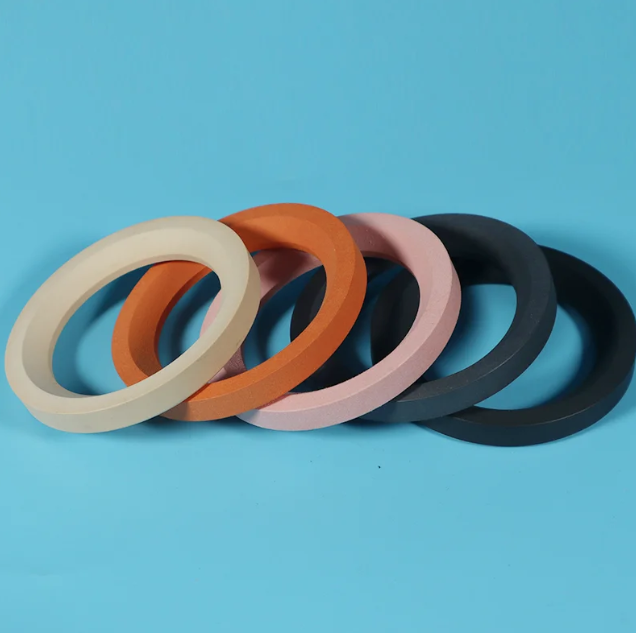
A sealing face can look flat on the bench and still lose contact once pressure and pipe strain come into play. The load path has to pass through the face without turning it into a hinge. That usually means keeping the mating flanges or housings stiff enough near the bolt circle, spacing fasteners evenly, and pulling them down in small increments so the face beds in without a high spot on one side.
Surface finish is just as important under load as initial roughness readings suggest. A surface that is too polished gives the seal material room to creep or extrude, while a coarse finish can leave spiral leakage channels. The most workable finish often follows the pressure boundary rather than crossing it, which helps the seal hold its position when the assembly flexes.
After the first thermal cycle, some of the initial preload will relax. Instead of simply adding more torque and risking a crushed face, it is better to recheck a few bolts for stretch or movement and bring the low spots back gradually. That kind of touch-up pass keeps the face compressed evenly without turning a minor drop in load into a distorted sealing surface.
Runtime That Outlasts Routine Maintenance Windows
Routine maintenance windows exist because equipment has historically demanded a pause. This platform takes a different route. Power, cooling, and compute resources are split into isolated zones, so a technician can replace a filter, test a backup path, or apply a firmware patch in one zone while the rest of the line keeps its rhythm. The result is a runtime that does not bend to the calendar.
The goal is not to eliminate maintenance entirely, but to shrink its footprint. Scheduled tasks that once required a full stop now run as background events or are designed out altogether. When a service interval arrives, the system treats it as a low-priority workflow instead of an operational break. That shift turns monthly and quarterly windows into minor events rather than production gaps.
Over a full asset lifecycle, the difference compounds. Teams stop reserving nights and weekends for upkeep, and backlog pressure drops because the platform was never forced offline for routine work. Anyone comparing total running hours quickly sees the advantage: a machine that keeps earning through maintenance changes how a facility plans its entire week.
Dimensional Calm When Temperatures Move
A room doesn't shift with the weather if its surfaces are allowed to breathe in quiet, layered ways. The warmth of wood next to cool stone, a wool throw against linen, the way a plaster wall holds the afternoon heat and releases it slowly after dark—these small material dialogues keep a space from feeling either brittle or swollen when the air turns. Nothing here needs to be adjusted or overcorrected; the room simply accommodates the day as it comes.
There is a particular steadiness in choosing textures that don't fight the thermometer. A woven rush mat underfoot stays temperate even when the hallway grows warm, while a heavy ceramic vessel on a windowsill remains cool to the touch long after noon. These aren't dramatic gestures. They work like a slow exhale, giving the eye and the skin something consistent to rest against while the temperature wanders between extremes.
What emerges is less about controlling climate and more about refusing to be rattled by it. The space doesn't announce itself as winter-ready or summer-proof; it simply lives in all seasons without changing its posture. That kind of calm reads almost as a personality trait—one formed not by gadgets or quick fixes, but by materials that have learned, over years, how to hold their own.
Shutoff Performance Without Fighting the Actuator
Reliable shutoff is often treated as a contest between the actuator and the process, but that framing tends to hide the real issue. When the valve internals create unnecessary dynamic loads, the actuator ends up working against forces that have very little to do with actually sealing the seat. Reducing those loads at the source changes the problem completely, allowing the actuator to focus on seating stress and friction instead of overpowering the line.
A more direct approach is to examine the force path from the plug to the seat. Balanced trim, pressure-assisted seating, or simply choosing the right flow direction can let line pressure contribute to closure rather than resist it. In those cases the actuator only needs a modest safety margin, which often allows a smaller and faster unit to deliver the same or better shutoff tightness.
The practical payoff is less wasted air or electrical energy, reduced wear on stems and packings, and fewer trips when pressures fluctuate. Instead of forcing the actuator to win a fight against a poorly matched valve, the assembly reaches shutoff with process forces largely neutralized. Performance comes from removing the resistance, not from overpowering it.
Service Histories That Favor PTFE Over Alternatives
Maintenance logs from chemical plants tend to tell a consistent story: PTFE seals, gaskets, and linings outlast many elastomer or metal alternatives when the line carries aggressive acids, solvents, or halogens. The material resists swelling, embrittlement, and stress cracking in ways that show up as fewer unplanned shutdowns and longer intervals between replacements. That kind of record is hard for maintenance teams to ignore.
In cryogenic and high-purity systems, PTFE has earned a similar reputation over time. Valves and fittings made from or lined with PTFE keep working after repeated thermal cycles that would cause other polymers to crack or lose dimensional stability. Years of service data often show these parts still in place while surrounding components have been swapped out, which reinforces the plant-level knowledge that PTFE is the safer long-term bet.
Food and pharmaceutical processing add another dimension. Service histories in those facilities show PTFE holding up against aggressive cleaning agents, steam-in-place cycles, and strict contamination controls. Because it does not impart taste or react with product streams, it avoids many batch rejection issues tied to other materials. Those documented experiences make PTFE the practical choice when downtime, product loss, or regulatory trouble carries a high price.
FAQ
PTFE resists nearly all industrial chemicals, including strong acids, solvents, and caustics that would swell or degrade most elastomers. It also has a low coefficient of friction, so the seat does not grab the ball or plug during operation, which keeps actuation torque predictable.
The main concern is cold flow or creep. Over many cycles, PTFE can slowly deform under load, especially at elevated temperatures. If the seat loses its interference fit, the valve may start to weep. Checking torque values and looking for minor external leakage during routine rounds helps catch this before it becomes a full seat replacement.
They can work, but unfilled PTFE is relatively soft and can be scored by hard particles. In abrasive slurry service, filled grades such as glass, carbon, or graphite-filled PTFE are usually a better fit because the filler reduces wear while keeping chemical compatibility. For very abrasive streams, a different seat design or harder polymer may be worth evaluating.
PTFE handles a wide range from cryogenic temperatures up to around 200 degrees Celsius, but its mechanical strength drops as temperature climbs. Repeated thermal cycling can also cause the seat to relax. The valve should be selected so the seat is not the limiting component at the upper end of the operating window, especially under full differential pressure.
Over-tightening the packing or flange bolts is a common one, because it can distort the seat and create uneven sealing. Another is forcing the valve closed against a trapped solid, which can cut or cold-flow the PTFE. Cleaning with metallic scrapers or abrasive pads during rebuilds can also damage the seating surface without being obvious at first.
PTFE generally offers the broadest chemical resistance of the three, but it has lower mechanical strength and higher creep than PEEK. UHMWPE has better abrasion resistance and lower cost, but it cannot handle the same temperature range or aggressive solvents. PEEK is stronger at high temperature but may be attacked by certain concentrated acids or halogens that PTFE tolerates. The right choice depends on whether chemical exposure, temperature, or wear is the dominant factor.
Reusing a PTFE seat is rarely a good idea. Once the seat has been compressed in service, it may have taken a permanent set and no longer provide the same interference fit after reassembly. Even if it looks smooth, micro-creep and surface contamination can reduce sealing reliability. The seat is usually one of the lower-cost parts of a rebuild, so replacing it is cheaper than dealing with a leak after startup.
Conclusion
In aggressive chemical service, the seat is usually the first component to show distress, but PTFE changes that pattern. Even when exposed to strong acids, halogens, or mixed solvent streams, the material shrugs off attack rather than swelling, softening, or shedding particles. That inertness keeps the sealing face clean and geometrically stable, so minor pressure cycles do not gradually carve leak paths. Under sustained bolt load and repeated valve cycling, PTFE also avoids the creep-related thinning that plagues softer thermoplastics; the contact band remains broad enough to hold a tight shutoff without excessive preload.
The practical payoff appears in longer intervals between teardowns. Valves with PTFE seats commonly stay in service well past the point where elastomer or reinforced nylon seats would need replacement, reducing unplanned downtime in dosing, sampling, and isolation duties. Temperature swings that make other polymers swell or warp have less effect here, which means the seat does not suddenly bind the ball or plug. Actuators can be sized for the process instead of for friction, and shutoff stays repeatable without hammering the closure. Field histories across chlor-alkali, fine chemical, and water treatment lines repeatedly favor PTFE when seat integrity determines mean time between repairs.
Contact Us
Contact Person: Tommy Xiao
Email: [email protected]
Tel/WhatsApp: 8615651509888
Website: https://www.ptfe-factory.com