

Private Label Healthcare RFID Tags: Revolutionizing Patient Safety and Asset Tracking
2026-11-16
Imagine a hospital where every surgical sponge, IV pump, and patient wristband communicates seamlessly—no misplaced equipment, no identity mix-ups, just flawless coordination. This isn't a distant dream; it's the reality being shaped by private label healthcare RFID tags. As patient safety pressures mount and asset losses drain budgets, forward-thinking facilities are turning to custom-branded tracking solutions that do more than just locate items. They’re embedding intelligence into daily workflows, ensuring the right resources reach the right person at the right moment. Behind many of these breakthroughs is a partner quietly powering the shift: OSRFID, whose tailored inlays and tags are becoming the invisible backbone of smarter, safer care. Let’s explore how this technology is rewriting the rules of hospital efficiency and why generic off-the-shelf tags are no longer enough.
How Private Label RFID Is Reshaping Hospital Safety Protocols
Hospitals have long struggled with the silent friction that lives between policy and practice—expired medications slipping through, sponges lingering in surgical sites, hand-hygiene compliance hovering stubbornly below target. Off-the-shelf tracking solutions often force workflows to bend around their limitations, adding more clicks, more alerts, more noise. Private-label RFID flips that dynamic. It’s not a generic sticker on a crash cart; it’s a system built from the floor up around how nurses actually move, how supply rooms actually get restocked, and what data actually matters when a patient’s safety is on the line. The difference isn’t just technical—it’s cultural, because staff stop seeing the technology as another compliance tool and start experiencing it as a quiet layer of reassurance.
What’s striking is how customization shifts the focus from asset location to risk prediction. A standard RFID setup might tell you where a certain infusion pump was last seen. A private-label approach, embedded in the hospital’s own ecosystem, can flag that the same pump has missed two preventive maintenance cycles, that it’s sitting in a high-usage unit with a known failure pattern, and that the shift change is about to happen—all in one glance. That kind of context-specific intelligence turns inventory management into a safety net. It’s no longer about counting items; it’s about understanding that a missing temperature-sensitive tray in the oncology pharmacy isn’t just a loss, but a potential patient exposure event that needs to be intercepted before it ever reaches the chair.
The quietest revolution, though, might be in how these systems handle the human side of safety protocols. When hospitals own the branding and the configuration, they can dial down the “big brother” feel that often accompanies enterprise-wide tracking. A badge that registers handwashing doesn’t have to beep like an accusation; it can simply log the action and later feed anonymized patterns to a dashboard that helps infection control teams redesign sink placement or adjust staffing during peak hours. That subtlety keeps staff engaged rather than alienated, and the resulting data stops being a disciplinary paper trail and starts becoming a design tool. Safety protocols stop being rules you enforce and start being habits the environment quietly reinforces—and that’s a shift no generic RFID rollout can easily replicate.
From Tracking to Prevention: RFID’s New Role in Patient Monitoring
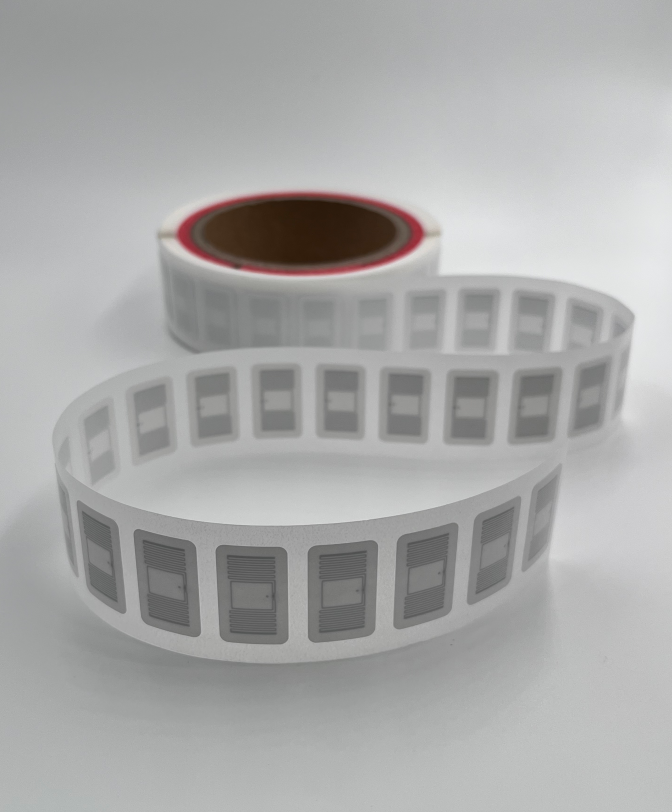
Hospitals have long used RFID to keep tabs on equipment and staff, but a quiet shift is unfolding in patient monitoring. Instead of simply logging where a person is at any given moment, care teams now pull real-time data on movement patterns, bed exits, and even hand hygiene compliance. This turns a location signal into a predictive safety net—if a high fall-risk patient stands unassisted, the system instantly alerts a nearby nurse rather than waiting for a call bell.
The prevention layer really comes alive when RFID data feeds into broader clinical workflows. A patient recovering from surgery might wear a discreet tag that tracks not only ambulation frequency but also whether prescribed mobility goals are being met. If the sensor shows prolonged inactivity, the electronic health record can prompt a care intervention before muscle atrophy or post-surgical complications set in. What was once a reactive response to an alarm becomes a proactive nudge toward healing.
Wearable RFID is also finding a place in infection control programs. Tags embedded in patient wristbands can verify whether isolation protocols are followed—for instance, by checking if staff performed proper decontamination before entering a room. When aggregated over weeks, the data reveals lapses that no manual audit could catch, allowing infection prevention teams to refine training and alter unit layouts. In this way, the technology quietly rewires how safety is baked into everyday care, erasing the line between monitoring and preventing harm.
The Invisible Revolution in Medical Asset Management
The Invisible Revolution in Medical Asset ManagementWhy Custom RFID Tags Outperform Off-the-Shelf Solutions
Standard RFID tags tend to follow a one-size-fits-all philosophy. They work reasonably well in generic environments, but once you introduce metal surfaces, liquids, or oddly shaped assets, performance often drops sharply. A custom tag is engineered around your specific item—its material, curvature, and even the read range you need. When the antenna geometry and chip selection are tuned to the actual object, the tag doesn’t just survive in harsh conditions; it delivers consistent reads that off-the-shelf tags simply can’t match.
There's also the reality of durability. Off-the-shelf options are rarely built for industrial abuse like repeated impact, chemical exposure, or extreme temperatures. With a custom tag, you can specify the substrate, adhesive, and encapsulation that match your process—whether it goes through autoclave sterilization, sits in a freezer, or gets hit with pressure washers. That kind of resilience keeps your asset tracking accurate over years, not months, and cuts down on tag replacement headaches.
Finally, custom tags give you a quieter, more efficient signal. When you share a frequency space with dozens or hundreds of tags, generic designs often cause cross-interference or unreliable reads at the edges of your coverage area. A tag optimized for your exact use case can be tuned for narrower beam patterns or specific polarization, reducing noise and false reads. It’s a different league of reliability—one where you spend less time troubleshooting and more time actually using your data.
Real-World Impact: Reducing Errors with Silent Guardians
Picture a busy hospital floor where a nurse, exhausted after a double shift, reaches for a medication. In that split second before the syringe connects, a soft glow from the wristband scanner and a gentle chime confirm the right patient, right dose, right time. No beeping alarms drown the hallway, no blinking lights shame the caregiver—just a quiet, steady layer of protection that has already caught a near-miss before it became a story. These silent guardians reshape the margin of error not by adding noise to the workflow, but by weaving verification into every touchpoint so seamlessly that catching a mistake feels like the natural rhythm of the day.
Beyond the bedside, the same quiet intelligence threads through manufacturing lines and logistics hubs. A picker in a vast warehouse reaches for a bin; a subtle vibration in the glove signals they are one aisle off before the wrong part ever leaves the shelf. In sterile cleanrooms, sensors embedded in floor panels track pressure and particulate counts without a single blinking LED, sending alerts only when thresholds drift. These are not interventions that demand attention—they are guardrails that simply don't let the process fail. The error rate doesn't just drop on a dashboard; it dissolves from the daily experience of the people doing the work, often without them ever recalling a specific “save.”
What makes this approach stick is that it treats human attention as finite and fallible, designing protection as a background hum rather than a foreground command. Instead of relying on a person to notice and react, the system notices and adapts, rerouting the flow before a mistake can propagate. Over months, the accumulated effect is striking: fewer recalls, safer care, products that ship right the first time, and a workforce that trusts the tools around them precisely because those tools don't scream for recognition. The real-world impact isn't measured solely in prevented errors—it's felt in the confidence that grows when people realize the environment itself has their back, silently making the right path the only path that works.
The Driving Force Behind Next-Gen Healthcare Tracking
Modern healthcare tracking has moved far beyond the simple pedometer. The true engine of next-generation systems is not just the sensor that gathers data, but the intelligent fabric that connects, interprets, and acts on it in real time. We are witnessing a shift from passive recording to active, predictive guidance—where a wearable doesn't just log an erratic heartbeat but understands it within the context of your stress levels, sleep patterns, and even micro-changes in skin temperature to alert you before you feel a symptom.
This evolution is powered by a quiet convergence of edge computing and adaptive algorithms that live directly on the device. Instead of sending raw, vulnerable data to a distant cloud, processing happens locally, learning your personal baseline day by day. The result is a system that knows the difference between a restless night caused by a looming deadline and one triggered by a physiological anomaly. This on-the-fly analysis slashes latency and preserves privacy, turning a simple tracker into a persistent guardian that only speaks up when a pattern truly deviates from your unique normal.
What truly propels this field forward, however, is the move from isolated metrics to a unified physiological narrative. A blood oxygen reading, a fall detection alert, and a hydration estimate are no longer disconnected data points; they are stitches in a continuous story of your health. The driving force is the ability to weave these threads together, creating a dynamic, holistic picture that can detect the subtle interplay of systems, flagging potential issues like the early onset of a respiratory infection hours before a fever emerges. It's not just tracking—it's anticipating.
FAQ
They're customized RFID labels or badges manufactured by one company but sold under another healthcare brand's name, allowing hospitals to integrate tracking seamlessly with their existing patient wristbands, asset tags, and inventory systems without forcing a third-party logo into every workflow. Unlike off-the-shelf RFID tags, these are tailored to a facility's specific frequency needs, size, adhesive requirements, and even sterilization compatibility.
They attach real-time location data to every patient wristband, making it impossible for staff to misidentify a person before surgery or medication administration. If a patient with an allergy wanders into the wrong unit or a newborn is moved without authorization, the system instantly alerts nurses. It also tracks patient flow through the ER and post-op, reducing wait times and preventing elopement incidents.
Absolutely. By tagging ventilators, IV pumps, wheelchairs, and even surgical tools with discreet, durable labels that match the hospital's own branding, you gain a live inventory map. Staff no longer waste hours hunting for a specific bed or crash cart; they locate it via a dashboard in seconds. The tags also log usage and maintenance history, cutting down on hoarding and unnecessary rental costs.
They're engineered with specific substrates and encapsulants that withstand autoclave cycles, chemical disinfectants, and repeated bending. A private label manufacturer lets you choose the exact material - whether it's a flexible UHF tag that survives laundry processes for scrubs and linens, or a rigid high-temperature tag that goes through steam sterilization with surgical kits, so the tracking doesn't break down after the first deep clean.
Barcodes require line-of-sight scanning, meaning a nurse has to physically rotate a vial or lab tube to read it, which eats up time and introduces human error. RFID reads multiple tagged items instantly, even through packaging or inside a drawer. A crash cart can be audited in one pass, a blood sample tray verified without opening a single lid. The private label aspect means the tags integrate into your current labels without disrupting the pharmacy or lab workflow.
The tags themselves store only a unique identifier, not patient names or medical records. All sensitive data lives on the hospital's secure server, matched to that identifier. Plus, private label systems let you embed additional security features like tag passwords, kill commands (for discharging patients), and encrypted communication protocols. The physical tags can be designed to deactivate upon removal from a wristband, so even if one falls off, no usable information leaks.
The scalability is one of its strongest points. You don't have to tag everything from day one. Many smaller facilities start with a focused use case—like tracking Covid-19 vaccine inventories or monitoring high-risk fall patients—using rental readers and pay-as-you-go cloud software. Since the tags are made to your spec from the first small batch, there's no wasted inventory. Costs have dropped significantly, and the reduction in lost assets and prevented adverse events often provides an ROI within months.
We're already seeing integration with smart sensor tags that monitor temperature for blood products and humidity for sterile storage, all within the same RFID infrastructure. The next step is linking them directly to electronic health records so that when a tagged instrument is used on a patient, that interaction is automatically documented. And with AI-powered analytics, the location data from tags will predict patient surges, optimize cleaning routes, and even help stop the spread of hospital-acquired infections by mapping contact points in real time.
Conclusion
The shift toward private label RFID tags in healthcare isn’t just a branding exercise—it’s becoming the quiet engine of clinical reliability. Instead of forcing hospitals to adapt around generic, off-the-shelf tags, custom solutions are reshaping safety protocols from the ground up. These tags can be tuned for specific sterilization cycles, attachment to curved IV pumps, or integration with wristbands that need to survive constant handwashing. That kind of design freedom turns tracking from a passive audit trail into an active safety net: a misplaced infusion pump or a surgical pack left inside a patient tray is flagged before it becomes a near miss. The invisible revolution here is that the tag itself disappears into the workflow, but the data it generates transforms how care teams respond.
What truly separates custom RFID from mass-market alternatives is its role in real-time prevention, not just retrospective inventory counts. Embedding tags into linens, scope guides, or even patient gowns creates a mesh of silent guardians that continuously monitors movement and association. When a wandering dementia patient passes through a door without an authorized companion, or when a crash cart drifts outside its designated zone, the system pushes an alert that changes a nurse’s next action. This is the new driving force: hospitals are beginning to see these tags not as disposable labels but as care team members that never blink. The real-world impact shows up in error logs—fewer mismatched blood samples, fewer delayed surgeries from missing trays—and those numbers are what turn a logistics tool into a patient safety revolution.
Contact Us
Contact Person: Esme Mo
Email: [email protected]
Tel/WhatsApp: 0086 191 2931 7837
Website: https://www.osrfidglobal.com/