

OEM Residue Free Protective Film Factory: The Ultimate Guide to High-Quality, Custom Solutions
2026-05-19
What if you could safeguard your products with a protective film that leaves absolutely no residue behind—every single time? At Shire, we’ve made that a reality. Dive into our ultimate guide to discover how our OEM residue-free films deliver flawless, custom solutions that outshine the competition.
Why Residue-Free Matters: The Hidden Cost of Inferior Protective Films
Most people never think about what happens when a protective film is peeled away. The assumption is that the surface underneath remains pristine, untouched by the very thing meant to shield it. But with low-grade films, that’s far from reality. A stubborn adhesive residue clings to the surface, turning a simple removal into a messy, time-consuming cleanup. This isn't just an inconvenience—it's a silent menace that can compromise the integrity of the material you were trying to protect.
The real cost emerges when you consider what that sticky leftover does over time. On glass, it clouds clarity, demanding aggressive solvents that risk etching or scratching. On painted metals or plastics, the residue can react chemically, causing discoloration or softening the finish. What starts as a protective measure becomes a source of damage, often permanent. The need for residue-free removal isn't a luxury; it's a baseline requirement that inferior films simply fail to meet, leaving behind a trail of hidden expenses and frustration.
Beyond the immediate hassle, there's a deeper issue of trust. When a film fails to come off clean, it erodes confidence in the entire application. Whether it's on electronics, automotive parts, or architectural surfaces, the residue signals a compromise in quality that reflects poorly on the product it was meant to preserve. Residue-free performance is more than a feature—it's a promise that the protection won't become the problem. Settling for anything less is a gamble where the stakes are measured in ruined surfaces and lost reputation.
Inside a Modern OEM Factory: Crafting Films That Leave Nothing Behind
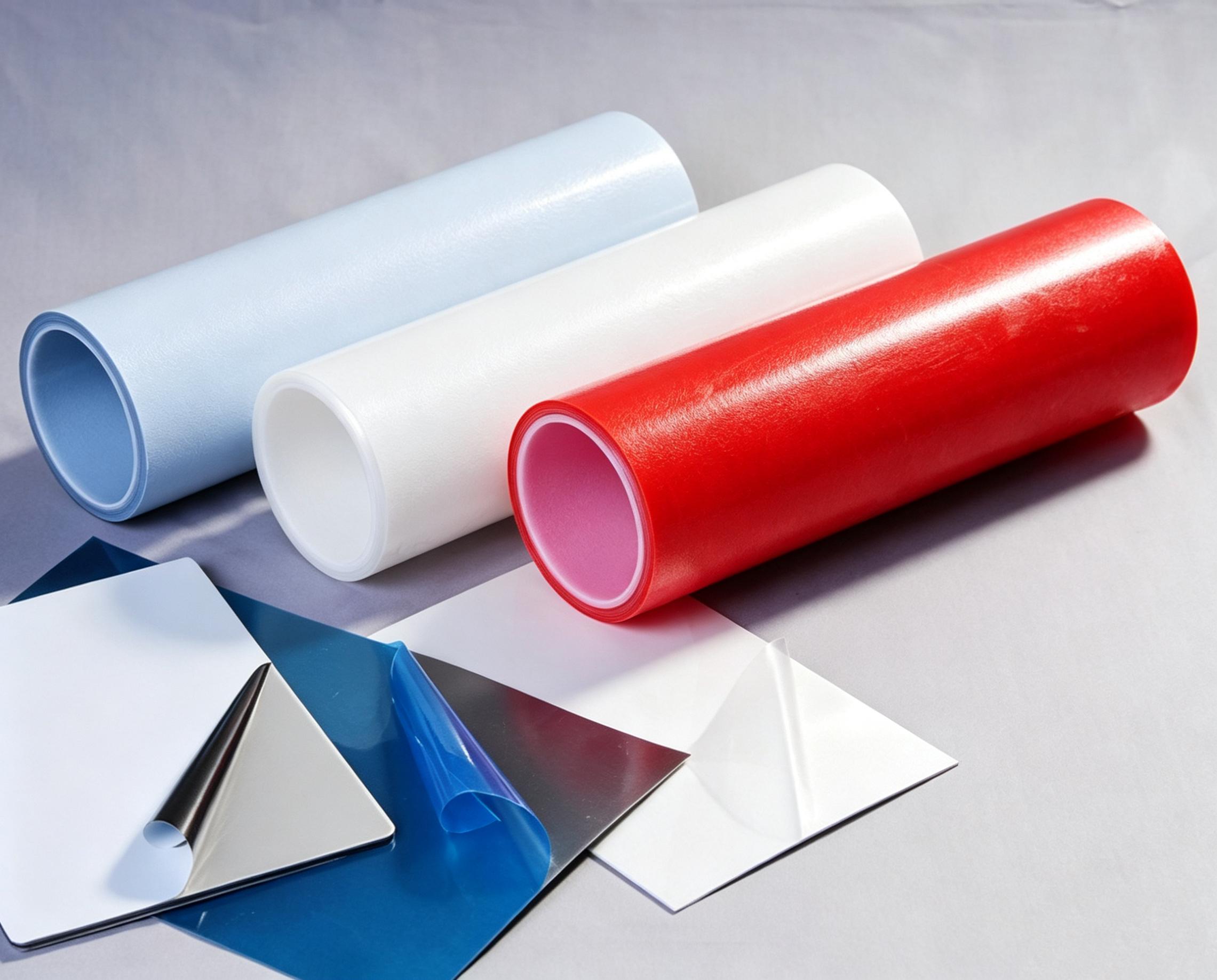
Stepping onto the production floor, the hum of precision machinery fills the air. Here, raw materials are transformed into protective films through a meticulously orchestrated sequence of coating, drying, and curing. Every parameter—temperature, tension, thickness—is monitored in real time, ensuring each batch meets the same exacting standards. The process feels almost invisible, yet the care taken at every step is what guarantees a film that performs flawlessly without leaving any residue behind.
In the quality control lab, samples are subjected to rigorous tests: peel adhesion on various surfaces, aging under UV light, and clean removal after prolonged application. Engineers scrutinize the data, tweaking formulations to balance grip and removability. It’s this relentless pursuit of a clean release that defines the factory’s ethos. Unlike conventional films that degrade or leave sticky traces, these are engineered at the molecular level to stay intact and come off cleanly, preserving both the surface and the user’s trust.
Beyond the technical prowess, there’s a quiet pride in crafting something that simply works and then disappears. From automotive paint protection to delicate electronics, the applications are vast, but the goal is singular: a film that does its job and leaves nothing behind. In an industry often focused on adding layers, this factory stands out by mastering the art of subtraction—creating products that vanish without a trace, yet their impact on reliability is lasting.
Customization Unleashed: Tailoring Thickness, Adhesion, and Clarity to Your Product
Every product carries its own set of demands—some need a whisper-thin layer that vanishes against a surface, while others call for a robust film that can take a beating. When you start with the freedom to dial in thickness, you’re not just picking a number off a chart. You’re aligning material behavior with real-world use, whether that means a sleek, barely-there shield for high-end electronics or a heavy-duty barrier for industrial gear. It’s the difference between a protective cover that feels like a second skin and one that bulks up where it shouldn’t.
Adhesion is another story entirely. The bond that works beautifully on glass might peel away from textured plastics without a second thought. We spend a lot of time matching the chemistry to the surface—balancing initial tack with long-term hold, so edges don’t lift and air bubbles don’t creep in over time. That kind of precision means your product leaves our hands ready to stick where you want it, for as long as you need it, without the mess of adhesive bleed or residue nightmares.
Then there’s clarity, which can make or break a design. We’ve seen projects where a milky haze would completely undermine a brand’s aesthetic, and others where a crystal-clear finish is the only option for display windows or transparent casings. Adjusting formulations to hit that perfect visual note—so light passes through without distortion or yellowing—turns a functional layer into an invisible ally. It’s not about offering a generic sheet off the shelf; it’s about shaping the material until it feels like it was always part of your product.
Applications That Demand Perfection: From Electronics to Automotive Finishes
In the world of electronics, even the slightest imperfection can spell disaster. Circuit boards and delicate components rely on coatings that are not just protective, but flawless down to the micron. A single pinhole or uneven layer can lead to corrosion, signal interference, or complete failure. That’s why the application of conformal coatings demands an almost obsessive level of precision—humidity, dust, and temperature variations must be neutralized without compromising the electrical integrity of the device. It’s a silent, invisible shield that keeps smartphones, medical devices, and aerospace controls running reliably.
Shifting to the automotive realm, the stakes are just as high but the challenges are different. A vehicle’s finish isn’t merely about aesthetics—it’s a protective skin battling UV radiation, road salt, stone chips, and harsh chemicals. High-end automotive paints are formulated to self-heal minor scratches, resist fading for decades, and maintain a mirror-like gloss that meets the discerning eye of luxury car buyers. The application process itself is a ballet of robotics and environmental control, where cleanroom-like conditions and electrostatic precision ensure that every curve and crevice is uniformly coated. One overlooked dust particle can mar an entire panel, making perfection not just a goal, but a baseline requirement.
What ties these industries together is an unwavering intolerance for compromise. Whether it’s the nanoscale uniformity of a semiconductor coating or the deep, wet gloss of a custom car finish, the drive for perfection pushes material science and application techniques to their limits. In both spheres, technicians and engineers operate in a world where “good enough” simply doesn’t exist—only absolute precision can ensure that the final product performs as intended, year after punishing year.
Quality Assurance Beyond the Certificate: Real-World Testing Protocols
While certifications offer a baseline, they rarely capture the messy reality of daily use. That’s why we’ve built a testing framework that mimics how products actually get handled—dropped on concrete, exposed to humidity swings, or crammed into overstuffed bags. It’s not about ticking boxes; it’s about uncovering the failure points that only emerge when people stop being careful.
Our protocols evolve from direct observation: we track how users interact with similar products in the wild and then replicate those behaviors in controlled, repeatable cycles. For example, zippers get yanked at odd angles, buttons are pressed with greasy fingers, and screens face abrasion from keys and coins. These aren’t industry-standard tests, but they reveal weaknesses that matter far more than a pass/fail stamp.
Every batch undergoes randomized stress scenarios, pulling from a library of over 200 real-world approximations. The goal is consistency that customers can feel—not just on day one, but after months of everyday abuse. If a product survives our gauntlet, it’s ready for the unpredictability of actual life.
Future-Proofing Your Supply: Innovations in Sustainable and Smart Films
As supply chains face mounting pressure to reduce environmental impact, film manufacturers are turning to bio-based and recycled polymers without compromising performance. These next-generation materials offer the same barrier protection and durability as conventional plastics but come with a significantly lower carbon footprint. By replacing fossil-fuel feedstocks with renewable sources, companies can lock in long-term material security while meeting tightening regulations and consumer expectations for greener packaging.
Beyond raw materials, smart films are transforming how supply chains monitor product integrity. Embedded sensors now detect temperature shifts, humidity spikes, or even gas emissions that signal spoilage—relaying data in real time to logistics platforms. This proactive visibility helps reduce waste by enabling dynamic routing or early intervention before goods are damaged, effectively turning the packaging into an active shield rather than a passive wrapper.
The convergence of sustainability and intelligence also paves the way for circular models. Films designed for easy separation or composting complement digital watermarks that sort packaging accurately in recycling streams. This dual approach not only extends the useful life of materials but also builds a resilient supply chain where every link—from raw material to end-of-life—is optimized for both efficiency and environmental responsibility.
FAQ
It means when you peel the film off, there's no sticky glue left behind—no ghosting, no adhesive transfer. This is critical for surfaces that need to stay flawless, like automotive paint before delivery or high-end electronics screens. Residue can ruin a finish and lead to expensive rework.
Top factories use precisely engineered adhesives—often acrylic or silicone-based systems—that bond firmly but release cleanly. They tweak the crosslinking density of the glue and control the coating weight down to the micron. They also run extensive aging tests to ensure the film won't break down and leave residue over time or under heat.
Beyond the basic stuff like quality certifications, ask about their R&D capability. A good partner will have chemists who can tailor an adhesive to your specific surface energy. Check if they’ve handled tricky materials like powder coatings or low-energy plastics. Also, see if they offer design support—die-cutting, printing, and quick prototyping without massive tooling costs.
Automotive is huge—especially for painted parts, carbon fiber, and trim. Electronics, including LCD panels and touchscreens, need pristine surfaces during assembly. Then there's construction for glass and metal panels, medical devices that must stay contaminant-free, and aerospace composites where any residue could affect bonding.
Absolutely. A skilled factory can pre-cut films with laser or die-cutting to match complex contours, while keeping the adhesive performance consistent. They'll often use a slightly thicker liner to prevent tunneling and ensure that even laser-cut edges don't ooze adhesive. Just share your CAD files, and they'll suggest the right formulation.
Ask for samples and run your own test—but don’t just slap it on and peel it off. Apply it to your actual surface, leave it in a hot room for a week, then remove it to simulate long-term aging. Even better, put the part through a thermal cycle test. A trustworthy factory will provide ageing reports and share third-party test data on adhesive transfer, outgassing, and humidity resistance.
Many OEM factories understand that new product launches start small. You can often get as few as 200–500 square meters, especially if you’re willing to share setup costs. Some even offer "pilot run" services where they coat a limited batch of your custom film, so you can validate without committing to a full production run.
The upfront per-square-meter price might be 10–30% higher, but the real cost is in the avoided cleanup. If you’re polishing fingerprints off luxury cars or scraping adhesive off medical screens, a few extra cents on film is a no-brainer. Plus, your end customer gets a perfect surface—so the value far outweighs the price difference.
Conclusion
In industries where surface integrity is non-negotiable, the true value of a protective film lies not in its immediate shielding ability but in what it leaves behind—literally. Low-grade films often use aggressive adhesives that, over time, bond permanently or degrade into sticky residues, causing costly rework, warranty claims, and brand damage. A dedicated OEM residue-free factory tackles this from the molecular level, formulating adhesives that maintain stable peel strength across temperature fluctuations and dwell times. By precisely controlling crosslinking density and utilizing clean-removal technologies, these films lift off seamlessly even after prolonged application, preserving the pristine surface of high-gloss finishes, coated metals, or sensitive optics. Customization further enhances this performance: engineers work directly with clients to tailor film thickness, adhesion levels, and optical clarity to match unique product geometries and end-use environments, ensuring that protection never becomes a liability.
Beyond the chemistry, real-world reliability is forged through rigorous testing protocols that go far beyond standard certificates. Leading factories simulate extreme logistics conditions—vibration, humidity, thermal cycling—and perform accelerated aging tests to confirm residue-free removal months down the line. This obsession with quality control is what makes these films indispensable across demanding sectors: shielding smartphone displays during assembly, guarding automotive paint finishes against scuffs and UV damage, or preventing micro-scratches on aerospace-grade materials. As supply chains evolve, forward-thinking manufacturers are embedding sustainability directly into their films—developing bio-based or recyclable carriers and energy-efficient production processes—while also exploring smart films with integrated indicators for tampering or environmental exposure. Choosing the right OEM partner means securing a future-proof supply of protective solutions that not only meet today’s exacting standards but also adapt to tomorrow’s challenges, without ever leaving a trace.
Contact Us
Contact Person: Jack Xu
Email: [email protected]
Tel/WhatsApp: 8615257328825
Website: https://www.temporaryprotectivefilm.com/