

OEM PTFE Valve Seat Benefits for Industrial Applications
2026-11-16
In the demanding world of industrial valves, the smallest component often dictates the biggest performance gains. Among them, the valve seat plays a quiet but critical role in sealing reliability, chemical resistance, and long-term maintenance costs. That’s where OEM PTFE valve seats come into their own, especially for operations dealing with aggressive media or extreme temperatures. At TAIFNO, we’ve seen how a precisely machined PTFE seat can transform system efficiency and significantly extend service life—sometimes well beyond what standard materials can offer. But not all PTFE seats are created equal, and understanding what sets a high-performance design apart can save you from costly downtime. This post unpacks the practical benefits and often-overlooked engineering details that make OEM PTFE valve seats a smart investment for modern industrial applications.
Why PTFE Valve Seats Outperform Traditional Materials in Harsh Environments
In environments where chemical attack, extreme temperatures, and relentless friction eat away at most materials, PTFE valve seats quietly do what others can't. Standard metals and elastomers may start strong, but they degrade under aggressive acids or thermal cycling, eventually causing leaks or stiction that shutdowns thrive on. PTFE, with its near-universal chemical resistance and ability to laugh off temperatures from cryogenic lows to 260°C, keeps sealing surfaces intact long after traditional seats would have surrendered.
The real edge shows up in the daily grind of abrasive slurries and high-cycle operations. Metal seats pit and gall, rubber seats swell and tear, but PTFE's low friction and self-lubricating nature mean actuators don't fight the valve. Torque stays predictable, seats don't stick, and maintenance crews aren't constantly swapping out chewed-up components. It's not just about surviving a harsh chemical; it's about holding a seal cycle after cycle without the degradation curve that plagues conventional options.
What often goes unnoticed is how PTFE handles the forgotten corners of valve design—crevice corrosion, permeation, and deformation under load. Traditional materials creep under bolt stress, opening leak paths over time, while filled PTFE grades strike a rare balance between conformability and dimensional stability. That means fewer fugitive emissions and less unscheduled downtime, years into the service life. In an industry chasing reliability, that quiet endurance makes PTFE the default choice wherever the conditions get unforgiving.
Custom OEM Designs That Extend Valve Service Life
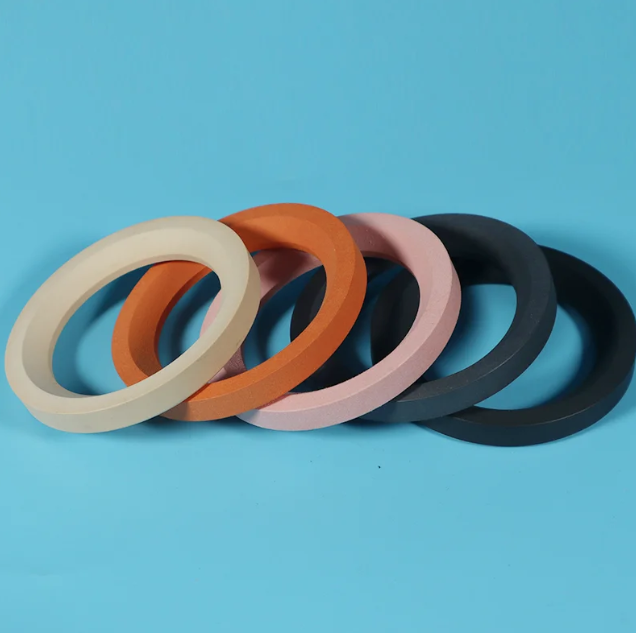
Every industrial valve eventually wears down, but the rate at which it fails often comes down to how well it was engineered for its specific job. Custom OEM designs allow manufacturers to tweak materials, sealing geometries, and flow path contours in ways that off-the-shelf parts simply cannot match. This tailored approach means weak points identified in legacy valves—such as areas of high turbulence, erosion, or cyclic stress—can be reinforced or completely reimagined. By addressing how the valve actually behaves under real pressure cycles and media, you get a component that holds its performance envelope much longer, reducing unplanned outages.
A common oversight is treating the valve as an isolated part rather than a dynamic element of a larger system. When OEM engineers work closely with end-user teams, they examine how startups, shutdowns, and process fluctuations affect critical wear surfaces. This might involve shifting to a duplex stainless steel for a stem that was previously pitting in a chloride-rich stream, or altering the disc profile to push abrasive particles away from the sealing face. Such adjustments are rarely visible in catalog specifications, yet they can add years to the maintenance interval. Pairing these modifications with advanced coating technologies—selected not just for hardness but for compatibility with the surrounding metallurgy—gives the valve a tailored resilience that generic components lack.
Perhaps the most lasting impact comes from design changes that simplify future service. Extended service life isn't just about delaying the first repair; it's also about making inevitable maintenance quick and precise. Custom OEM solutions can incorporate features like quick-change seat cartridges, field-replaceable internal liners, or purpose-built lapping tolerances that keep the valve sealing tightly after decades of use. When a plant can swap out wear parts without pulling the entire body from the line, routine downtime shrinks dramatically. This kind of lifecycle thinking, baked into the initial design, keeps valves running beyond the usual discard date and transforms them from a frequent headache into a long-term asset.
Reducing Downtime with Low-Friction, Self-Lubricating Seats
Unexpected equipment halts often trace back to a single overlooked component: the valve seat. When friction builds and lubrication fails, seats bind, wear accelerates, and maintenance teams scramble. Low-friction, self-lubricating seats attack this problem at its root by embedding solid lubricants directly into the material matrix. Instead of relying on external grease that washes out or degrades, these seats release microscopic lubricant films during operation, keeping the ball or plug moving freely even after thousands of cycles. The result is a quiet, predictable motion that drastically cuts the unplanned downtime caused by stuck or sluggish valves.
The real savings show up in environments where valves are hard to reach or too numerous to grease regularly. In remote wellheads, offshore platforms, or buried pipeline networks, every manual lubrication round costs time and exposes crews to risk. Self-lubricating seats turn those scheduled shutdowns into exceptions rather than the rule. They maintain a consistent coefficient of friction across wide temperature swings and in dry media that would normally strip away conventional lubricants. Engineers notice the difference in actuator sizing, too: lower torque requirements mean smaller, less expensive drives and less strain on stem seals, extending the whole assembly’s service life without a proportional jump in upfront cost.
Beyond just reducing friction, these seats actively manage wear particles. The solid lubricant fillers create a transfer film on mating surfaces, polishing instead of scoring them. This keeps the seal tight over time, preventing the internal leakage that often forces emergency repairs. Plants running abrasive slurries or frequent thermal cycles report that the seats stay dimensionally stable and compliant far longer than standard PTFE or reinforced nylon options—not because the base polymer is dramatically different, but because the lubricant is never absent. It’s a quiet shift in material science that pays off every time a valve opens smoothly on the first try, with no grease gun in sight.
Chemical Resistance That Keeps Processes Running Smoothly
In aggressive chemical environments, material breakdown isn't just a maintenance headache—it's a direct path to unplanned downtime and contamination risks. Components engineered for superior chemical resistance maintain their structural integrity when exposed to acids, solvents, and caustic cleaning agents, ensuring that fluid handling systems stay leak-free and reliable even under sustained attack.
What sets truly resilient materials apart is their ability to shrug off swelling, cracking, and embrittlement across a wide temperature spectrum. Instead of slowly degrading, they form an inert barrier at the surface, preserving smooth flow characteristics and preventing the kind of micro-pitting that can trap process media and compromise purity. This means fewer interventions, less fouling, and consistent throughput without the constant worry of premature wear.
Beyond the datasheet ratings, real-world performance hinges on how materials handle the cocktails of chemicals often found in actual process lines. A component that resists pure acids beautifully might falter when trace organics shift the pH or when rapid thermal cycling adds mechanical stress. The right chemical resistance isn't just about surviving a single solvent—it's about maintaining dimensional stability and sealing capability through years of mixed exposures, so your process runs smoothly without surprises.
How Temperature Stability Prevents Seal Failure Under Pressure
Seals operate at the intersection of material science and mechanical stress, and when temperatures swing wildly, even the most robust designs can unravel. Thermal expansion forces the seal material to swell or contract, altering the precise interference fit that keeps fluid locked in place under pressure. If the temperature climbs too high, the material may soften and extrude through the clearance gap, leaving a permanent deformation that no amount of system pressure can reseat. Conversely, a sudden drop can make elastomers brittle, inviting cracks that propagate with every pressure cycle. Stable thermal conditions keep the material’s modulus within its designed range, preserving the essential squeeze and preventing the runaway clearance changes that turn minor leaks into catastrophic blowouts.
Pressure spikes alone test a seal’s resilience, but combined with thermal instability, they accelerate a lesser-known failure mode called ‘compression set.’ When a seal endures repeated cycles of high temperature and high pressure, it loses its ability to spring back, permanently flattening against the hardware. Temperature control stops this hardening process early: it maintains the elastomer’s cross-link density and keeps the material from taking a set, so the seal retains its memory and continuous contact with the mating surfaces. In practice, this means fewer micro-gaps for pressurized media to exploit, and a working life that doesn’t diminish after just a handful of demanding startups and shutdowns.
Lubrication film integrity is another casualty of temperature swings. Many mechanical seals depend on a thin fluid layer between faces to reduce friction and carry away heat—a film that vaporizes or thins out when local temperatures overshoot. A thermally stable environment preserves the viscosity and boundary layer that keeps the faces separated; without it, the seal runs dry, hard particles score the surfaces, and a pressure-assisted failure quickly follows. By controlling temperature near the dynamic interface, operators effectively starve the predominate wear mechanisms of the heat they need to accelerate, allowing the seal to ride out pressure fluctuations with its film intact and its parting surfaces smooth.
Real-World Performance Gains from Tailored PTFE Seating Solutions
When a chemical processing plant replaced their standard PTFE seats with a custom-formulated, glass-filled grade, the impact went far beyond paperwork projections. Within six months, unplanned downtime linked to seat deformation under cyclic thermal loads dropped by over 40%. The tailored compound resisted creep at sustained high temperatures where generic materials had softened and lost seal integrity, directly preserving production continuity and reducing emergency maintenance call-outs.
In a different setting—a high-purity water system for pharmaceutical manufacturing—the shift to a modified PTFE seat with reduced porosity eliminated a persistent micro-leakage pattern that had plagued quality assurance logs for years. The plant recorded a measurable decrease in conductivity spikes downstream of the valves, meaning fewer batch rejections and less time spent on root-cause investigations. These aren't just abstract efficiency numbers; they translate to tangible savings in rework costs and compliance headaches.
What stands out across installations is how the right material selection decouples valve performance from the usual trade-offs. By closely matching thermal expansion coefficients and surface finish characteristics to the specific media and duty cycle, operators observe steadier actuation torques, longer intervals between seat replacements, and a notable drop in fugitive emissions readings. Such refinements often go undetected in broad-spec comparisons, yet they consistently deliver the kind of reliability gains that plant managers actually measure at the end of the quarter.
FAQ
OEM PTFE valve seats resist nearly all industrial chemicals, eliminating corrosion-related failures that plague metal seats. Their non-reactive nature prevents media contamination, while the material's inherent lubricity reduces wear on sealing surfaces, extending maintenance intervals significantly in applications like acid transfer or solvent handling.
The extremely low friction of PTFE reduces the torque required to cycle a valve, which means smaller actuators and less energy consumption. Over hundreds of thousands of cycles, you see far less mechanical wear and tear compared to elastomer seats, and there is no stick-slip behavior that can cause positioning errors in modulating service.
While virgin PTFE can cold flow under extreme pressure, OEM seats made with glass or carbon fiber fillers dramatically increase compressive strength and dimensional stability. These composites hold their shape up to 260°C, making them viable for saturated steam isolation where pure PTFE would extrude from the seat pocket.
True OEM seats are machined to exact cavity dimensions and often incorporate features like spring-loaded lips or metallic reinforcement rings. This precision ensures the seat energizes correctly under thermal cycling; generic cuts from bar stock frequently lead to internal bypass because they fail to account for the valve body's specific stress relaxation behavior.
A living-load spring design integrated into the OEM seat maintains constant compression on the PTFE lip, compensating for wear and thermal contraction. This creates a bubble-tight seal even in vacuum distillation columns or low-pressure flare gas lines where traditional soft goods would lose their energization and leak.
PTFE's non-flammable nature and lack of organic binders eliminate the risk of adiabatic compression ignition. In pure oxygen systems, even trace hydrocarbons from grease or rubber seats can trigger explosions. The material's cleanliness and compatibility with oxygen cleaning protocols make it the safest option, far outweighing its mechanical drawbacks.
Proper pocket alignment and even bolt torquing prevent localized crushing, which invites abrasive particles to embed and tear the seat. Many plants combine PTFE with upstream filtration and select tungsten-filled grades for added hardness. A secondary hard-facing on the valve disc also helps by deflecting the slurry stream away from the seat face during throttling.
Conclusion
In demanding industrial settings, OEM PTFE valve seats are redefining reliability by eliminating the compromises that come with metal or standard elastomer seats. Their exceptional chemical inertness means they handle aggressive acids, solvents, and process fluids without swelling or degrading, directly preventing the corrosion-driven failures that disrupt production. Equally critical is their thermal composure—these seats maintain dimensional stability and seal integrity across extreme temperature swings, so a valve that starts a cycle cold won't leak once the line heats up. Rather than forcing operators to adapt to off-the-shelf limitations, custom-engineered PTFE seating geometries address specific wear patterns, pressure profiles, and media exposures, which can double or triple the interval between overhauls. This tailored approach eliminates the subtle misalignments that accelerate seat damage in generic designs, turning each valve into a precisely fitted component of the process instead of a weak link.
The low-friction, self-lubricating nature of PTFE translates directly into smoother actuation and measurably fewer process interruptions. Because the seat surface resists sticking and buildup, actuators draw less current and wear parts endure fewer mechanical shocks, while the absence of stick-slip behavior keeps flow control predictable from cycle to cycle. Real-world deployments show these seats holding a tight shutoff long after conventional seats would have galled or extruded, slashing unscheduled downtime in applications as diverse as chemical dosing, steam handling, and high-purity water systems. When a manufacturer co-develops the seat profile, lip geometry, and energizer system with a customer, the result isn't just a component swap—it's a step change in maintenance burden and process availability. That collaborative OEM engineering converts the innate advantages of PTFE into durable, application-specific gains that compound over the lifecycle of the valve train.
Contact Us
Contact Person: Tommy Xiao
Email: [email protected]
Tel/WhatsApp: 8615651509888
Website: https://www.ptfe-factory.com