

OEM Cooling Mattress Topper Solutions for a Cooler Sleep Experience
2026-10-24
When summer nights turn sticky and sleep feels impossible, the right cooling mattress topper can make all the difference. But not every product lives up to its promise—many trap heat, feel plasticky, or lose their cooling effect after an hour. That’s where OEM solutions from Kunbao come in. We combine advanced gel-infused materials, breathable fabrics, and tailored manufacturing to create mattress toppers that actually keep you cool through the night. Whether you’re a brand looking to launch a premium sleep line or a retailer seeking reliable customization, Kunbao’s OEM expertise turns your cooling topper concept into a standout product. In this post, we’ll explore what makes a truly effective cooling topper, how Kunbao’s technology differs from generic options, and why partnering with the right manufacturer can transform your customers’ sleep experience.
Phase-change materials that hold the perfect sleep temperature
Most cooling sheets and mattress pads rely on moisture wicking or added ventilation, but phase-change materials take a different route. They absorb excess body heat when your skin temperature rises and then release that stored warmth once you start to cool down. This creates a buffering effect that keeps the microclimate between your body and the bedding from swinging too far in either direction.
The materials themselves are often microencapsulated paraffin or salt hydrates embedded in foam, gel, or fabric coatings. Each capsule is tuned to melt and solidify within a narrow temperature band—typically right around 88°F to 90°F—so the transition happens exactly when your body needs it most. Unlike gel-infused memory foam that simply feels cool for the first ten minutes, PCMs keep working through multiple sleep cycles.
What matters in practice is the total heat capacity and the melting point range, not just the presence of "PCM" on a label. A well-designed PCM layer can delay the middle-of-the-night overheating that disrupts deep sleep, especially for couples sharing a bed with different temperature preferences. That ability to bridge the gap between two extremes is what makes it genuinely useful rather than a marketing gimmick.
Open-cell foam paths for constant air movement
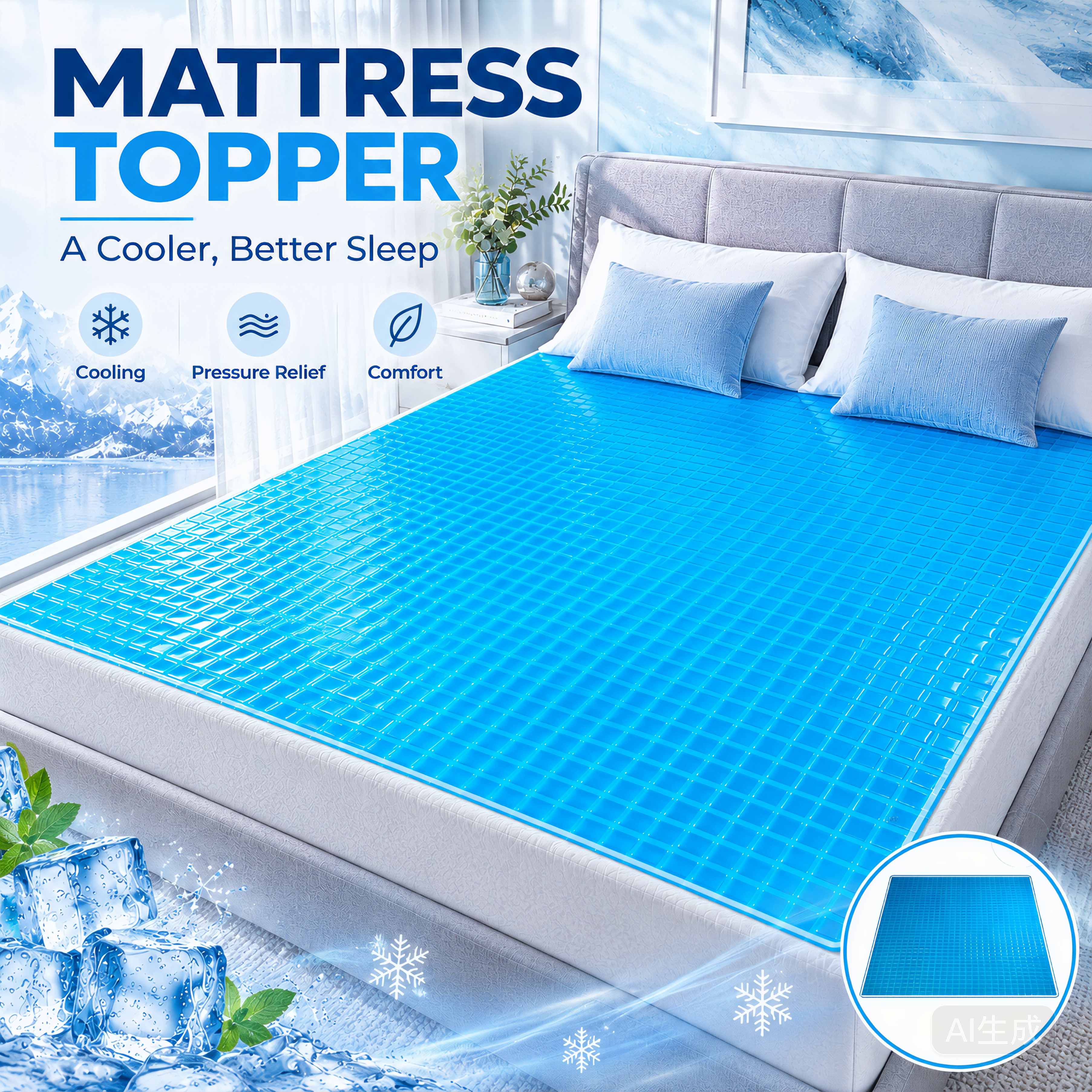
Open-cell foam is made with interconnected pores that leave unobstructed routes for air to pass through. Rather than holding warmth against the body, the structure lets hot air drift away and cooler air slip in as pressure changes with each small shift in position.
Those continuous channels mean even slight movement pushes stale air out and draws fresh air inward. Over the course of a night, that quiet exchange keeps the surface from turning damp or overly warm, which is especially useful in stuffy rooms or for people who tend to sleep hot.
Gel-infused comfort layers that never warm up
Most memory foam beds trap heat like a wool blanket in July. These gel layers flip that script. The gel beads pull warmth away from your skin the moment you lie down, dispersing it through channels that stay noticeably cool to the touch. You won't get that gentle shift from cool to clammy at 2 a.m. — the surface temperature barely moves, even after hours of continuous contact.
What's different here isn't a coating or a spray-on finish. The gel is mixed directly into the foam during pouring, so every cell carries a bit of that cooling property. It doesn't wash off, it doesn't settle to one side, and it doesn't rely on airflow to work. Even with a waterproof protector or thicker sheets, the gel still does its job quietly. The foam never gets that sticky, body-heat-soaked feel common with older memory materials.
If you've ever had to flip a pillow to find the cold side, these layers make that habit unnecessary. Sleep partners often notice the difference within the first week — no more kicking off covers in a half-awake daze or waking up with damp hair at the neck. It's a practical, low-key fix for anyone who runs hot or sleeps in a warm climate.
Custom thickness and firmness for niche markets
Niche markets rarely line up with standard sizing, so custom thickness and firmness solve practical problems that off-the-shelf products ignore. Boat berths, vintage travel trailers, and hospital beds all have wildly different space limits and support needs. Instead of forcing a stock slab into these gaps, manufacturers can adjust compression rates and thicknesses in half-inch increments. A five-inch medium-firm core works for a dinette conversion, while a seven-inch dual-layer setup with a softer top supports a side sleeper in a camper van.
Specialized use cases bring the real demand into focus. Yoga studios often request thicker, high-density mats for restorative classes, while pediatric clinics look for firmer, low-VOC surfaces that hold up to daily sanitizing. Pet bedding suppliers lean toward four-inch medium-density sheets that resist claw punctures. Each segment has a different reason for bypassing retail stock, so treating firmness as a spectrum rather than a fixed setting lets smaller production runs stay consistent without losing the exact feel each niche requires.
Washable cooling covers that keep their grip
Most cooling covers either slide around after a week or lose their chill once washed. This one avoids both problems by pairing a breathable knit face with a soft silicone grip pattern underneath. The grip isn’t a stiff rubber layer; it’s spread across the bottom in small dots that hold onto the mattress without blocking airflow.
Machine washing doesn’t break down the backing. After multiple cold cycles, the dots stay tacky and the fabric doesn’t pill or thin out. Line drying is enough to keep the cover fresh, and there’s no plastic smell when you put it back on the bed.
For hot sleepers, the cooling effect comes from the fiber itself rather than a chemical finish. Moisture moves through quickly, so you don’t wake up sticky. It fits snug over deep mattresses and won’t bunch up under a fitted sheet.
Low-profile cooling that fits any existing mattress
A cooling layer shouldn’t require you to buy a whole new mattress. This low-profile design sits directly on top of what you already own, adding targeted airflow without extra bulk. You keep the support layer you’ve gotten used to while finally solving that trapped-heat problem.
Because the pad is thin enough to disappear under a fitted sheet, there’s no awkward height change or shifting. It works with any standard mattress depth, and the cooling gel pulls heat away from the surface all night—so you stop flipping to the cold side.
It’s the kind of upgrade that doesn’t ask you to change your routine. Just place it on the mattress, put your sheet back over it, and let the breathable channels do the rest. No straps that snap, no extra foam that changes the feel.
FAQ
Instead of relying only on open-cell foam, these toppers usually incorporate phase change materials, gel infusions, or moisture-wicking covers to pull heat away from the body. The manufacturing focus shifts from basic support to managing thermal transfer without sacrificing comfort.
Phase change materials are often the most effective because they absorb excess heat once you reach a certain temperature. Gel-infused foam and breathable knitted covers help too, but PCMs tend to produce the clearest difference for hot sleepers.
Ask for third-party test data on thermal conductivity and skin temperature reduction rather than just marketing descriptions. A reliable partner should also share details about the raw material suppliers and let you request sample batches with different cooling intensities.
Yes, if the design balances active cooling with insulation. Some toppers are engineered to feel cool on contact but not cold, so they work in winter when paired with normal bedding. It comes down to material selection and cover layering.
The cover is often underrated. Fabrics like Coolmax or bamboo-derived rayon pull moisture away from the skin and speed up evaporation. A poorly chosen cover can trap heat even if the foam core is designed to cool.
Most factories allow you to adjust thickness, density, cooling material concentration, cover construction, and edge support. Some can even produce regional variants with different firmness and cooling levels for humid versus dry climates.
Check how the cooling additives hold up after repeated compression and wash cycles. PCM microcapsules can degrade if the foam structure is weak, and covers may lose moisture-wicking ability. Request accelerated aging tests to verify long-term performance.
Conclusion
Picture a mattress topper that does more than just sit there—it actively manages your microclimate. Phase-change materials act like thermal sponges, soaking up excess body heat and releasing it only when needed, keeping the surface locked in that precise zone where sleep comes naturally. Open-cell foam paths create tiny ventilation tunnels, letting air shift with every turn so heat never builds up, even under heavier bedding. Gel-infused comfort layers add a cool touch that refuses to warm, meaning you can always find the chill side of the pillow, all night long without flipping or fussing.
OEM customization pushes this further. Whether you need a low-profile design that slips onto any existing mattress or a bespoke thickness and firmness for a niche market—say, hot sleepers, luxury resorts, or medical recovery—every parameter is adjustable. The washable cooling cover stays fresh and keeps its grip, no sliding or bunching, just a clean, cool surface that survives countless wash cycles. This understated design blends into any sleep setup, giving brands an effortless way to deliver cooler nights without swapping out the whole bed. The result is a sleep surface that stays comfortably cool from dusk till dawn, tailored exactly to your market. It’s a practical upgrade that turns any bed into a cool oasis without the cost or hassle of replacing the mattress itself, and brands and customers alike win with a quieter, cooler, more restorative sleep.
Contact Us
Contact Person: Catherine Peng
Email: [email protected]
Tel/WhatsApp: +86-13434169510
Website: https://www.kbcoolgel.com/