

Leather Office Chair Company: Crafting Comfort and Style for Your Workspace
2026-10-29
When your workspace demands both durability and design, the right leather office chair can change everything. At OFCJNS, we believe comfort and style should never be a trade-off. This guide explores how our leather seating solutions blend craftsmanship with everyday ergonomics—so you can focus on what matters most.
Why We Still Choose Real Hides Over Imitations
There's a reason a well-worn leather chair or a scuffed hide rug feels alive in a way that vinyl never will. Real hides carry the marks of their source—the faint lines from old scratches, the subtle shifts in grain, the uneven edges that no factory mold can fake. Each one tells a quiet story, and that unpredictability is precisely what makes it worth having. Imitations might look tidy on a shelf, but they lack the depth that comes from something that once breathed.
Over time, genuine hide doesn't just survive—it improves. The oils from your hands darken the surface into a patina, and small scuffs become part of the character rather than flaws to hide. Synthetic alternatives, by contrast, tend to crack, peel, or fade into a plasticky sheen after a few years of real use. You end up replacing them more often, which rarely saves money or hassle in the long run.
Then there's the feel. Run your palm across a piece of real leather or fur, and you'll notice a warmth and slight give that cold imitation materials can't match. It's not just about luxury; it's about living with materials that respond to touch and age gracefully instead of fighting against daily wear. Once you've experienced that, it's hard to go back to the fake stuff.
How a Leather Chair Should Support Your Lower Back
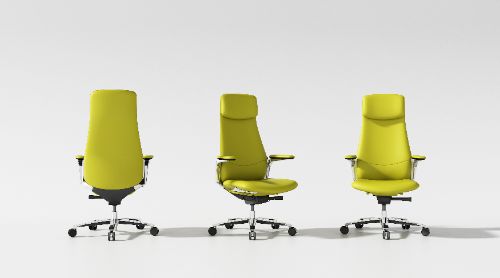
A well-designed leather chair does more than cushion your body; it keeps the natural curve of your lower spine intact. The lumbar area should feel a gentle, steady push rather than a hard lump or a gap. If the chair sinks too deeply, your pelvis tilts backward and your lower back flattens, which often leads to stiffness after an hour. A firmer seat with just enough give lets your hips stay slightly above your knees, creating the angle your lower back needs to stay relaxed.
The backrest should follow the shape of your spine without forcing you into one position. Look for a chair where the lumbar support hits between your waistline and the bottom of your ribcage, not higher or lower. When you sit all the way back, there should be no empty space behind the small of your back. If the chair has adjustable support, move it until the pressure feels broad and even, not concentrated on one point. Leather that is too soft or stretched out will eventually lose this contour, so press against the backrest before buying and check that it springs back instead of staying dimpled.
Your lower back also benefits from a chair that lets you shift your weight naturally. A rigid, overstuffed design traps you in one posture, which tires the muscles that stabilize your spine. The best leather chairs allow slight movement in the seat and backrest, so you can lean forward or recline without fighting the frame. After twenty minutes, you should still feel your spine stacked and your shoulders relaxed, not pulling your lower back into a slouch. If you notice yourself constantly readjusting or curling forward, the chair is not supporting you properly — it is simply holding you up.
The Break-In Period: What to Expect in the First Month
During the first month with a new vehicle, the engine internals are still settling into their running clearances. You'll notice the fuel economy wandering a bit before it steadies, and the transmission may shift with a slight hesitation that disappears after a few hundred miles. That's the piston rings bedding against the cylinder walls and the clutch or torque converter finding its rhythm.
Resist the urge to hold a single RPM for long highway stretches. Vary your speed, keep the tachometer below roughly two-thirds of redline, and avoid hard launches for at least the first 600 miles. Short bursts of moderate throttle actually help seat the rings, but sustained full-throttle pulls can glaze the bores before the oil film stabilizes.
By the end of the first month, the steering may feel a touch lighter and the brakes more predictable as the pads transfer a uniform layer onto the rotors. Don't be alarmed by a faint hot-oil smell after a longer drive; it's usually just assembly lubricants burning off. If the idle still hunts or the shifter feels notchy past 1,000 miles, that's worth a phone call to the service desk.
Stitching, Padding, and Frames Most Brands Overlook
Stitching rarely gets the attention it deserves. Most brands treat it as a functional afterthought—just something holding the fabric together. But run your fingers over a well-made bag or jacket and you’ll notice the difference immediately. Tight, even seams with no loose threads speak to a level of care that’s becoming rare. The overlooked part? Bar tacks at stress points, double-needle work on load-bearing edges, and thread that’s chosen for abrasion resistance rather than just color matching.
Padding is another silent failure point. Cheap foam breaks down within months, leaving straps lumpy or flat. The brands that get it right use layered constructions—dense EVA foam against the body, softer memory foam on the contact surface—and they shape the padding to follow actual anatomy instead of just cutting a rectangle. Frames suffer the same neglect: many are flat sheets of plastic that flex unpredictably. A proper frame should have a curve that transfers weight to your hips or shoulders, with just enough torsional give to move with you instead of fighting your body.
When all three are done well, you don’t think about them—you just notice the bag feels lighter, the jacket sits better, the harness doesn’t dig in after an hour. That’s the trick: the best construction disappears. But once you’ve handled gear where stitching, padding, and frames were treated as core design elements, everything else feels like a compromise.
From Executive Suites to Spare Bedrooms Without Looking Lost
Moving from a dedicated executive suite to a spare bedroom often starts with a mental hurdle: the room feels like a leftover, not a command center. The fix lies in treating every square foot as intentional. Start by clearing the floor—mount shelving at eye level, route cables through a single grommet, and anchor the room with a desk that has real weight, not a flimsy writing table. A deep walnut or matte steel surface immediately shifts the tone from makeshift to deliberate.
Lighting does more heavy lifting than most realize. Swap the standard ceiling fixture for a dimmable, directional track or a sculptural pendant hung low over the work zone. Add a slim floor lamp in the corner so there are no dark pockets. When the room is lit in layers, it stops feeling like a repurposed guest room and starts behaving like a private office that happens to have a closet.
Finally, resist the urge to fill every corner with storage bins. A spare bedroom becomes lost when it doubles as overflow. Keep one clear wall for a large piece of art or a textured wall hanging, and let the chair swivel toward it for thinking breaks. If there’s room for a small side table with a carafe and glass, even better—those small, human touches are what separate a room that works from a room that merely holds furniture.
What Happens to Top-Grain Leather After Five Years of Daily Use
Five years of daily use leaves its mark on top-grain leather in ways that reveal both the material’s strength and its compromises. The surface becomes noticeably softer and more pliable, especially where your body makes repeated contact—think seat cushions, armrests, or the fold of a bag. High-friction zones like edges and piping often lose some of their original pigment, exposing a slightly lighter base underneath. That wear isn’t necessarily a flaw; it’s the leather recording how you sit, carry, or reach for it every single day.
Unlike full-grain leather, which builds a glossy patina over time, top-grain tends to hold its corrected finish longer before showing subtle dulling or fine cracking in flex areas. The protective topcoat resists stains and moisture well, but once it begins to break down—often around year three or four—you might notice shallow creases that don’t bounce back as quickly. Regular conditioning becomes less about preventing scratches and more about keeping those stressed fibers from drying out and splitting.
What surprises most people is how the leather’s color shifts unevenly. Areas exposed to indirect sunlight or body heat can warm to a deeper tone, while tucked-away sections stay close to the original shade. That variation gives the piece a lived-in character that synthetic alternatives simply can’t reproduce. After five years, top-grain leather doesn’t look new—and that’s exactly the point. It looks like it belongs to you.
FAQ
We work with full-grain hides and reinforce the frame joints by hand, so each chair ends up with a slightly individual grain pattern. The cushioning is layered rather than a single foam block, which keeps it from flattening after a year of daily use.
It comes down to the seat pan angle and lumbar curve. We set the recline tension a bit softer than most office chairs, but keep the silhouette clean and tailored. You get a chair that looks sharp on video calls without sacrificing long sitting sessions.
Yes. Our mid-back and compact executive models have a smaller footprint while keeping the same seat depth and armrest adjustability. We also offer a low-profile base option that slides under most standard desks.
We mainly use top-grain and full-grain leather from tanneries that follow strict environmental standards. A light wipe with a damp cloth every couple of weeks and a leather conditioner twice a year is usually enough to keep the surface supple.
Quite a few options are available. Beyond the core black and cognac, you can pick from oxblood, navy, or sage, and we offer contrast stitching or tone-on-tone thread. Custom orders take about three weeks longer but don't cost extra for the stitching choice.
Most models arrive about 85% assembled. The seat and back are already connected, so you just attach the base and gas lift. It usually takes ten to fifteen minutes with the included hex key.
We cover the frame and mechanism for ten years, and the leather and foam for three years. If something wears out, we ship replacement parts directly, and the repairs are designed to be done at home with basic tools.
Our leather comes from tanneries certified for water treatment and chemical management. The wood for armrests and bases is either FSC-certified or reclaimed, and we minimize foam waste by cutting patterns in a nested layout.
Conclusion
The Leather Office Chair Company builds seating around a simple conviction: genuine top-grain hides outperform imitations in both touch and longevity. Where bonded or faux leather cracks and peels within a year, real hides develop a lived-in patina that keeps the chair looking intentional rather than worn. The lower back support isn't an afterthought—each frame is angled and padded to follow the natural curve of the spine, so you're not constantly shifting to find a comfortable position. Expect a short break-in period during the first month as the hide softens and the cushion molds to your body; that stiffness is a sign the materials are doing their job, not a flaw.
What separates this company from most brands is the attention to details you can't see in a showroom photo. Stitching is double-reinforced along stress points, high-density foam keeps its shape after years of daily use, and the frame is built to handle office chairs being rolled, leaned back, and occasionally bumped. The design is versatile enough to move from an executive suite to a spare bedroom without looking out of place—it reads as intentional furniture, not leftover office equipment. After five years of daily use, top-grain leather doesn't degrade; it darkens slightly, softens further, and shows a subtle sheen that tells you the chair has been lived in and respected. That's the difference between buying a seat and investing in how you work.
Contact Us
Contact Person: Diff Wang
Email: [email protected]
Tel/WhatsApp: +8613650281199
Website: https://www.ofcmeshchair.com/