

Iron Casting Service Explained for Modern Manufacturers
2026-11-16
Ask five foundries to define 'quality' in iron casting and you'll get five different answers—usually after a missed delivery date. For modern manufacturers, that ambiguity is the real cost. This guide cuts through it: what iron casting actually involves, which specifications matter, and how to separate dependable production partners from shops that simply pour and hope. Supreme Machinery approaches the process from the manufacturer's side, where tolerances, machinability, and on-time repeatability decide whether a casting is a bargain or a bottleneck.
Why Iron Casting Still Wins for Complex Geometries
Molten iron doesn't care how many straight lines your CAD model has. It fills a cavity as a single continuous fluid, which means features like curved internal passages, uneven wall transitions, and deep ribs can be produced without seams or secondary assembly steps. The mold can be split along non-planar surfaces and supported by collapsible cores, opening up undercuts and hollow chambers that would require expensive multi-axis setups in other processes.
The real advantage shows up when a part needs to be stiff in one direction and light in another. Casting lets the designer place material exactly where load paths demand it while leaving thin webs elsewhere. For brackets, housings, and manifolds, this integration removes bolted joints and weld lines, simplifying the assembly and reducing the number of places where fatigue can start.
Simulation has also made the old trial-and-error loop much shorter. Gating, riser placement, and cooling rates can be tuned before the first pour, so a complex geometry can be cast repeatedly with predictable results. That reliability is why iron casting still holds ground when a shape is too awkward, too integrated, or too costly to machine from billet.
From Molten Metal to Finished Part: What Actually Happens
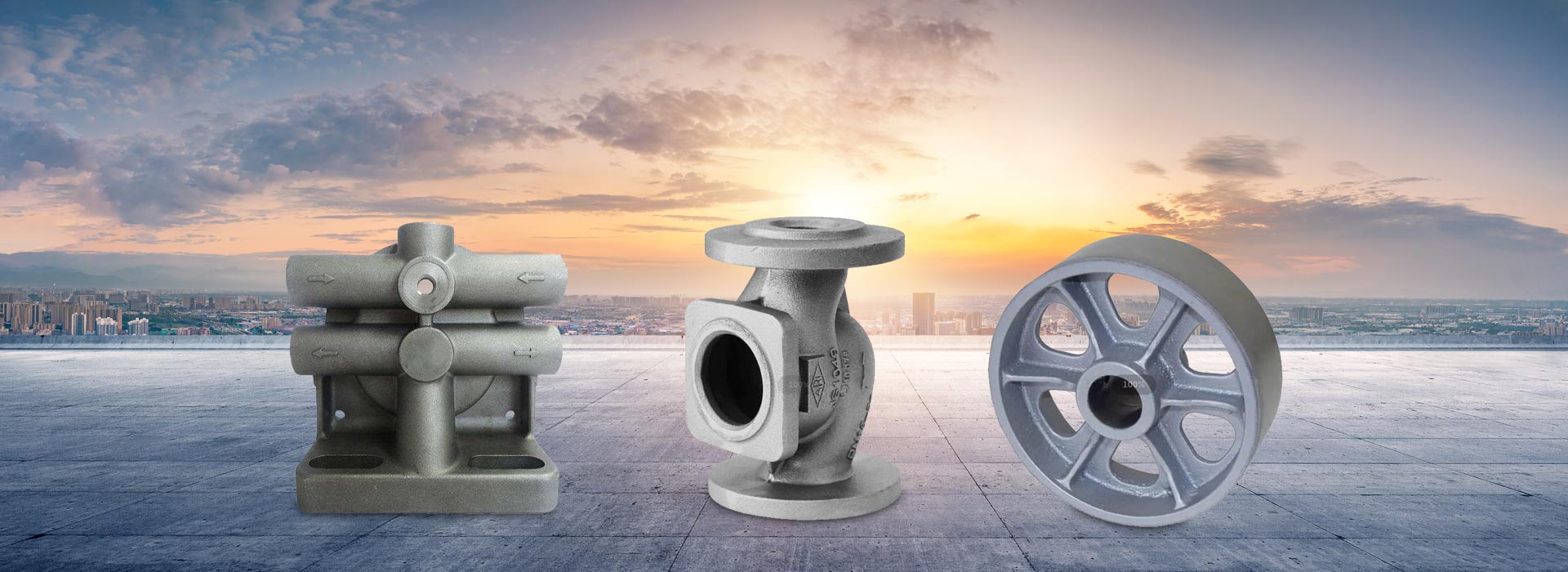
Pouring liquid metal into a mold feels almost like magic until you watch the surface skin form and then crack as the inside keeps shrinking. Most of the work happens in ways you never see: the way a sprue chokes the flow just enough to trap slag, the way a riser feeds the casting while it cools, or the way a sharp corner quietly invites a hot tear. The metal doesn't simply freeze all at once. It solidifies from the outside in, and that simple fact decides whether your part comes out sound or full of hidden voids.
Once the casting has cooled enough to handle, the real conversation with the material begins. Gates and risers get cut away, sometimes with a saw, sometimes with a hammer and a practiced swing. Then comes blasting, grinding, and often heat treatment to relieve the stresses trapped during cooling. The surface you get straight from the mold rarely matches the drawing. So a machinist takes over, shaving off a few thousandths here, opening a bore there, until the part finally agrees with the blueprint.
At that point the casting is not just a shape anymore. It's a record of choices made hours earlier: alloy temperature, pouring speed, mold coating, cooling time. Every defect that didn't happen is also the result of those choices. So the finished part sitting on the bench is less a single event and more the last frame of a long, invisible film that started with a furnace and ended with a dimension check.
Material Choices That Change Part Performance
Swap a standard aluminum bracket for a glass-filled nylon and the difference isn't just weight on a spreadsheet. The way a part flexes under load, how it behaves when temperatures swing, or whether it survives repeated impacts all shift with the raw material. Engineers often get locked into familiar metals or commodity plastics, yet a simple switch can eliminate a secondary machining step or remove the need for a separate damping component. It's the material itself doing work that the original design never accounted for.
Think about a gear made from acetal versus one cut from cast iron. The acetal gear runs quieter, needs no lubrication, and absorbs small misalignments that would chew up a rigid metal pair. On the other side, a stainless steel shaft inside a corrosive pump might be replaced by a ceramic-filled PEEK that holds its dimensions without rusting or swelling. These aren't exotic upgrades for niche projects; they're everyday choices that change how a part feels, lasts, and fails.
The real lever is matching the material's failure mode to how the part is actually used. A polycarbonate housing cracks cleanly when pushed too far, while a tough ABS might deform and keep functioning. A cast aluminum cover is stiff but transmits every vibration, whereas a mineral-filled polypropylene damps those frequencies before they reach the user. The same geometry, the same loads, but a different material turns a marginal design into one that holds up in the field.
The Hidden Cost Drivers in Iron Casting Projects
Many buyers compare foundry quotes by piece price and miss costs that surface only after tooling is approved. One of the most overlooked drivers is metallurgical ambiguity. When a drawing says “ductile iron” without a specific grade, foundries either assume the cheapest option or add contingency to cover risk. That assumption gets priced into the quote or, worse, becomes a rejection during sample approval. Another quiet cost is over-tolerancing. Designers often carry tight machining tolerances into as-cast features, which forces extra grinding, gauging, and sorting long before a single part is machined.
Tooling and pattern strategy also create a split between apparent and actual cost. A cheap pattern may be fine for five prototypes but not for a production run of five thousand. When patterns degrade midway, the foundry has to interrupt production, repair or replace the pattern, and re-qualify dimensions, all while delivery dates slip. The same applies to gating and riser design that is fixed too early. Once a pattern is cut, later changes to feeding or part orientation because of internal defects become expensive rework rather than routine engineering.
Scrap and inspection requirements hide further costs. A foundry may accept an order with a low piece price but recover margin through extra charges for non-destructive testing, hardness checks on every lot, or documentation packages. If the casting has internal soundness expectations that are not explicitly stated, the foundry may quietly increase the rejection buffer in its process, which raises real cost without changing the quote. Understanding these cost drivers before sourcing usually matters more than negotiating the last few cents off a unit price.
Design Details That Prevent Casting Defects
Small changes in part geometry often do more to stop defects than adjusting melt temperature or cycle time. Sharp internal corners are a common source of hot tears and shrinkage porosity because they concentrate stress while the metal is still weak. Adding a radius of at least half the adjacent wall thickness gives the solidifying front room to feed and reduces crack initiation. Similar attention to rib proportions helps: a rib should stay around 60 percent of the main wall thickness to avoid sink marks without making the section too heavy.
The path the metal takes into the cavity is just as important as the shape it fills. Gate placement works best when it directs flow from thick sections toward thin ones, allowing the thicker areas to act as feeders during cooling. Turbulent filling from a poorly located gate traps gas and creates cold laps, while a gentler, progressive fill lets air escape through vents before the metal reaches the end of the cavity. Risers should be positioned at the last regions to freeze, not simply at the highest point of the part.
Draft angles, uniform wall transitions, and deliberate parting line placement round out the critical design controls. A smooth taper of one to three degrees prevents drag marks and ejection damage, while a gradual change in wall thickness avoids isolated hot spots. Where a thick boss meets a thin wall, coring out the center keeps the mass from creating internal voids. When these details are treated as essential upstream choices, the result is less dependence on downstream rework and process tweaking.
Matching Casting Methods to Production Volume
Volume shapes casting choices long before the first pattern is cut. For prototypes or runs under a few hundred pieces, sand casting and investment casting often make more sense, because tooling stays simple and design changes do not trigger massive rework costs. The price per part is higher, but that penalty is easier to absorb when the alternative is paying for hardened tooling that will never earn back its cost.
Once quantities climb into the thousands, the math starts to shift toward permanent mold and low-pressure processes. The tooling investment looks more reasonable when it is spread across a longer run, and the tighter dimensional control reduces downstream machining. This is the range where many programs struggle, because choosing a low-volume method drives up labor, while jumping to high-volume tooling too early locks the design before it has stabilized.
At high volumes, die casting becomes the natural default for aluminum and zinc parts. The dies are expensive and unforgiving, but they deliver fast cycle times, repeatable wall thickness, and a low unit cost once the line is running. The trade-off is timing: die casting rewards a frozen design and punishes late changes, so it works best when engineering confidence is high and the volume forecast can support the upfront commitment.
FAQ
A dependable shop pairs honest DFM feedback with metallurgical control. You notice it in how they respond to your print: they flag transitions that could trap gas, suggest radii changes before tooling starts, and can show melt records or spectrometer readings without being asked. Mediocre suppliers often accept the drawing as-is and leave the problems to appear after first article.
Many teams switch when a welded assembly carries too much distortion risk or a billet part wastes too much stock. Casting lets them put material only where stiffness and load paths demand it. The result is often a single rigid component with fewer joints, less straightening, and a predictable machining allowance instead of hours of rough milling.
Gray iron is the workhorse for damping, bearing surfaces, and complex shapes. Ductile iron steps in when the part sees shock, fatigue, or needs to bend before it breaks. Compacted graphite iron sits between them when thermal cycling matters. The right choice depends less on strength alone and more on how the part fails in service.
Bring the functional surfaces, load direction, and any leak or pressure requirements forward. Also state the expected order rhythm, because a prototype-friendly foundry may not be the right fit for annual blanket orders. That context changes gating, pattern design, and whether a cheaper loose pattern still makes sense.
Cost is driven more by pattern complexity, core count, and cleaning room time than by raw metal weight. A heavier but simpler casting can be cheaper than a light, intricate one with multiple internal cavities. Finishing steps such as shot blast, grinding, impregnation, or heat treatment also accumulate faster than most buyers expect.
Ask for a first article report tied to the actual heat used, not a generic certificate. Request photos of the cut section or layout inspection, and ask how they handle shrinkage, sand inclusion, or hardness variation when it appears. The quality of that corrective process matters more than a spotless initial sample.
Often yes, but not for patriotic reasons alone. A shorter supply chain shortens the loop when patterns need adjustment, a surface finish needs verification, or a container shipment goes wrong. Local suppliers also tend to be more transparent about scrap recovery and process changes than distant intermediaries.
Conclusion
Iron casting remains a practical route for modern manufacturers who need complex shapes without multiplying assembly steps. A single pour can create internal cavities, curved walls, and uneven thicknesses that would be awkward to machine or weld from billet. The journey from molten metal to finished part involves patternmaking, molding, melting, controlled pouring, shakeout, and finishing; each stage shapes dimensional accuracy and surface quality. Material selection quietly drives performance because gray iron, ductile iron, and compacted graphite iron each offer different damping, machinability, and tensile behavior. Choosing the right alloy is not a mere formality, it changes how the part survives thermal cycling, load, and wear in service.
Much of the final cost in an iron casting project is decided before tooling is cut. Wall thickness, section transitions, draft angles, and placement of parting lines affect yield, scrap rate, and post-casting cleanup. Hidden cost drivers such as excessive weight, unnecessary machining stock, or awkward cores often matter more than raw metal price. Design details prevent casting defects when they respect solidification patterns and feed metal flow, avoiding shrinkage cavities, cold shuts, and porosity. Finally, matching the casting method to production volume keeps budgets realistic: sand casting fits low-to-medium runs and large parts, while shell molding or automated green sand suits repeatable, higher-volume work. These choices together define an iron casting service that balances geometry, metallurgy, and economics for modern manufacturing.
Contact Us
Contact Person: Paul
Email: [email protected]
Tel/WhatsApp: 8615067447509
Website: https://www.spironcasting.com