

Industrial Vehicle Manufacturer Selection Mistakes That Cost Operations Time and Money
2026-11-16
Every operations team has felt it—the quiet frustration when a forklift that looked right on paper starts burning hours in unplanned downtime, or when a supplier’s support line goes cold after the invoice clears. The real cost of choosing an industrial vehicle manufacturer rarely shows up in the purchase price. It hides in delayed parts, mismatched service, and equipment that was never quite aligned with the job. Before you lock in another fleet decision, it is worth examining where those mistakes actually begin. At HANGCHA, the focus is on closing that gap between catalog promises and daily performance, so your operation does not pay for the same lesson twice.
A low purchase price hides a much higher cost per operating hour
Low purchase price is easy to see; operating cost is not. That is why equipment with a smaller initial invoice can quietly become the most expensive option on site. Fuel consumption, service parts, unplanned downtime, and reduced output per shift all feed into a number that matters far more than the figure on the quote.
Cheaper machines tend to give away cost somewhere. It may be an older engine that uses more fuel under load, a hydraulic system that runs hotter, or wear parts that need replacement twice as often. The operator notices it as slower cycles, shorter working windows, or repeated passes that still do not meet the required finish.
A better approach is to convert the purchase price into a cost per working hour. Add expected fuel and maintenance over the planned hours, include probable repairs, and subtract realistic resale value. Once those numbers are compared, the low upfront price often stops looking like a bargain and starts looking like a long-term operating burden.
The standard truck fails when the load is anything but standard
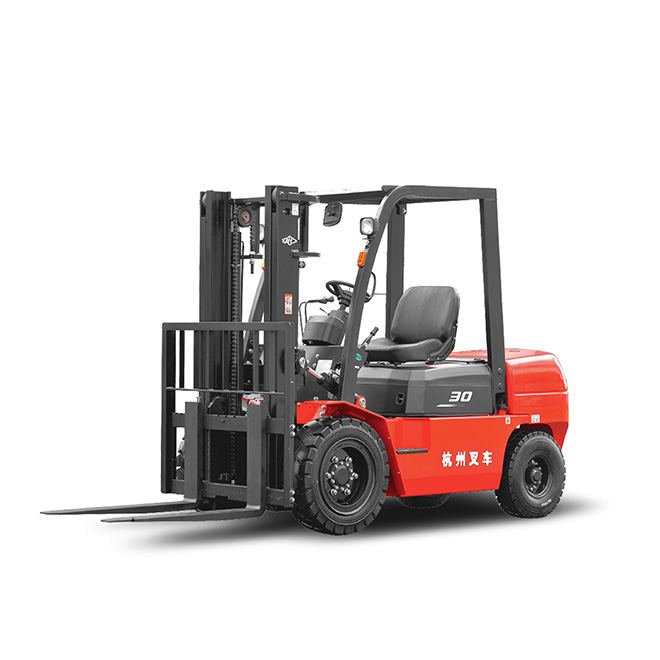
Most fleet managers learn this the hard way somewhere between the second and third reshuffle of a shipment. A standard truck handles pallets, crates, and neatly wrapped cargo with predictable ease. But the moment the load shifts to something irregular—long steel beams, bundled piping, a half-disassembled machine—the same truck becomes a liability. The tie-down points are in the wrong places. The deck height is all wrong for overhead clearance. The center of gravity starts to wander in ways the suspension was never tuned to manage.
It is not just a matter of inconvenience or a slower drive. The failure shows up in worn brake pads, cracked frame welds, and drivers who have learned to overcorrect for a trailer that never quite settles. Every mile carries a quiet negotiation between the truck's design assumptions and the actual shape of the cargo. When the load refuses to fit the template, the truck does not adapt—it accumulates stress until something small gives way, usually far from a service yard.
What makes this failure so persistent is that fleets keep treating it as an accident of circumstance. They blame the shipper for a bad pallet job or the driver for taking a rough stretch of road. Rarely does anyone look at the truck itself and admit that the whole setup was built for a world of uniform boxes and standard weight slips. The sooner that assumption is dropped, the sooner the real problem becomes visible: the truck is not failing because the load is difficult. It is failing because standard was never a realistic description of the freight.
Service maps cover the region but miss the shifts that matter
The map on the shelter wall still shows Route 47B looping through Millbrook, even though that branch stopped running in March. It shades every neighborhood, labels every line, and marks each transfer point with a neat little circle. On paper, the region is fully covered; on the street, the map is already wrong.
The blind spots are not geographic. They are temporal. A service map freezes the network at the moment it was printed, but the real system bends around road work, driver shortages, seasonal cuts, and same-day reroutes. The 5:40 a.m. run that disappeared in November never leaves a blank space on the map. The Saturday loop that now ends three stops early still looks intact. Riders discover these shifts by waiting, not by reading.
Coverage that ignores time is only half honest. People miss work, appointments, and the last reliable connection when the map promises a service the street cannot deliver. The neighborhoods are all there. What is missing is the small, daily truth about which buses actually show up.
Lead times come to light after the old fleet is already down
Most fleets don't see the real lead time until the old unit is already parked behind the workshop with a fault that no one wants to repair. The conversation that started with rough delivery estimates suddenly turns into a hard date, and that date is rarely close. Buyers discover the chassis is available, but the body installation, battery pack, or specialized axle is scheduled weeks or months out because no one placed a holding order.
The gap usually builds quietly. Operations keeps squeezing another season out of aging equipment while procurement waits for budget approval. By the time the order goes out, the supplier's earlier “about ten weeks” has become a formal twenty-six-week confirmation. The old fleet is down, shifts are being juggled, and short-term rentals start eating the budget that was meant for the replacement.
What changes is not just the delivery month, but the cost of every alternative. Once the old fleet is already down, rental rates climb, overtime becomes routine, and rush shipping charges appear on parts that were supposed to be ordinary. Checking lead times before the failure forces the risk into the open, where it can be priced, scheduled, or avoided entirely.
Paper safety certifications do not survive your actual aisle widths
A paper safety certificate gives you a snapshot of the facility as it was documented, not as it runs. The moment a pallet overhangs a rack beam, a repair cart blocks the corner, or stock gets staged a few inches past the line, the clearance figure on that certificate stops matching the aisle a forklift has to navigate.
The problem tends to hide in daily habits. Audits often measure from rack face to rack face or use blueprint dimensions, while the real pinch points are created by protruding loads, uneven pallets, and temporary storage that never gets moved back. Those small losses add up until the effective aisle width is nowhere near the certified number.
Use the certification as a baseline, not as proof that everything is fine. Check the actual path at the busiest part of a shift, measure the narrowest gap rather than the widest, and update the paperwork when the layout changes. If the tape measure and the certificate disagree, the tape measure wins.
The operators were never asked, and the cost shows up in turnaround
Turnaround planning usually happens in conference rooms with schedules, budgets, and inspection reports spread across the table. The people who run the equipment every shift are rarely in those meetings. When their input is missing, the plan looks tidy on paper but drifts away from what the units actually need.
Operators notice the small things that never make it into formal reports: a valve that sticks when it gets hot, a vibration that comes and goes, a drain that has to be coaxed open. Without that knowledge, the turnaround scope becomes a list of assumptions. Problems stay hidden until the equipment is opened up, and then the real work begins with crews already on-site.
That is when the cost appears. Late discoveries force rushed decisions, extra scaffolding, expedited parts, and overtime. The budget absorbs the hit, and the schedule stretches. A few structured conversations with operators earlier would have surfaced many of those items while they were still cheap to handle.
FAQ
The purchase price hides gaps in parts availability, local service coverage, and build quality. A truck sitting idle waiting on a backordered component or a technician who has to travel from another region wipes out whatever was saved on the invoice.
Rated capacity and brochure figures don't tell you much. The number of shifts, stops, lifts, ramp grades, and load weights per hour is what actually determines whether components will wear prematurely. A manufacturer that asks about these details is more likely to spec the truck correctly.
If the nearest qualified technician is hours away, even minor faults turn into multi-day downtime events. Operations end up stockpiling spare parts or paying premium travel rates, and any upfront price advantage disappears.
Attachments, battery or engine options, telematics, and operator comfort features decide whether the unit stays productive over its whole life. A manufacturer that only sells a basic truck often cannot support later changes without expensive retrofits.
Common wear items may not be kept in regional warehouses. A small part can stop an expensive vehicle for a week. Reliable manufacturers publish realistic lead times and stage critical spares close to the customer.
Yes. A maker that mostly serves light warehousing may not understand cold storage corrosion, foundry dust, or heavy side loading. Standard specifications fail early in demanding conditions, leading to unplanned rebuilds and shorter replacement cycles.
If fault codes, hour meters, and impact alerts don't feed into the maintenance system, repairs only happen after failure. That reactive mode costs far more than a modest difference in vehicle price.
Ask for references with similar operating conditions, local technician coverage, parts fill rates, warranty claims history, and standard telematics integration. A manufacturer that answers with specifics instead of sales promises is one you can hold accountable later.
Conclusion
Fleet decisions often start with a sticker price that looks disciplined until it quietly converts into higher hourly spend. A cheaper industrial vehicle can burn through energy, tires, and unscheduled repairs at a rate that erases the initial savings long before replacement. The problem compounds when the chosen model is a standard truck expected to handle non-standard loads. Operations then improvise with attachments, extra passes, or manual staging, none of which appear on the purchase order. Service coverage may look adequate on a map, but if the provider cannot reach second- and third-shift operations, a down truck means waiting until morning while throughput slips. Lead times are another silent trap: by the time the old fleet is already down, the availability of new units becomes the real constraint.
What gets overlooked most is the gap between the sales specification and the physical workspace. Paper safety certifications mean little when the truck cannot complete a turn within the actual aisle widths, forcing operators to slow down or reroute. And because operators are rarely asked during selection, their daily friction with mast height, seat position, or control placement shows up later as longer turnaround and damaged inventory. The recurring cost is not the machine itself, but the accumulated time spent working around it. A better selection process treats purchase price as one input among many: shift patterns, load variety, real lead times, aisle geometry, and operator feedback have to be weighed before the fleet order is signed.
Contact Us
Contact Person: Liuxue
Email: [email protected]
Tel/WhatsApp: +86-19084200370
Website: https://www.hf-ec.com/