

Hospital Bed Factory Solutions for High Quality Patient Care
2026-08-30
Behind every restful night for a patient is a hospital bed built with precision. At Suncare, our factory floor merges advanced welding robots with hand-finished quality checks, producing beds that withstand the toughest care environments. If you've ever wondered how a single hospital bed factory can reduce pressure injuries, speed up recovery, and support overwhelmed nursing teams, this post walks you through the details.
The Bed Frame Nurses Actually Want to Work With
The first thing a nurse notices about a bed frame is how quietly and smoothly the height adjustment operates. During a busy shift, there’s no room for a motor that groans or lurches. A frame that lowers to a safe working height for repositioning—and rises high enough for easy transfers—saves a lot of back strain. Controls mounted on both side rails, with a simple hand pendant that doesn’t get tangled, make a real difference when hands are full.
Durability matters more than flashy features. Nurses want a reinforced steel frame with sealed motors that don’t overheat, even after dozens of adjustments per day. The head and foot boards should come off without tools for quick access during emergencies. Surfaces and cable coatings need to stand up to hospital-grade disinfectants without cracking or peeling. If a wheel locks with one foot tap and rolls smoothly over door thresholds, that’s a bed frame worth keeping on the floor.
Safety details separate a nurse-friendly frame from a frustrating one. Side rails that latch securely but can be lowered with one hand prevent falls without slowing down care. A mattress platform with anti-slip strips keeps the patient from sliding when the head is elevated. And the CPR release should work instantly, dropping the head section flat with a single pull—no searching for a hidden lever. When these basics are reliable, nurses can focus on the patient instead of wrestling with the equipment.
Built to Survive Years of Constant Sanitizing
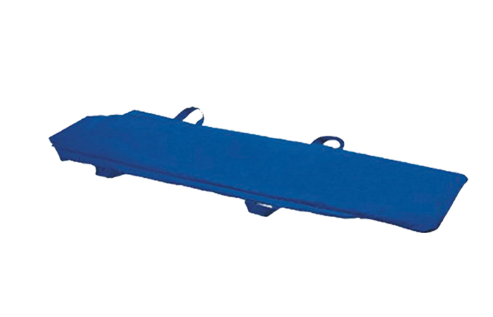
Many surfaces look fine after the first few wipe-downs, but repeated exposure to alcohol-based sprays and harsh disinfectants quietly breaks down their finish. Within months, you start seeing hazing, softened edges, or a sticky residue that won't rinse away. That kind of wear isn't just cosmetic—it creates micro-crevices where germs can hide, which defeats the whole point of sanitizing in the first place.
This material was formulated from the start to ignore that cycle. Instead of relying on a surface coating that eventually wears thin, its chemical resistance is built through the entire thickness. Hospital-grade quaternary ammonium compounds, bleach solutions, and 70% isopropyl alcohol have been used in soak tests for weeks at a time without measurable loss of hardness or color. Edge seals stay tight, and the texture remains easy to wipe clean rather than turning tacky.
What that means in daily practice is simple: you can disinfect as often as your protocols require, and the surface won't start fighting back. There is no need to switch to a gentler cleaner out of fear, or to replace panels because they've gone cloudy after a flu season. The material simply stays as cleanable on the thousandth wipe as it was on the first, which is what constant sanitizing should actually mean.
No More Waiting Months for Custom Bed Sizes
You finally found a bed frame you love, but the size won't fit your space. Maybe you need a true 7-foot mattress for a taller family member, or a narrow twin for a cozy guest nook. Standard catalogs rarely help. And custom orders? They usually mean waiting eight, ten, even twelve weeks while you sleep on the couch. That's not a plan, it's a pause button on your life.
We built a different kind of workshop. One where a custom bed size isn't a special request—it's just another Tuesday. Whether you're dealing with a non-standard RV platform, a vintage iron frame, or simply a bedroom with awkward angles, we cut, assemble, and ship your exact dimensions in days, not seasons. No rush fees, no vague delivery windows. You tell us the length, width, and preferred height; we handle the rest.
Think of it as off-the-shelf speed with made-to-measure precision. Our team works from your measurements, not a dropdown menu. And because we stock raw materials in-house, we skip the usual supply chain delays. You get a bed that fits your space the first time—without the long silence after you click 'order.'
How We Close the Gaps Between Bed Rail and Patient
Instead of relying on a single cushion or pad, we start by measuring the actual space between the rail and the mattress at several points along the bed frame. That gap changes depending on mattress compression, rail position, and the patient's weight, so a one-size insert rarely stays put. We cut high-density foam wedges to fit the widest opening, then tuck a low-friction cover over them so they slide inward with the mattress rather than bunching at the foot.
For patients who shift frequently or sleep on their side, we add a second layer of protection with adjustable bolsters that fasten to the rail brackets, not just the mattress. These move with the rail when it lowers, which keeps the barrier continuous during repositioning. If the bed has split rails, we bridge the middle hinge with a flexible filler strip that folds instead of leaving a pinch point.
Every shift, staff recheck the fit after any position change or bedding adjustment. We keep a log of which insert size worked for each patient because a small difference in mattress firmness can reopen a gap that looked sealed an hour earlier. That habit has cut down on entrapment near the rails more than any single product change.
Factory Floor Testing That Mimics Real Hospital Chaos
Walk through the final test area at this facility and you'd be forgiven for thinking you'd wandered into a busy emergency department. Monitors beep over each other, infusion pumps click in uneven rhythms, and carts of equipment collide in narrow aisles. Technicians don't check items one by one on a clipboard; they deliberately create power dips, kink oxygen lines, and blast radio interference across the floor. It's not disorder for its own sake—it's a controlled reproduction of the mess hospitals actually run on.
The test scripts here aren't linear. A ventilator is pushed to full load while a nearby electrosurgical unit fires, then the compressed air supply is cut for three seconds just as an alarm would normally sound. Two wireless monitors are forced onto the same channel, and a defibrillator is charged next to a running MRI simulator. Faults overlap, cancel out, or amplify each other, which is exactly what happens when a room fills with staff, family, and stacked equipment. The goal is to catch the weird interactions that only appear under simultaneous stress.
Passing this gauntlet means a device has already met the worst a hospital can throw at it before it ever reaches a patient. When a monitor freezes or a pump reboots, engineers trace the root cause while the equipment is still on the factory side of the loading dock. That is far cheaper—and quieter—than discovering a conflict during a code blue. The chaotic floor isn't a sign of sloppy manufacturing; it's the last proof that the product can handle the real world.
What a Hospital Bed Should Cost Over Its Lifetime
The purchase price of a hospital bed is only the starting point. Over a typical service life of ten to fifteen years, maintenance, replacement parts, software updates, and downtime can easily exceed the initial cost. A bed that seems like a bargain at signing often becomes the most expensive option once repair crews start making regular visits and the unit sits out of service waiting for parts.
Durability depends on how the bed is actually used day after day. Beds that handle heavier patients, aggressive cleaning chemicals, and constant repositioning need stronger motors, better casters, and surfaces that resist cracking. Spending more upfront on a bed engineered for those conditions usually means fewer failures and a longer working life, which keeps the total cost per patient day lower than a cheaper model that requires replacement after seven or eight years.
The real budget should include service contracts, battery replacements, software licensing, and eventually decommissioning. Ask vendors for lifecycle cost data instead of just the sticker price. A bed that costs twenty percent less to buy but needs twice as many service calls will quietly drain the facility budget long after the invoice is forgotten.
FAQ
The frame uses 2.0 mm cold-rolled steel tubes with a powder-coated finish, welded at stress points and tested to withstand a 500 kg static load. The patient surface is supported by a four-section articulated deck with reinforced hinges, and the entire base sits on 150 mm dual-locking casters that resist shifting during CPR or patient transfer.
We avoid hard-to-clean gaps by using sealed, ultrasonically welded seams on the mattress cover and injection-molded ABS head and footboards with smooth, rounded edges. All surfaces are rated for repeated exposure to quaternary ammonium disinfectants and 10% sodium hypochlorite without cracking or discoloration. The bed also has an open undercarriage design that allows floor cleaning without obstruction.
For ICU, we offer a cardiac chair position, chest X-ray cassette holder, and integrated nurse call. For bariatric patients, the frame width extends to 1100 mm and supports 500 kg with a wider air mattress. Pediatric versions include a 300 mm low-height position, lockable side rail covers, and playful color options. Obstetric wards often request a hand-held labor grip and adjustable foot section.
Each linear actuator undergoes a 20,000-cycle endurance test under 250 kg load, followed by a no-load speed check. We also perform a dielectric strength test at 1500 V for 60 seconds and a leakage current test below 100 µA. The control box is sealed to IP54 and tested for electromagnetic compatibility against other bedside devices.
We use multi-layer foam systems: a 50 mm viscoelastic top layer for pressure redistribution, a 100 mm high-resilience polyurethane core, and a firmer perimeter to prevent edge collapse. The mattress cover is breathable and moisture-vapor permeable, and the bed's deck has a 15-degree automatic lateral tilt setting for pressure offloading. The head and knee sections move independently to reduce shear forces.
The bed's electrical system is designed to meet IEC 60601-1 and is classified as Type B applied parts. All patient-contact metal parts are grounded through redundant paths, and the power cord is low-leakage with a hospital-grade plug. We include a potential equalization terminal on the frame for use in operating rooms and a lockable power cord to prevent accidental disconnection.
We ship each bed with a QR-coded parts list and a 15-minute video guide for nursing staff. Critical spare parts like casters, actuators, and control boxes are stocked in regional warehouses for 48-hour delivery. The control system logs error codes that can be read via USB, and we provide a free remote diagnostic service for the first two years.
We now integrate weight sensors under the deck to monitor patient movement and send alerts to the nurse call system when a patient exits. The bed can automatically adjust head-of-bed angle for ventilator-associated pneumonia prevention protocols. We also use a CAN-bus communication protocol so the bed can be linked to hospital information systems, with firmware updates done remotely.
Conclusion
Hospital beds rarely get credit for the daily abuse they take, yet the frame is where nursing frustration often starts. We reworked the bed frame around how nurses actually move, lift, and adjust patients—fewer pinch points, smoother casters, and a lower working height that reduces back strain. The materials can handle years of harsh disinfectants without cracking or corroding, so the bed keeps its finish and function even after thousands of wipe-downs. And when a facility needs a non-standard width or length, our floor is already set up for short runs: instead of waiting months for a custom quote, you get a production slot within weeks because we keep base components modular and ready.
The space between side rails and the mattress is where injuries hide. We design rail profiles and mattress retainers together as a system, closing that gap to a finger-width tolerance across all positions. Before any bed ships, it goes through a test cell that replicates the chaos of a real ward—overloaded trays, yanked rails, spilled fluids, and repeated full-weight drops on the deck. That abuse testing catches failures before they reach patients. Cost is judged over a decade, not at purchase. Fewer replacement parts, longer service intervals, and a frame that holds alignment cut total ownership expense while keeping patient safety and caregiver workflow at the center.
Contact Us
Contact Person: Frank Chan
Email: [email protected]
Tel/WhatsApp: 0086-13924529088
Website: https://www.suncare-medical.com