
Fatty Alcohol Polyoxyethylene Ether Manufacturer: Expert Insights on High-Performance Surfactants
2026-08-05
Behind every impeccably stable emulsion or perfectly dispersed formulation lies a class of unsung heroes: fatty alcohol polyoxyethylene ethers. These versatile nonionic surfactants power breakthroughs across textiles, agrochemicals, and personal care. Yet not all suppliers deliver the precision consistency and technical depth required for demanding applications. HAISEN combines decades of ethoxylation expertise with a relentless focus on narrow-range oligomer distribution and customized cloud points, turning raw chemical potential into measurable process advantages. In this article, we go beyond spec sheets to share field-tested insights on optimizing performance, sidestepping compatibility pitfalls, and why surfactant choice can make or break your formulation—straight from the lab bench of a manufacturer who lives and breathes these high-performance molecules.
How AEO Surfactants Redefine Industrial Cleaning Efficiency
AEO surfactants, or alcohol ethoxylates, have quietly revolutionized the way industrial facilities approach cleaning challenges. Unlike traditional harsh solvents, these non-ionic agents excel at breaking down complex oils, greases, and stubborn residues without corroding equipment or leaving behind harmful byproducts. Their molecular structure—a hydrophobic tail paired with a hydrophilic ethoxylate chain—allows them to reduce surface tension dramatically, enabling water-based solutions to penetrate and lift contaminants that once demanded aggressive chemicals. This shift not only boosts cleaning speed but also minimizes downtime, a critical factor in high-output environments where every minute of stoppage translates to lost revenue.
What truly sets AEO surfactants apart is their adaptability across a wide spectrum of industrial conditions. They perform consistently in hard water, at varying temperatures, and even in the presence of heavy soil loads where other cleaners falter. Manufacturers can fine-tune the ethoxylation level to match specific tasks, creating formulations that rinse away easily without leaving residues that attract dirt later. This precision means less rewashing, reduced water usage, and longer-lasting clean surfaces—advantages that add up to significant resource savings over time. Industries from food processing to metalworking are discovering that AEO-based cleaners maintain efficiency cycle after cycle, often requiring lower concentrations than conventional alternatives.
Beyond operational gains, AEO surfactants carry a lighter environmental footprint, aligning with tightening regulations and corporate sustainability goals. They break down readily in wastewater treatment systems and exhibit low aquatic toxicity, making them a responsible choice without sacrificing performance. For businesses navigating the balance between stringent hygiene standards, cost pressures, and environmental accountability, AEOs offer a practical path forward. Their emergence marks a turning point where cleaning is no longer just about removing dirt—it’s about doing so intelligently, sustainably, and with an eye on the bottom line.
Tailoring Fatty Alcohol Polyoxyethylene Ethers for Niche Applications
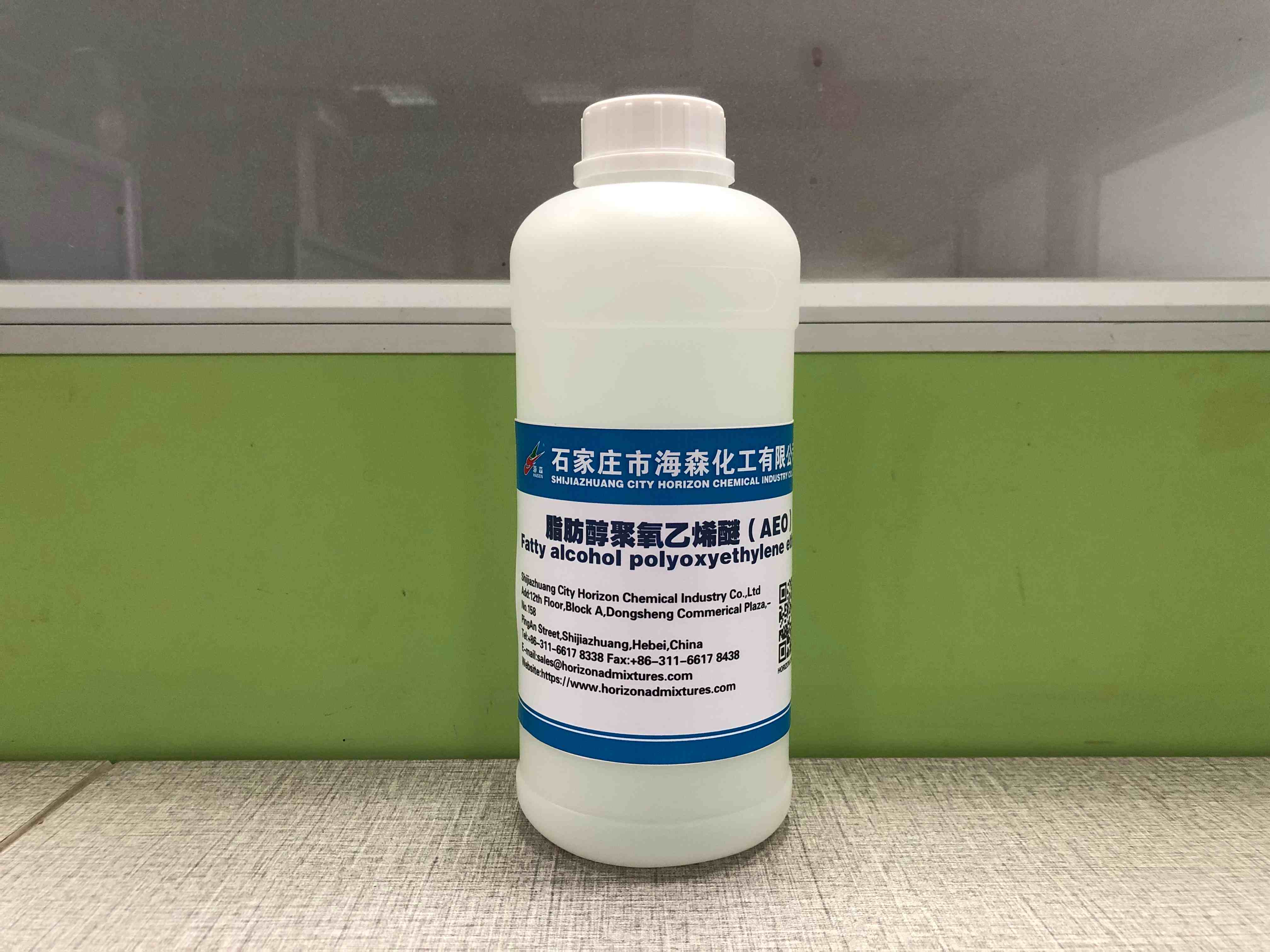
The versatility of fatty alcohol polyoxyethylene ethers lies in the nearly infinite combinations of hydrophobic tails and polyoxyethylene chains. By carefully selecting the alcohol—ranging from short-chain lauryl to long-chain stearyl or even branched isomers—and adjusting the degree of ethoxylation, chemists can dial in properties like cloud point, wetting speed, and emulsifying strength with astonishing precision. A nonionic intended for a low-foam metal cleaning concentrate, for instance, might be built around a narrow ethoxylate range on a medium-chain alcohol, striking a balance between rapid soil penetration and the alkali stability demanded by the bath conditions. This molecular tailoring transforms a simple surfactant into a problem-solving tool for formulators tackling uncommon performance gaps.
Niche markets often reveal just how critical structural nuance can be. In textile pre-treatment, an ether with a longer alkyl chain and a modest polyoxyethylene block excels at removing hydrophobic waxes without overwhelming the effluent with foam. The same backbone, ethoxylated to a higher molar ratio, finds a home in high-temperature emulsion polymerization, where its elevated cloud point prevents phase separation during exothermic reactions. Even within household products, subtle shifts matter: a toilet bowl trucleaner might leverage a short-chain, highly ethoxylated variant to guarantee complete solubility in cold water and leave behind a streak-free finish, while a degreasing additive for automotive wipes relies on a branched alcohol ethoxylate that cuts through oil without leaving a tacky residue.
The push toward renewable feedstocks has intensified interest in tailoring these surfactants for performance and sustainability in tandem. Alcohols derived from coconut or palm kernel oil can be ethoxylated with narrow-range catalysts, yielding products with markedly less unreacted alcohol and a tighter distribution of homologues—a boon for applications sensitive to odor or skin irritation, such as baby wipes or intimate washes. Elsewhere, the move away from linearity is gaining ground; methyl-substituted or fully branched alcohols produce ethoxylates with suppressed gel phases and faster dissolution, which solves real-world headaches in cold-process formulations. Each adjustment, whether in lipophilic architecture or oxyethylene length, unlocks a new subset of properties, ensuring these molecules remain indispensable well beyond commodity cleaning.
Green Chemistry in AEO Manufacturing: Beyond Standard Practices
In the realm of Alcohol Ethoxylate (AEO) production, green chemistry has evolved from a peripheral consideration to a driving force for innovation. Beyond simply meeting baseline environmental regulations, forward-thinking manufacturers are re-engineering core processes to minimize waste and energy consumption. This involves replacing conventional petrochemical feedstocks with bio-based alternatives, such as ethanol derived from sugarcane or corn, which substantially reduces the carbon footprint. Moreover, the synthesis itself is being refined through catalytic advancements that operate under milder conditions, slashing greenhouse gas emissions and hazardous by-products.
A deeper integration of circular economy principles further distinguishes truly sustainable manufacturing. Closed-loop systems for water and solvent recovery are becoming standard, but the next frontier lies in the valorization of side streams—transforming what was once considered waste into valuable co-products. For instance, advanced separation technologies enable the isolation of homologs and oligomers for use in specialized industrial applications, thereby improving atom economy and reducing disposal needs. This holistic approach ensures that every molecule is utilized, pushing the boundaries of efficiency well beyond conventional metrics.
The commitment to green chemistry also extends into the final product lifecycle and transparency in the supply chain. Manufacturers are designing AEOs for improved biodegradability without sacrificing performance, ensuring that the surfactants break down rapidly and completely after use, mitigating aquatic toxicity. Additionally, rigorous life-cycle assessments are openly shared, validating the environmental gains from raw material sourcing to end-of-life. By adopting these comprehensive strategies, AEO production not only complies with current green standards but actively redefines what responsible manufacturing means in the 21st century.
Ensuring Purity and Performance: The Raw Material Advantage
Every high-performance product begins with an uncompromising choice in raw materials. The purity of these foundational inputs directly dictates the reliability, efficiency, and longevity of the final output. When materials are sourced without contamination or substandard blends, they enable tighter tolerances and more predictable behavior under stress. This isn’t just about meeting a specification—it’s about building in the resilience that separates premium from mediocre before a single process step even begins.
Performance gains often trace back to how well the base stock aligns with the operational demands placed on it. Chemistries and microstructures that are inherently cleaner and more uniform reduce the likelihood of defects during manufacturing. They also open the door to lighter, stronger, or more heat-resistant designs that would be impossible with off-the-shelf alternatives. The raw material advantage is a deliberate engineering filter: it eliminates variables that downstream processes can’t fix, leaving a product that consistently outpaces expectations.
Beyond immediate performance, there’s an understated economic logic. Higher purity reduces waste by lowering rejection rates and extending maintenance intervals. It also future-proofs against tightening regulations or shifting industry standards, as cleaner inputs inherently carry fewer compliance risks. This isn’t merely about paying a premium for better inputs; it’s about reshaping the entire value proposition so that reliability becomes a built-in feature rather than an afterthought.
Unlocking New Possibilities with AEO in Cosmetics and Personal Care
Alcohol ethoxylates have quietly taken on a transformative role in the world of beauty and skincare. Far beyond their classic use as gentle cleansing agents, these versatile surfactants now enable formulators to craft products that feel lighter, rinse cleaner, and respect the skin’s natural barrier. Their unique molecular structure allows perfect control over foam density and emulsifying power, opening the door to textures that were once difficult to achieve—think cloud-like creams and crystal-clear serums that still deliver deep hydration.
One of the most exciting shifts is how AEOs are helping brands move away from harsh sulfates without compromising on performance. By blending different ethoxylation levels, it’s possible to fine-tune mildness and solubility, creating shampoos that lather beautifully yet soothe the scalp, or makeup removers that melt away stubborn products without tugging. This tuning also improves compatibility with sensitive ingredients like retinol and vitamin C, making active-rich formulas more stable and accessible for daily use.
Sustainability-minded innovation is another frontier where AEOs shine. Newer grades derived from bio-based alcohols and designed for ready biodegradability are aligning performance with eco-conscious values. They’re enabling waterless formats, concentrated refills, and cold-process manufacturing—helping brands reduce their footprint while delivering the sensorial elegance consumers expect. In an industry that demands both softness and efficacy, these humble molecules are proving to be a catalyst for smarter, kinder beauty solutions.
What to Look for in a High-Performance AEO Manufacturer
A manufacturer’s engineering depth often reveals itself in how they handle unconventional requirements. Instead of relying on standard catalogs, the best teams dissect the operational context of your application—whether it involves extreme thermal cycling, unusual mechanical loads, or strict noise constraints. They’ll bring a prototyping ethos that values iterative testing over theoretical simulations, using real-world feedback to refine efficiency curves and response times. Pay attention to how freely they discuss past failures: a partner who openly shares lessons from edge-case breakdowns is invested in long-term reliability, not just meeting a spec sheet.
Equally telling is their approach to integration complexity. True high-performance output isn’t just about the core mechanism—it’s about how seamlessly the system communicates with your existing infrastructure. Look for manufacturers who treat control protocols and data feedback loops as design priorities from day one, not as afterthoughts. Their engineering team should be comfortable mapping out signal latency budgets and electromagnetic compatibility strategies alongside mechanical tolerances. When the conversation stays grounded in your actual data streams and physical layout rather than generic performance claims, you’ve likely found a partner who views optimization through the lens of your entire ecosystem, not just their own product.
FAQ
They are nonionic surfactants made by reacting fatty alcohols with ethylene oxide, creating a molecule with a hydrophilic polyoxyethylene chain and a lipophilic fatty alkyl tail. Their high-performance nature comes from exceptional emulsifying, wetting, and dispersing properties, combined with stability across a wide pH range and compatibility with other surfactants, making them versatile in demanding formulations.
Reputable manufacturers use tightly controlled ethoxylation processes with precise monitoring of reaction parameters like temperature, pressure, and catalyst concentration. They also implement rigorous in-process testing and final product analysis—such as cloud point, hydroxyl value, and molecular weight distribution—to guarantee batch-to-batch uniformity and adherence to strict specifications.
Beyond basic production capability, a standout manufacturer offers deep technical expertise, the ability to tailor the degree of ethoxylation for specific applications, flexible batch sizes, and responsive customer support. Certifications like ISO 9001, responsible supply chain practices, and a willingness to collaborate on custom solutions also differentiate top-tier suppliers.
They are vital in home and industrial cleaning (detergents), textiles (scouring and dyeing), agriculture (adjuvants for improved pesticide action), personal care (mild shampoos and cleansers), and leather processing. Their primary role is to lower surface tension, enabling better wetting, emulsification, or dispersion of active ingredients.
Yes, many grades are readily biodegradable and have favorable aquatic toxicity profiles, especially those with linear fatty alcohol chains. Responsible manufacturers can provide data on biodegradability and help select products suitable for eco-label certifications, though the exact profile depends on alkyl chain length and EO content.
Issues like gel phase formation during dilution, sensitivity to water hardness, and foaming control are typical. Experienced manufacturers offer application guidance, recommend complementary co-surfactants or hydrotropes, and can adjust the surfactant’s HLB value to optimize performance and processability for the specific formulation conditions.
Conclusion
Fatty alcohol polyoxyethylene ethers (AEO) have become indispensable in modern surfactant technology, reshaping industrial cleaning with unmatched efficiency. Expert manufacturers leverage precise ethoxylation to fine-tune hydrophilic-lipophilic balance, enabling rapid soil penetration and emulsification even under extreme conditions. This adaptability extends far beyond generic formulations; custom-tailored AEOs now address niche demands in agrochemicals, textile processing, and metalworking fluids, where off-the-shelf surfactants fall short. Behind these advances lies a commitment to green chemistry—leading producers are re-engineering processes to minimize waste, using renewable feedstocks and catalytic methods that slash energy consumption without compromising performance.
The raw material backbone determines a surfactant’s purity and reliability, and top-tier manufacturers secure high-grade fatty alcohols to eliminate impurities that could trigger skin irritation or destabilize formulations. In cosmetics and personal care, this translates into mild cleansing systems and emulsifiers that enhance product aesthetics and safety. When sourcing an AEO partner, look for deep process expertise, rigorous quality controls, and a track record of innovation—qualities that distinguish a supplier capable of unlocking new application frontiers while meeting evolving regulatory demands.
Contact Us
Contact Person: Sam Lee
Email: [email protected]
Tel/WhatsApp: 86-311-6617 8338
Website: https://www.horizonadmixtures.com/