

Electrical Slip Ring Supplier: How to Choose the Right Partner for Your Industrial Needs
2026-08-12
Selecting the right electrical slip ring supplier can make or break your industrial project. From wind turbines to medical robots, reliable rotary transmission is non-negotiable. But with countless options on the market, how do you cut through the noise? Whether you're battling space constraints, harsh environments, or signal integrity challenges, the partner you choose must deliver more than just hardware. At MOFLON, we've seen firsthand how the right engineering support transforms system performance. In this guide, we’ll walk you through the key factors to consider—beyond the datasheet—so you can avoid costly downtime and accelerate your design.
Decoding Supplier Expertise Beyond the Brochure
Glossy catalogs and polished sales pitches can paint a flattering picture, but true supplier expertise is rarely captured in marketing materials. To gauge real capability, you need to look at how a supplier handles the unexpected. Do they have a track record of solving complex, non-standard challenges? A supplier who has repeatedly adapted their processes to meet unique demands demonstrates a depth of knowledge that goes far beyond what any brochure can convey.
Another telling sign is the way a supplier engages during the early conversation. Experts don't just recite specifications—they ask insightful questions, challenge assumptions, and suggest refinements that show they've thought deeply about your goals. This collaborative probing reveals whether they genuinely understand the underlying mechanics of their field, or just know how to follow a script. It's the difference between a vendor who simply executes orders and a partner who elevates the outcome.
Finally, look beyond the customer testimonials they handpick. Seek out unfiltered feedback, visit their facility if possible, and watch how their teams solve problems in real time. A supplier’s true expertise is often evident in the details: how they manage quality deviations, the efficiency of their internal communication, and their willingness to invest in continuous improvement. These operational realities tell a far more honest story than any curated portfolio.
Why Material Choices Make or Break Slip Ring Performance
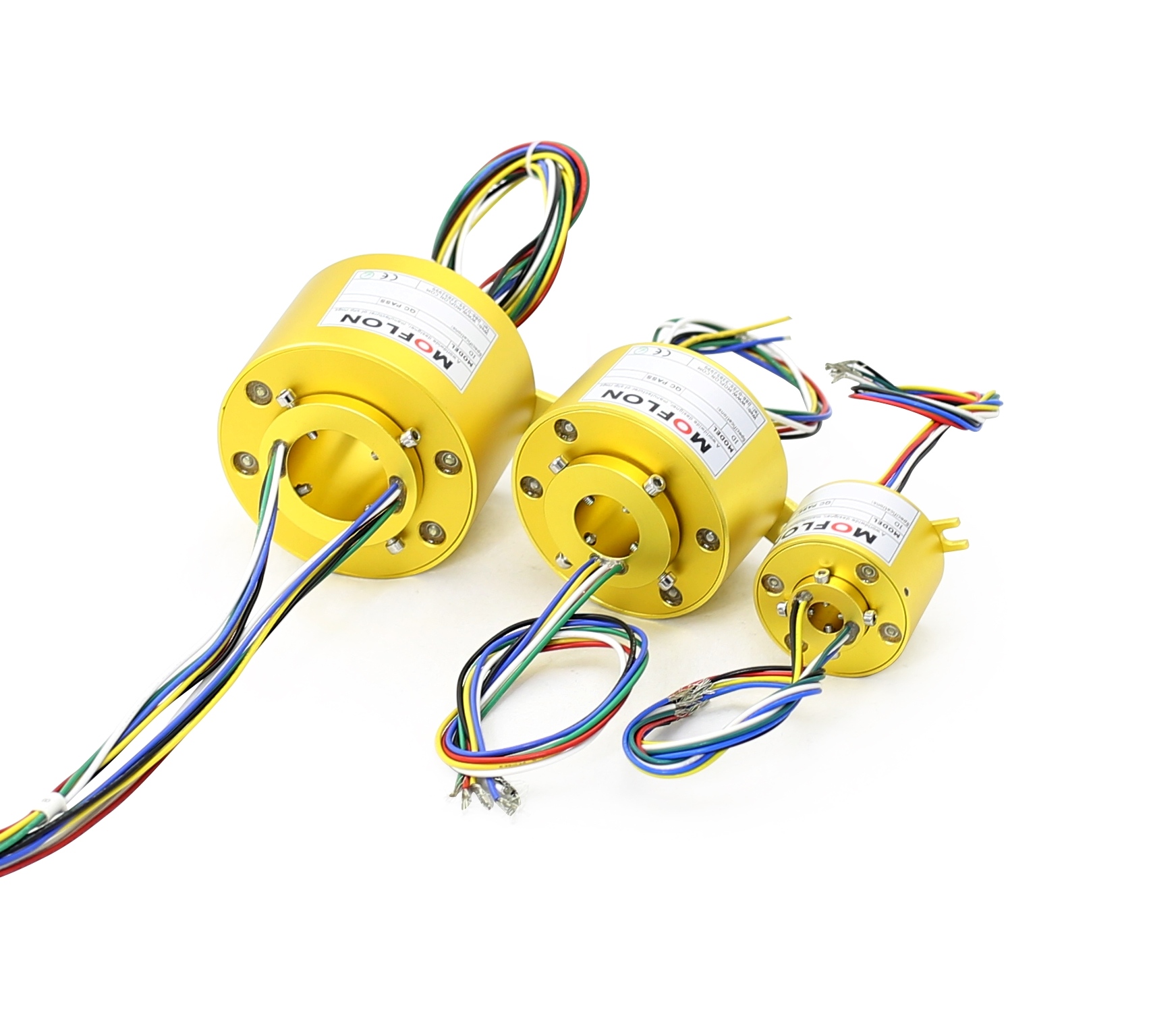
The raw heart of a slip ring lies in its contact materials. Pick the wrong pairing—say, a copper ring against a graphite brush in a high-humidity environment—and you’ll soon see erratic signals, voltage drops, or outright failure. Gold-on-gold contacts, often dismissed as overkill, actually shine in low-current data circuits where a fraction of an ohm fluctuation can corrupt sensitive measurements. The trick isn’t just picking “premium” metals; it’s matching contact chemistry to the exact chore—rotational speed, current density, and atmospheric grime all tilt the balance toward one alloy over another.
Insulation and housing materials are the silent partners that often doom a design. Standard plastics might hold up on a bench, but put them inside a wind turbine nacelle where temperatures swing from -40°C to +70°C with salt spray, and you’ll get cracking, tracking, or capacitive coupling that bleeds noise into the signal path. We’ve seen PTFE or ceramic composites save projects where engineers assumed any dielectric would do. A material’s dielectric constant and thermal expansion coefficient aren’t just datasheet numbers—they dictate whether your Ethernet signal arrives intact or as a ghost of itself after a few thousand cycles.
Beyond the core components, the structural backbone of the slip ring—often aluminum or stainless steel—determines how vibration, shock, and thermal gradients distort the ring-brush interface over time. A flimsy housing flexes just enough to create micro-gaps that oxidize contacts or set up fretting corrosion. Heavy gold plating over a nickel underlayer might solve the immediate wear issue, but if the substrate deforms, the plating cracks, and debris becomes an abrasive cocktail. The best material choices don’t just survive the first hundred hours; they anticipate the slow degradation dance between lubricant evaporation, brush spring relaxation, and ring surface evolution—factors that turn a “minor” material compromise into a field failure six months in.
The Customization Factor: When Off-the-Shelf Just Won’t Cut It
There’s a quiet frustration that builds when a tool almost works. The dashboard makes sense but omits the one metric your team lives by. The workflow covers 80% of the process, but that final 20% forces a messy workaround of emails, spreadsheets, and sticky notes. Off-the-shelf products promise speed and affordability, and they often deliver—for a while. But the longer you use them, the more you feel their edges. You’re no longer fitting the tool into your business; you’re reshaping your business to fit the tool. That’s the moment customization stops being a preference and becomes a necessity.
Customization isn’t just about adding a logo or swapping colors. It’s about logic that mirrors how you actually think and operate. For a regional distributor, it might mean a pricing engine that factors in fuel surcharges by zip code. For a medical practice, it could be an intake form that dynamically adjusts follow-ups based on a patient’s age and medication list. These aren’t frivolous details; they are the silent differentiators that separate a seamless customer experience from a clunky one. When your software can’t capture these subtleties, you leave value on the table—and often, your employees spend hours manually bridging the gap.
The real cost of sticking with an ill-fitting solution sneaks up on you. It’s not just the subscription fee; it’s the hours spent training new hires on convoluted workarounds, the deals lost because a quote took too long to generate, the data errors from duplicate entry. Custom-built tools carry their own risks—higher upfront investment, the need for ongoing maintenance—but when the alternative is slowly bending your own processes out of shape, the equation flips. Off-the-shelf only wins when your needs are truly generic. The moment they become specific, you’re no longer saving money—you’re simply paying in a different currency.
Navigating Lead Times Without Compromising Quality
Lead times can feel like a moving target, especially when demand spikes or supply chains hiccup. But cutting corners to speed things up usually backfires. Instead, we zero in on the tasks that genuinely drive progress, not just the ones that look busy. By understanding the end-to-end workflow, we pinpoint where delays actually happen—often it's not the production itself but the handoffs and approvals that stall momentum. Tightening those gaps without squeezing the actual work keeps quality intact.
Another lever is communication with suppliers and clients. Setting realistic expectations early prevents the panic-induced scramble that leads to mistakes. We've learned that a transparent timeline, with built-in buffers for the unpredictable, is far more effective than promising the impossible. It also helps to have contingency plans—alternative materials, backup suppliers, cross-trained staff—so when a bottleneck hits, the solution is already in place. Quality isn't a sacrifice; it's a constant, and navigating lead times is just about steering around obstacles without losing sight of it.
Post-Sale Support: The Hidden Cost Differentiator
Many businesses treat the initial price tag as the ultimate competitive weapon, yet they overlook how post-sale support drastically reshapes total cost of ownership. The upfront cost of equipment or software is just the visible tip—ongoing maintenance, training, emergency response, and upgrade expenses are frequently underestimated during procurement. When a vendor fails to deliver prompt technical aid or spare parts after the sale, downtime losses can quickly eclipse any upfront savings, and this hidden burden becomes especially punishing over a multi-year lifecycle.
Support quality quietly molds customer loyalty, though its direct link to profitability is rarely measured. One poor service experience can drive a client straight to a competitor, while truly dependable post-sale care builds a sticky relationship—customers not only repurchase but become vocal advocates. In B2B settings, contract renewal rates correlate strongly with response speed and resolution efficiency; this trust premium can't be bought with discounts, yet it's often the cheapest retention tool a company wields.
Strategically, post-sale support acts as deferred value delivery that keeps a supplier invested long after the transaction, raising imitation barriers. Firms that view support as a cost center typically offer reactive, bare-minimum service; those that treat it as a profit engine proactively mine customer data, anticipate needs, and craft premium support tiers. This mindset shift turns a necessary hassle into a true differentiator—one that competitors can't easily replicate without matching the same operational depth and cultural commitment.
Building a Partnership, Not Just a Transaction
True collaboration is rooted in understanding where a client wants to go, not just selling them what they need right now. It starts with listening—really listening—to the quiet frustrations behind a brief, the aspirations that haven’t yet been articulated. When you treat every interaction as a chance to learn about someone’s vision, you stop being a vendor and start becoming a strategic ally. The shift is subtle but profound: instead of asking "What can I sell you?" the question becomes "How can I help you succeed?" This approach reframes the entire relationship, turning project-based exchanges into an ongoing dialogue that evolves as goals shift and new challenges emerge.
Partnerships thrive on transparency and shared risk. Too often, service providers promise perfect outcomes while hiding behind jargon or fine print. A genuine partner, on the other hand, openly discusses constraints, reveals their own limitations, and works side by side to solve problems rather than pointing fingers when something goes wrong. This honesty builds a reservoir of trust that becomes invaluable when tough calls need to be made. It also means celebrating wins together and, equally, absorbing setbacks without blame. When both sides are invested not just in the deliverables but in the relationship itself, the work becomes less about contractual obligations and more about creating something neither could achieve alone.
The best partnerships outlast any single project because they’re built on mutual growth. A transactional mindset sees a client as a closed loop: hand over the work, get paid, move on. In contrast, a partnership stays curious about what happens next. Did the solution generate the expected impact? How has the client’s world changed since we last spoke? By staying engaged and offering insights without an immediate agenda, you create a resonant frequency that keeps the door open for future collaboration. This enduring connection transforms customers into ambassadors—people who don’t just come back for more, but actively champion your ability to see the bigger picture. In the end, deals come and go, but the partners who stay are the ones who never lost sight of the human element behind every business goal.
FAQ
Focus on their experience with your specific industry and application. Ask about custom design capabilities, in-house testing, and their engineering team's familiarity with materials that suit your operating environment—like high moisture, vibration, or extreme temperatures.
Request sample units for testing in your own conditions, and ask for detailed test reports reflecting real-world performance. Check for certifications like ISO 9001, and talk to existing customers in similar industries to hear about long-term reliability.
Many applications need more than off-the-shelf solutions. A capable supplier will offer tailored designs—adjusting electrical circuits, mechanical dimensions, or materials—to match your exact power and signal needs, without pushing you into a one-size-fits-all product.
It's critical, especially for integrated systems. Look for responsive support channels, clear documentation, and assistance with installation or troubleshooting. A partner who provides training for your team and quick access to replacement parts can greatly reduce downtime.
Beware of vague specifications, reluctance to share failure data, or a lack of on-site visits. If a supplier can't explain how they handle noise, wear, or signal integrity, or if their lead times seem unrealistically short without justification, treat it as a warning sign.
The cheapest option often leads to higher maintenance costs and early failure. Instead, evaluate the total lifecycle expense—considering durability, warranty support, and the supplier's reputation for honoring commitments. A slightly higher initial investment can pay off through longer service intervals and fewer unexpected shutdowns.
Manufacturers with comprehensive test labs can simulate real operating conditions—like continuous rotation, temperature cycling, and signal integrity checks—before shipping. This catches potential issues early and gives you confidence that the slip rings will perform as expected from day one.
Ask about their R&D investments and recent product developments. A forward-thinking partner will have a roadmap for improving contact materials, reducing electrical noise, or integrating fiber optics and fluidics, ensuring your system stays competitive as technology evolves.
Conclusion
Selecting a slip ring supplier isn't just about comparing datasheets—it's about uncovering the engineering depth behind the polished marketing. The real differentiator emerges when you probe beyond the brochure: can the supplier walk you through failure modes they've solved in applications similar to yours? Their material science decisions directly impact longevity and signal integrity, from gold-on-gold contacts for low-noise data transfer to silver graphite composites for high-power applications in dusty environments. A partner worth your trust doesn't just offer catalog solutions; they engage in a genuine conversation about your specific rpm, environmental sealing, and hybrid signal requirements, proposing design tweaks that prevent premature wear or crosstalk. This level of customization often surfaces the subtle mismatch between off-the-shelf products and your machine's unique operational profile.
Yet technical expertise alone isn't enough—the way a supplier handles lead times and post-sale issues reveals their operational maturity. Look for partners who transparently map out their production schedule, identifying potential bottlenecks early rather than making empty promises. After delivery, the cost of ownership becomes visible through their support responsiveness: do they offer on-site troubleshooting or just generic email troubleshooting guides? The best relationships evolve into proactive collaborations, where the supplier monitors your slip ring's performance trends and suggests upgrades before failures occur. In the end, the right partnership transforms a simple component purchase into a long-term reliability advantage, blending deep engineering insight with a commitment to your uptime that goes far beyond a single transaction.
Contact Us
Contact Person: Xiangpin Li
Email: [email protected]
Tel/WhatsApp: 86 186 1706 8578
Website: https://www.moflon.com