

Custom Threaded Ball Valves: What to Consider Before You Specify
2026-11-25
Specifying a custom threaded ball valve isn’t just about picking a size and a pressure class—it’s about avoiding the quiet compromises that show up months later in the field. From end connection details to seat material choices, small oversights can turn a routine shutoff point into a maintenance headache. Before you lock in your next specification, it pays to know which questions actually matter. This guide walks through the key factors, and if you’re looking for a supplier that treats custom as standard, UPTAI has been helping engineers get those details right.
Fluid Chemistry Should Drive the Material Call
Material selection often starts with pressure ratings, temperature limits, and installed cost. That sequence quietly invites trouble when the fluid is treated as an afterthought. A pump housing that handles clean water without issue can fail within months in brine because the chlorides find their way into crevices and initiate pitting long before any mechanical limit is approached. If the chemistry of the stream does not shape the shortlist, the shortlist will eventually be reshaped by leaks, contamination, or unscheduled shutdowns.
The fluid is not a fixed background condition. Small changes in pH, dissolved oxygen, sulfur species, or solvent content can shift a material from passive to actively corroding. Temperature concentrates the problem: a lining that works at ambient conditions may swell, soften, or lose adhesion when the same fluid runs hot under pressure. For this reason, compatibility testing should use the actual production mixture, not a simplified proxy. If a vendor offers a generic corrosion chart, treat it as a starting point rather than a verdict.
A practical rule is to resolve chemical compatibility before debating mechanical properties. Start with the full fluid analysis, including trace constituents and upset conditions, then eliminate candidate materials that cannot survive the wet environment. Only after that filter should strength, fatigue life, weldability, and cost enter the conversation. This order feels slower at the design stage, but it prevents the expensive pattern of selecting a familiar alloy, qualifying it for pressure, and then discovering during commissioning that the process stream dissolves something the spec sheet never mentioned.
Thread Mismatches Are the Fastest Way to Delay a Build
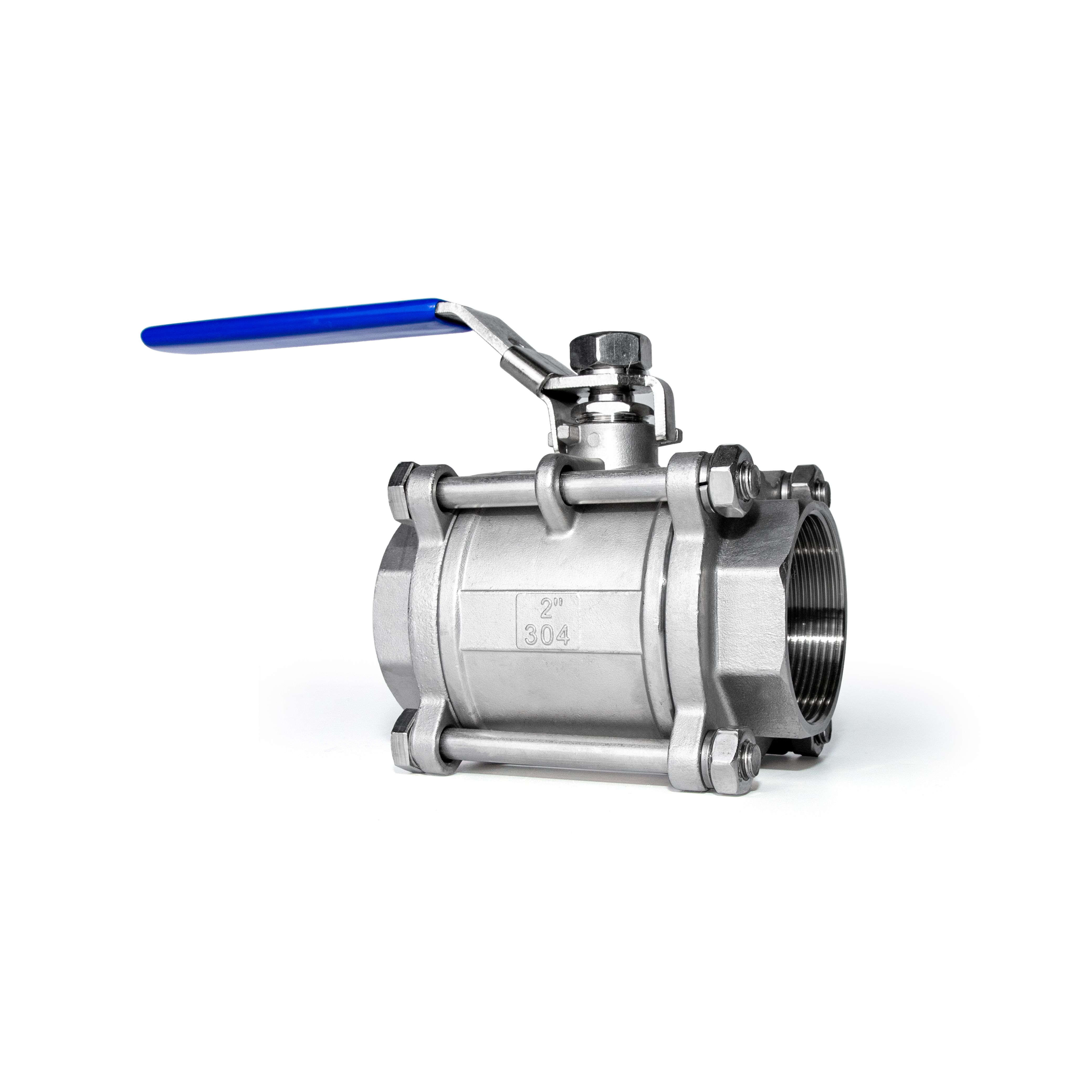
Thread mismatches tend to get written off as a minor supply issue until a line stops. A bracket that should take an M10 bolt arrives with M8 holes, or a replacement fastener has the right diameter but the wrong pitch. Unlike a cosmetic defect, there is usually no safe workaround; forcing the thread just strips it, and the assembly cannot move forward.
The delay feels sudden, but the cause is often silent. Substitutions happen during purchasing when a spec gets copied from an old revision or a vendor switches tolerance bands. By the time the mismatch is caught at the torque station, the workaround options are already limited to rework, hand tapping, or waiting for the correct parts. All of them steal hours that were never in the schedule.
Keeping thread details explicit in the BOM and checking incoming fasteners against the actual mating part takes far less time than recovering from a stalled build. Even a five-minute verification at receiving can prevent a half-day stoppage at final assembly.
Rated Pressure and Temperature Are Not Your Operating Limits
Many engineers assume the pressure rating stamped on a valve or the temperature printed on a pump curve represents the boundary of safe operation, but those numbers rarely tell the whole story in a real plant. The rated pressure often comes from a single material test at a fixed temperature, while your piping sees thermal expansion, water hammer, and occasional misalignment that shift actual stress far beyond a simple static figure. Similarly, a temperature rating assumes uniform heat distribution, yet a steam line with poor insulation or a dead leg can develop local hot spots that never show up on a standard nameplate.
Operating limits emerge from how the component interacts with everything around it, not from a catalog value. Flange gaskets relax after thermal cycles, pump seals respond to process fluid chemistry, and control valves behave differently when throttled near a closed position. If you treat rated pressure and temperature as hard walls, you miss the slow degradation that occurs at 80% of those numbers because of vibration, corrosion, or repeated start-stop sequences. A system running comfortably inside its nominal ratings can still fail when a relief valve chatters or a pipe hanger loses tension over the years.
The practical approach is to separate design limits from routine operating windows. Ratings are useful for component selection and initial sizing, but they do not account for cumulative fatigue, transient spikes, or operator habits. Instead of asking whether a pressure or temperature exceeds the label, ask how often it approaches that label and what else changes at the same time. A steam trap that repeatedly hits its temperature rating for ten minutes every shift may be in worse shape than one that briefly exceeds its pressure rating once a year, because the first condition drives long-term material creep while the second might be a rare surge the piping can absorb without damage.
The Seat and Seal Package Deserves Its Own Review
Usually, a seat gets a passing mention in a longer write-up, but this one changed how I think about the whole setup. The cushioning has a firmness that doesn't collapse after an hour, and the side bolsters actually hold you in place without digging into your ribs. It is the kind of detail you only notice when you stop treating the seat as furniture and start paying attention to how your body feels after a long drive.
The seal package is easy to overlook until the weather turns. I drove through a downpour and a stretch of dusty gravel, and the cabin stayed remarkably quiet and clean. The door seals close with a solid thunk rather than a hollow slap, and there is no faint whistle at highway speed. That might sound minor, but over weeks of daily use it adds up to a much calmer environment.
What makes this combination worth its own review is how much it affects the daily ownership experience. The seat and seals are not flashy upgrades, yet they are the parts you interact with constantly. If the rest of the machine disappeared, I would still remember how good it felt to sit here and how little outside noise followed me inside.
Even a Manual Valve Needs an Automation Path
Many plants still depend on manually operated valves for isolation, bypass, or occasional utility service. The assumption is that if a valve is only turned a few times a year, automation is unnecessary. But even these low-cycle valves benefit from a planned route to automation because access is often poor, operations are inconsistent, and the true cost of sending someone to the field is rarely counted.
That does not mean every manual valve should be motorized next week. It means the valve should be selected, installed, and documented so an actuator can be added later without cutting pipe or reworking supports. A bracket pad, adequate stem height, a lockable energy source nearby, and a clear tag number are inexpensive at the start and prevent expensive modifications later.
A practical automation path also clarifies what automation is meant to achieve. Sometimes a simple position indicator or limit switch closes the reliability gap; other cases need full open-close control with torque seating. Linking the manual valve to an asset list with this future intent turns a forgotten hand wheel into a manageable part of the plant’s control strategy.
Maintenance Access Is Easier to Spec Now Than Retrofit Later
Maintenance access is one of those quiet layout decisions that rarely gets attention until a technician has to cut a hole in a finished wall. Specifying a properly placed access panel or clearance zone during design is far simpler than trying to create one after drywall, paint, and trim are complete. The cost difference is not subtle: a modest coordination note on a drawing can prevent hours of demolition, patching, and repainting later.
Once construction is finished, retrofitting access usually means working around live systems, relocating obstructions, and sometimes disturbing fire-rated enclosures or acoustic assemblies. The result often looks patched-together and may still leave the equipment awkward to reach. Planning for access early lets architects and engineers resolve conflicts before they become physical obstacles. It also gives the facility team a clear path to filters, valves, controls, and drains without guesswork.
The practical payoff accumulates with every service call. A reachable filter gets changed on time; an accessible shut-off valve gets exercised during inspections; a clear path to a fan motor keeps a minor repair from becoming a major wall opening. Those early decisions quietly protect the long-term performance of the building and keep routine maintenance from turning into an unplanned construction project.
FAQ
Thread mismatches are one of the most common field problems. NPT, BSPP, and BSPT are not interchangeable, and even the same nominal size can have different pitch and sealing geometry. Confirm the thread form, gender, and whether the connection is tapered or parallel, then state that explicitly on the drawing or data sheet.
Full port keeps the bore roughly equal to the pipe ID, so it adds little pressure drop and allows pigging or inspection in some lines. Reduced port saves space and cost but introduces a restriction. If the process can tolerate some pressure loss and there is no need for full-line ID, reduced port can work.
The metal body may survive a temperature, but the seat often fails first. Virgin PTFE is a good general-purpose seal but softens at elevated temperatures and can wear quickly in abrasive service. Filled PTFE, TFM, PEEK, or metal seats shift the trade-off between shutoff tightness, chemical resistance, and temperature range.
Do not rely only on the cold working pressure rating. As temperature rises, both the body material and the seats derate. Ask for a pressure-temperature curve for the specific body alloy and seat package, not just a generic class rating.
Yes. The seat controls flow through the bore, while the stem seal controls leakage to atmosphere. For volatile or hazardous fluids, specify live-loaded packing, a blow-out-proof stem, and possibly fugitive emission testing so the stem seal gets the same attention as the seat.
With a standard floating ball and soft seats, liquid or gas can become trapped in the ball cavity when the valve is closed. If the trapped volume is likely to expand due to temperature rise, specify a pressure-relieving seat or a vented ball to prevent excessive cavity pressure and possible seat damage.
Give the fluid or gas, operating and design pressure and temperature, pipe size and schedule, exact thread standard and gender, full or reduced port, body and trim material preferences, seat and stem seal materials, actuation or locking requirements, and any certifications or testing you need. That upfront detail typically shortens the review time and reduces misquotes.
Only if the service conditions call for them. Fire-safe construction adds specific seat and packing materials or secondary sealing to reduce leakage during a fire, while anti-static design prevents static charge build-up between ball and body. They add cost, so tie the request to a code requirement or a real process risk rather than specifying them by default.
Conclusion
Threaded ball valves look simple enough on a cut sheet, but most problems with custom versions start before the first part is made. You cannot separate material selection from the actual fluid chemistry—two systems carrying water or mild solvents can behave very differently once trace acids, chlorides, cleaning agents, or temperature swings are introduced. Thread details are just as easy to overlook: NPT, BSPT, and BSPP threads are not interchangeable, and assuming the plant standard will work often leads to leak paths, forced rework, or a stalled build. A valve's published pressure and temperature figures also deserve careful reading, because those numbers usually reflect ideal static conditions, not the derating caused by cycling, water hammer, thermal expansion, or the seat material at the top of its range.
The soft components often create the real limits, so the seat and seal package should be reviewed as its own system rather than an afterthought—PTFE, filled PTFE, PEEK, and elastomer options each respond differently to pressure, speed, and chemical exposure. Even if the current process is fully manual, specifying an actuator mounting pattern, a square stem, and enough clearance avoids a costly redesign when operators later ask for remote control. Finally, build in maintenance access from the start: leave room for handle travel, make sure the center section can be serviced without removing the valve from the line, and consider where wrenches, lockout tags, and future automation hardware will actually fit. A few early decisions around materials, threads, ratings, sealing, and access tend to matter more than the valve body itself.
Contact Us
Contact Person: Adonis
Email: [email protected]
Tel/WhatsApp: 8615858822657
Website: https://www.uptaivalve.com