

Custom Data Concentrator Units: A Practical Guide to Smarter Utility Networks
2026-11-28
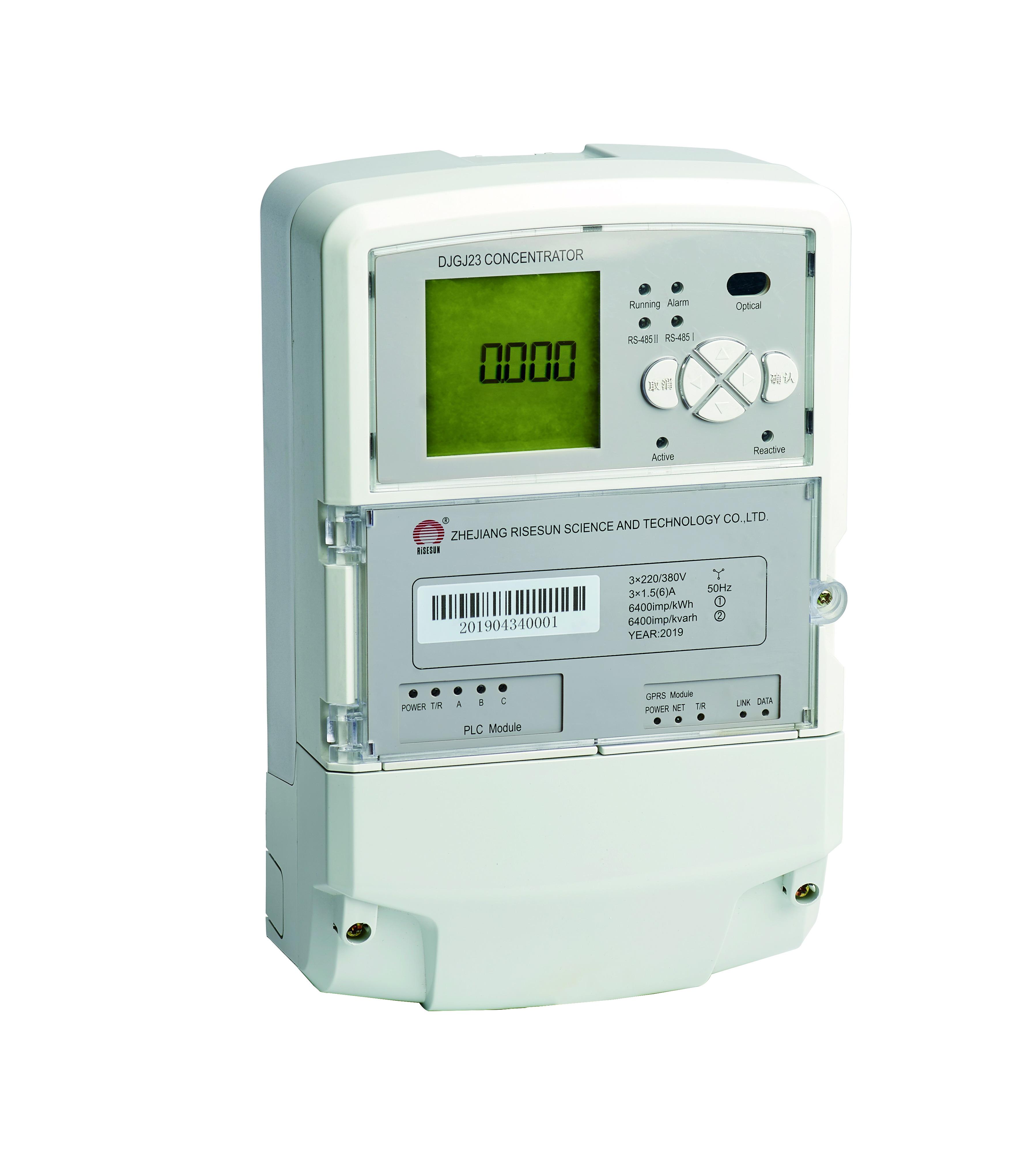
Utility networks are drowning in data but starving for context. A custom data concentrator unit changes that—turning scattered meter reads and sensor noise into one coherent stream that operators can actually act on. In this practical guide, we move beyond one-size-fits-all hardware to focus on what smarter integration really demands. Whether you are retrofitting aging infrastructure or planning a greenfield rollout, the decisions around protocol handling, edge storage, and installation fit will make or break the project. Risesun has learned through real deployments that a build-to-spec approach avoids many of the usual integration traps. If your network still depends on generic concentrators, you are likely leaving reliability and visibility on the table. Let’s unpack what a genuinely custom unit should deliver.
What a Custom Data Concentrator Actually Changes in the Field
A standard concentrator often assumes the site will adapt to it. A custom unit flips that relationship. Field crews notice the difference before the panel door is even closed: terminal blocks are arranged in the same order as the site drawings, the label text matches the names used in the maintenance logs, and the power input accepts the available rail voltage without an extra converter. That removes a whole layer of on-site improvisation.
The more meaningful change shows up during commissioning and fault-finding. Instead of cycling through generic register maps or chasing mismatched Modbus tables, the technician sees pre-mapped points that correspond to the devices already installed. Alarms are named after the actual feeder or pump, not after a default channel number. When a loop drops, the front-panel indicators and the local diagnostics point to the specific terminal or communication port, which shortens the time between noticing an issue and applying the fix.
Over time, the field impact is less about the hardware and more about consistency. Spare units arrive with the same firmware, the same terminal layout, and the same behavior as the one being replaced. A crew can swap a unit without re-learning a new interface or updating as-built documentation. That consistency reduces mistakes during night call-outs and keeps the focus on the process, not on the concentrator.
Designing Around Your Network’s Oddest Constraints
Every network carries its own set of strange, almost personal rules. One client might have a router that drops any packet larger than 1400 bytes for no documented reason. Another might block all outbound traffic on port 22, forcing you to tunnel SSH through an HTTPS connection that a legacy proxy barely tolerates. You stop asking why these quirks exist and start treating them as fixed physical laws. The real work begins when you map those constraints, not as obstacles to be removed, but as boundaries that shape the entire architecture. A database sync that assumes a stable 10 Mbps link will fail on a network that randomly halves its bandwidth every afternoon. Designing well means writing code that watches for these oddities and adapts without panicking.
The trick is to stop fighting the network and start listening to it. I once built a file transfer system for a warehouse where forklifts moving between shelving units caused Wi-Fi roaming events every few seconds. A normal retry loop would have drowned the access points in connection attempts. Instead, the client software learned to pause for a random 400 to 900 milliseconds after any dropped packet, then resume from the exact byte offset. This made the transfer slower but nearly unbreakable. Another network refused to pass DNS queries for any domain longer than 20 characters, so internal service names had to be shortened to cryptic two-letter combinations. The constraint became a naming convention, and eventually a strange kind of team inside joke.
Good design under bizarre constraints means building small, testable assumptions rather than grand abstractions. You don't need a message queue that guarantees exactly-once delivery if the network occasionally duplicates packets at layer two. You need a de-duplication table keyed by a client-generated UUID. You don't need a load balancer that assumes symmetric routing if one ISP randomly sends return traffic through a different path. You need to bind session state to a shared store and stop trusting the source IP. Each odd constraint peels away a layer of comfortable illusion. What remains is a system that works not despite the network, but because someone took the time to understand exactly how broken it really is.
Protocol Gaps That Off-the-Shelf Gear Usually Misses
Most off-the-shelf access points and controllers implement the headline parts of a standard well enough to pass a quick lab test. The trouble shows up in the corners: retransmission timers for EAPOL frames, how a client handles a PMK cache entry expiring mid-roam, or whether the driver actually respects the BSS transition candidate list. Vendors often treat these as optional details, so a network that feels solid during a five-minute walkthrough can crumble once hundreds of devices start moving between radios.
Interoperability gaps are another sore spot. A firmware build might default to WPA3 transition mode but leave out parts of the handshake that third-party supplicants expect, or it may advertise 802.11k neighbor reports while sending empty or malformed measurement responses. Because the vendor tests primarily against its own silicon, the mismatch only appears when a phone from another manufacturer tries to roam and gets stuck on a weak signal for no obvious reason.
Power-save behavior is where the protocol gaps become genuinely costly. Some devices claim support for U-APSD or dynamic SMPS but never complete the full state machine, so clients either burn through battery or miss frames while asleep. In most cases there is no clean error message; you just see poor roaming, dropped voice calls, and a helpdesk queue that cannot decide whether the client, the access point, or the standard is at fault.
Local Decision-Making That Keeps Data Moving During Outages
A warehouse management system can keep directing forklifts even after the wide-area network goes quiet. Local controllers hold the latest slot assignments, expiry dates, and safety rules, so they continue to make routing calls and only flag items that need human review. Outbound updates are written to an append-only log on the gateway, which naturally preserves the order of events.
Edge nodes that operate this way aren't trying to replicate the entire cloud dataset. They carry a compact decision set that matters for the next few minutes or hours, often refreshed during low-traffic periods. If a connection drops, the node keeps working from that local snapshot and marks every record with the last known sync point.
When the link comes back, reconciliation is deliberately boring: the device sends its pending records, receives any newer rules, and moves on. There's no holding pattern for critical operations and no single network failure that can bring the whole site to a standstill.
Surviving Heat, Dust, and Voltage Swings at the Edge
A sealed cabinet on a gravel road can hit 65°C before noon, and the dust does not wait for the door to open. Fine grit works into connector housings, mixes with humidity, and coats heat sinks until they stop doing their job. Add a solar array or diesel generator pushing voltage up and down with load changes, and the margin for error disappears. Equipment that survives here is not just a set of industrial ratings on a datasheet; it is laid out, coated, and tuned for thermal cycling, particle ingress, and brownout conditions at the same time.
Cooling at the edge usually means getting heat out without pulling outside air through the chassis. A fully sealed enclosure with the case itself as the heat spreader is often more reliable than fan trays, because filters clog and ball bearings dry out. Large thermal pads, thick board copper, and components rated well beyond the expected ambient range help flatten hot spots. For dust, conformal coating on the I/O regions and gasketed connectors prevent grit from creating micro-shorts or wearing contacts. The goal is not spotless hardware; it is hardware that still works when a fine layer of dust settles on every exposed surface.
Voltage swings demand more than a wide-input power supply. Input protection, hold-up capacitance, and a firmware strategy for under-voltage events keep storage and radios from failing mid-write. When the supply drops, the system should finish critical writes and shut down cleanly instead of browning out the processor. If the edge node has to ride through generator starts or weak solar mornings, this combination of front-end filtering and controlled power-down is what prevents corrupted logs and unexplained reboots.
From First Pilot to Full-Scale Utility Rollout
A pilot can hide a lot of friction. When only a handful of meters or grid devices are involved, crews can work around quirks, data gaps, and hardware that needs extra attention. The move to a full rollout makes those workarounds impossible to sustain, so the first real task is identifying which fixes need to become standard practice.
Scaling up shifts the focus from proving the concept to managing repeatability. Procurement volumes change, installation schedules tighten, and the data arriving from the field grows by an order of magnitude. Processes that were handled by a single engineer or a shared spreadsheet during the pilot need to be replaced with clear handoffs, automated checks, and training that fits a much larger crew base.
Once the rollout reaches the wider utility footprint, regional variations tend to surface. Soil conditions, weather exposure, legacy infrastructure, and local permitting rules all introduce variation that a small pilot never fully captures. Keeping the deployment on track at that stage depends on monitoring early signals, adjusting rollout playbooks quickly, and feeding field observations back into the next set of installations.
FAQ
It pulls readings and status data from meters, sensors, and other field devices, normalizes different protocols, and forwards the consolidated stream to the utility's headend or cloud platform. Custom units are often tuned to handle older equipment or unusual site conditions that generic hardware cannot manage well.
Existing networks rarely follow a single standard. A custom build can match specific connector types, legacy interfaces, power constraints, or physical space limits without forcing the utility to replace working field assets.
Poor cellular coverage, noisy power lines, and mixed-generation meter fleets are common hurdles. A custom unit can cache data during outages, switch between wired and wireless uplinks, and retransmit only what was missed once the link stabilizes.
The priority is compatibility with what is already installed. DLMS/COSEM, Modbus, DNP3, MQTT, and IEC 60870-5-104 are common choices, but the best mix depends on downstream systems and whether the utility needs real-time or batch delivery.
Instead of shipping every raw reading to a central platform, the device can filter noise, detect leaks or voltage anomalies, aggregate load profiles, and only escalate meaningful events. This reduces bandwidth demand and makes response times noticeably faster.
Temperature swings, humidity, vibration, and limited cabinet space can shorten the life of hardware that was not designed for those conditions. Planning for remote diagnostics, firmware updates, and simple field replacement tends to prevent most long-term headaches.
They can aggregate data from solar inverters, battery systems, and EV chargers that speak different protocols, then present a single operational view. That visibility helps utilities manage voltage levels, balance local generation, and respond to grid constraints without building a separate monitoring network.
Encrypted uplinks, unique device credentials, signed firmware, and logs that record administrative changes are essential. Physical tamper detection and a clear patching process matter just as much, especially for devices installed in remote or publicly accessible locations.
Conclusion
A custom data concentrator changes what a utility can actually see and do at the edge, not just how many meters report back. In the field, the difference shows up when a substation loses its uplink and the concentrator keeps polling, time-stamping, and queueing reads instead of letting gaps form. That local decision-making also helps during outages because the unit can prioritize restoration data, suppress low-value alarms, and hold non-urgent traffic until bandwidth returns. Off-the-shelf hardware rarely handles protocol quirks well, especially mixed DLMS/COSEM implementations, vendor-specific register maps, or meters that drift from documented behavior. A custom design absorbs those gaps without forcing a wholesale meter replacement or waiting on vendor roadmaps.
Practical constraints shape the design more than any spec sheet. Long rural feeders, irregular solar inverter reporting, and daily radio packet loss all influence polling schedules, buffer sizing, and failover paths. Edge conditions also demand hardware that survives heat, dust, and voltage swings, so sealed enclosures, wide-temperature parts, and tolerant power supplies become standard. Scaling from a first pilot to a full rollout works when early units include remote diagnostics and configuration hooks. Without that, every minor adjustment turns into an expensive truck roll. The result is a concentrator that behaves less like a generic gateway and more like a network element shaped by the grid's real edges, which is exactly where smarter utility networks begin.
Contact Us
Contact Person: Eric Tian
Email: [email protected]
Tel/WhatsApp: +86-13714190315
Website: https://www.cn-risesun.com/