

Cooling Mattress Topper Vendor Selection Made Simple
2026-10-26
Sourcing cooling mattress toppers shouldn’t feel like navigating a maze of vague specs and unreliable claims. Yet for many buyers, that’s exactly what vendor selection becomes—until you find a partner who cuts through the noise. Kunbao turns a typically tedious process into a straightforward decision, offering clarity where others offer confusion. In this guide, we’ll strip away the guesswork and show you how to evaluate vendors with confidence, saving you time and costly mistakes.
What Separates a Truly Cooling Topper From a Marketing Gimmick
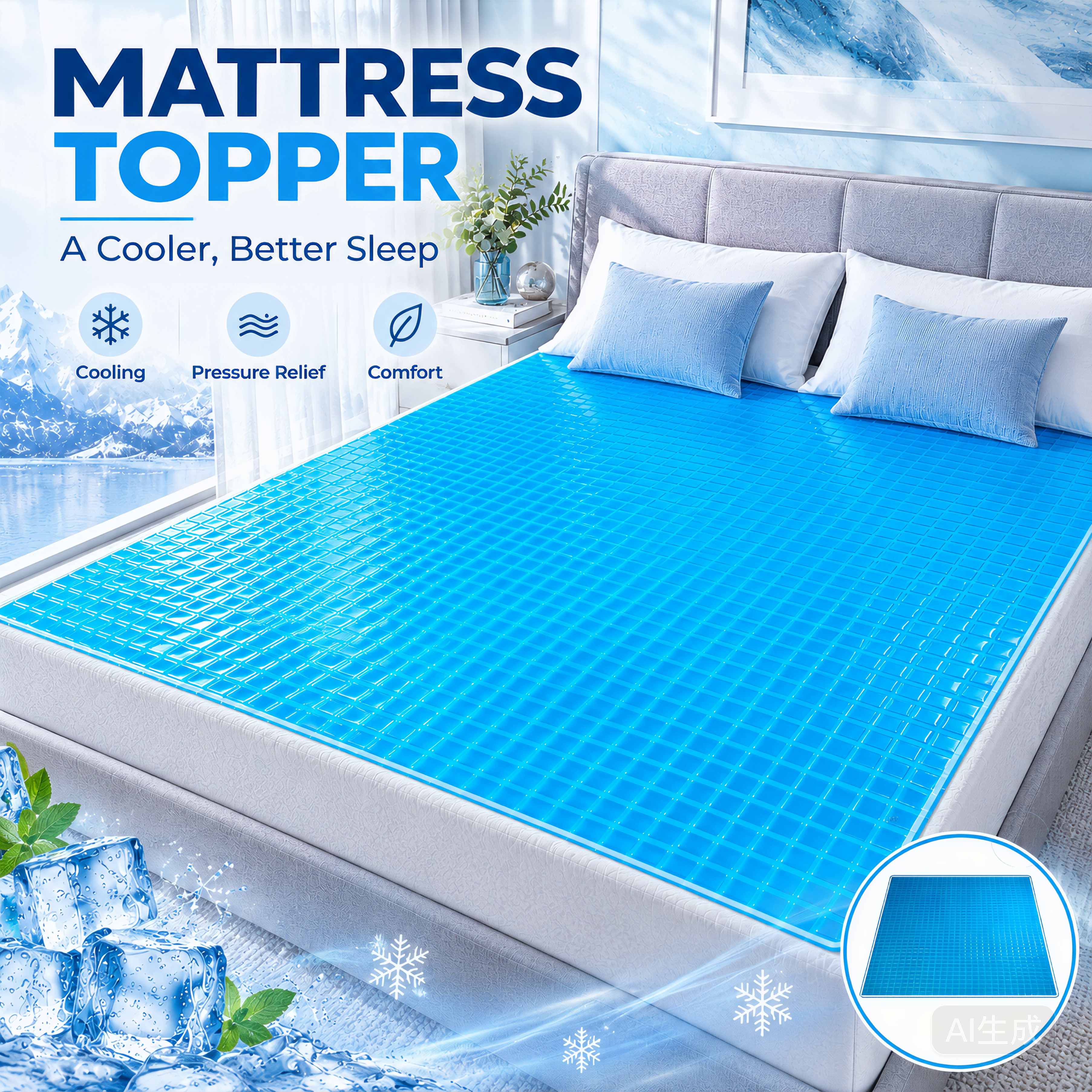
A lot of toppers feel cool when you first lie down, but that sensation often comes from a thin layer of gel-infused foam or a slick cover that conducts heat away from your skin for a minute. The real question is what happens after twenty minutes. A genuinely effective cooling topper keeps pulling warmth away from your body instead of just creating a brief chilly surface. If the product description spends more time on words like “icy” and less on how it actually manages airflow and moisture, you’re likely looking at a gimmick.
The materials that actually work tend to be less flashy. Open-cell foams, perforated latex, or a well-placed phase-change layer can make a measurable difference because they allow heat to escape rather than trapping it under your hips and shoulders. Cheaper options often rely on memory foam’s heat retention and then sprinkle in some copper or charcoal powder to sound technical. Those additives may look good on a label, but they don’t change the fundamental problem of dense foam holding onto body heat all night.
Another clear sign is whether the manufacturer is willing to back up the cooling claim with numbers. Thermal conductivity, heat flux, or even a simple air-permeability figure can tell you more than a string of adjectives. Real cooling toppers don’t need to promise an arctic blast; they just need to keep your skin temperature steadier through the early morning hours. If you wake up sweaty even with the “cooling” topper, the marketing likely won out over the engineering.
Where to Look for Material Claims That Hold Up Under Testing
Peer-reviewed journals remain the most trustworthy starting point, but not all publications carry equal weight. Focus on journals with a long track record in experimental mechanics or materials characterization—think Acta Materialia, Materials Science and Engineering: A, or the Journal of Testing and Evaluation. Avoid predatory open-access outlets that accept nearly anything, and be wary of conference papers that never went through rigorous review. A practical trick is to check whether the authors actually performed the tests themselves or simply cited secondary sources, because original test data almost always shows raw stress-strain curves, fracture surfaces, or thermal cycling logs.
Standard reference databases maintained by national metrology institutes or professional bodies offer another layer of reliability. The NIST Materials Data Repository, the ASM Handbooks, and the European Commission's JRC data collections provide vetted values that have been reproduced across multiple labs. What sets these apart is the accompanying documentation: testing conditions, specimen geometry, and measurement uncertainty are all spelled out. If you need to compare a new alloy against a proven baseline, this is where you go instead of relying on a single vendor's marketing sheet.
Supplier data sheets can still be useful, but treat them as leads rather than proof. Ask for the original test report—not a summarized PDF—and check whether the testing was done by an ISO 17025-accredited lab. Third-party certifications from organizations like TÜV or UL add another layer of confidence, especially for properties tied to safety or regulatory compliance. When the stakes are high, commission your own independent testing; the cost of a tensile or fatigue run is trivial compared to a failed component in the field.
Vendor Questions That Reveal More Than Their Spec Sheet
When you sit down with a vendor, their glossy one-pager might boast about uptime percentages and feature lists, but the real story often hides in the pauses before they answer. Ask how they handle a failed deployment on a Friday night, and watch whether they describe a clear escalation path or suddenly get vague about “standard procedures.” The spec sheet tells you what the product can do under ideal conditions; their response tells you how they behave when things go sideways.
Dig into the names behind the roadmap. Instead of accepting a three-year product vision at face value, ask which customer requests actually made it into the last two releases. Vendors who can point to a specific feature that originated from a client conversation—and explain the trade-offs they made to ship it—tend to treat their roadmap as a living document rather than a marketing artifact. If they deflect with “we value all feedback,” that’s a quieter signal than any missing bullet point.
Finally, poke at the operational edges that never appear in a demo. Inquire about the average time from bug report to patch, or how they communicate during a partial outage. A vendor who fumbles over ownership of their own incident reports is telling you that their support model is decorative, not functional. The spec sheet may promise 99.9% uptime, but the way they talk about the 0.1% reveals whether you’ll be troubleshooting alone at 2 a.m. or with a partner who actually answers the phone.
Why Lead Times and Minimum Orders Deserve a Closer Look
Many purchasing teams treat lead times and minimum order quantities as fixed constraints, but that assumption quietly eats into working capital. A furniture importer I worked with kept ordering 500 units per SKU because the supplier's published MOQ said so. When she finally pushed back, the factory agreed to 300 units with only a 3% price increase—and her inventory turnover jumped because she wasn't sitting on slow-moving stock.
Lead time gets even less scrutiny. A two-week delay doesn't sound like much until you realize it forces you to hold extra safety stock for every item sourced from that supplier. If a retailer carries 200 SKUs from one vendor, an extra week of buffer can tie up tens of thousands of dollars in storage and insurance, not to mention markdown risk when trends shift before the shipment arrives.
Before signing a contract, map out the true cost of these terms. Calculate what a 20% reduction in MOQ would do to your storage fees, obsolescence, and cash conversion cycle. Then compare that against any per-unit price concession the supplier asks for. Often, the savings from lower inventory outweigh a small price bump. Smart buyers negotiate lead time windows and tiered MOQs the same way they negotiate unit cost—because these numbers are never as set in stone as they first appear.
How to Compare Quotes Without Ignoring Hidden Costs
You've got three quotes on your desk and the final numbers are within a few hundred dollars of each other. That's exactly when hidden costs bite hardest. Take each quote and circle every line item that appears on only one of them—things like equipment disposal, debris hauling, after-hours labor, or warranty registration fees. Then send a short email to each vendor asking them to confirm whether those specific items are included in their price. You'd be surprised how often a low quote quietly leaves out the cleanup crew or charges extra for a second visit.
Another trap is comparing quotes that don't cover the same scope. One painter might include patching and sanding; another treats that as an add-on. One flooring installer rolls old carpet removal into the price; another leaves it at the curb for you to handle. Before you compare numbers, write down the exact materials, finish level, timeline, and cleanup expectations you gave each bidder. If a quote doesn't spell these out, ask for a revised version. A cheap quote that assumes you'll do part of the prep work isn't actually cheaper.
Payment terms and follow-up service can hide real costs too. A lower bid might demand half up front and the rest before the job passes inspection, which gives you little leverage if something goes wrong. Ask each vendor what the warranty covers, how long it lasts, and whether there's a fee for returning to fix minor issues. Also check what happens if you change your mind about a material or add a small task mid-project—some contractors charge a flat change fee on top of the new work. Write these answers next to the price before you sign anything.
Signs a Supplier Will Still Be Responsive After the First Order
One of the clearest indicators comes during the quoting and sampling phase. A supplier who asks detailed questions about your end use, expected volume, and quality standards before you even place the first order is likely thinking long-term. They don't treat your request as a one-off transaction; they're already mapping out how to support repeat business. If they suggest small adjustments to improve durability or cut shipping costs without being asked, that's a strong sign they'll answer emails quickly three months from now.
After the order ships, pay attention to how they handle the little things. Do they send tracking numbers without prompting? Do they follow up a week later to confirm the goods arrived intact? A supplier who proactively checks in—even with a short message—shows they aren't just chasing the next invoice. Also watch how they respond when something minor goes wrong, like a delayed raw material or a packaging change. If they own the issue immediately and offer a concrete fix, you can trust that responsiveness won't fade once the initial payment clears.
FAQ
Focus on material transparency. Ask for the exact composition of the cooling layer, whether it's gel-infused foam, phase change fabric, or breathable latex. Vendors who openly share density specs and cooling test data tend to be more reliable than those relying on vague marketing terms.
Request third-party test results for thermal conductivity or sleeping temperature trials. A trustworthy vendor will also offer a sample program, so you can feel the heat dissipation yourself before committing to bulk orders. Be wary of anyone who can't explain how the cooling mechanism works in plain terms.
The cover fabric can make or break cooling performance. Look for vendors who use breathable, moisture-wicking materials like Tencel or cotton blends with open-weave structures. Avoid suppliers pushing polyester-dominant covers without ventilation, since those trap heat no matter how advanced the foam is.
Yes, but only if their base product is already solid. Customization is valuable for thickness, firmness, and cover design, but it shouldn't be used to patch a mediocre core. Ask about minimum order quantities and whether custom cooling features have been tested together as a system.
Certifications like CertiPUR-US or OEKO-TEX matter because they confirm low chemical emissions and safe materials. However, they don't prove cooling performance, so treat them as a baseline for trust, not a replacement for actual thermal testing or hands-on samples.
Watch out for rushed timelines, reluctance to provide detailed spec sheets, or an inability to answer technical questions about airflow or gel density. Also be suspicious if a vendor suddenly drops prices after you express hesitation—it often signals inconsistent material sourcing.
Run a small pilot order with both if possible. During that process, evaluate communication speed, packaging quality, and how they handle minor issues. The vendor who treats a small test order seriously is far more likely to be dependable at scale.
Conclusion
Choosing a cooling mattress topper vendor stops being complicated once you separate measurable performance from clever packaging. A truly cooling topper earns that label through independent test data—air permeability, thermal resistance, and moisture regain figures you can verify yourself. If a supplier only hands you a brochure with words like 'ice silk' or 'Arctic touch,' ask for the test report and the exact placement of any phase-change material. Real vendors answer those questions with numbers and samples, not vague promises. This is also where material claims get exposed: some factories use a thin coating that washes out, while others embed cooling yarns or breathable foams that keep working after dozens of uses. Push for a lab report, not a demo video.
Quotes and logistics need the same skeptical eye. Check lead times and minimum order quantities early, because a low unit price means nothing if you have to order 5,000 pieces when you only sell 300. Read every line of the quote—freight, packaging, inspection, and mold fees often hide in the fine print. Then test the relationship after the first order: send a follow-up question about a defect or a reorder timeline. A supplier who responds quickly and gives clear answers is more valuable than one with a perfect spec sheet but slow communication. Vendor selection isn't about finding the cheapest topper; it's about finding a partner who proves claims, respects your order scale, and stays reachable when something goes wrong.
Contact Us
Contact Person: Catherine Peng
Email: [email protected]
Tel/WhatsApp: +86-13434169510
Website: https://www.kbcoolgel.com/