

China Stainless Steel Self Tapping Screws for Industrial and DIY Projects
2026-11-16
China produces most of the world's stainless steel self-tapping screws, but not all of them survive a real-world torque test. For industrial lines and weekend DIY projects alike, the difference often comes down to the fastener you never see. Wanluo has built a reputation on that hidden strength—here's what sets their screws apart.
Why Stainless Steel Self Tapping Screws From China Suit Both Factory Floors and Weekend Workbenches
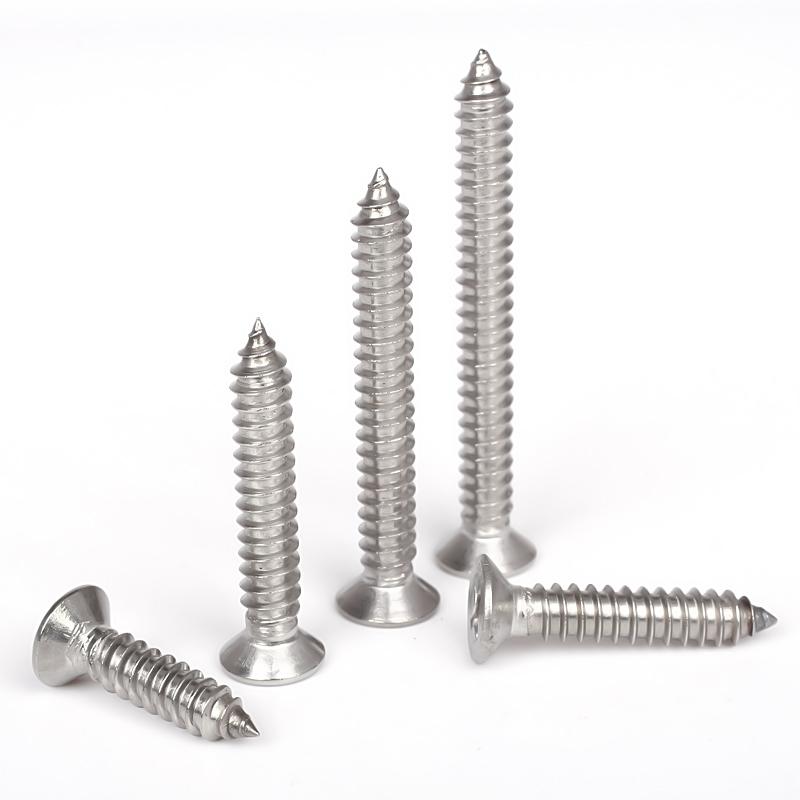
Stainless steel self tapping screws from China have earned a quiet reputation for handling two very different worlds without complaint. On a factory floor, they bite into sheet metal, aluminum extrusions, and even thin stainless panels without needing a pilot hole, which keeps assembly lines moving fast. The material resists the occasional coolant splash or humid shift change, so maintenance crews don't spend their Saturdays replacing corroded fasteners. At the same time, a home woodworker reaching for the same box on a weekend finds the threads sharp enough to sink into hardwood or plastic without splitting the material, and the stainless finish means an outdoor planter or gate hinge won't bleed rust streaks after the first rain.
What makes this dual suitability possible is less about a single design breakthrough and more about how Chinese manufacturers have refined the basics. The cold forming process yields consistent thread geometry, so the screws don't cam out under high torque in a production jig, yet they still drive smoothly with a handheld drill on a garage bench. The stainless alloy typically used offers a practical balance of hardness and corrosion resistance—it's not the exotic marine grade you'd need for saltwater immersion, but it shrugs off mild acids, cleaning agents, and the occasional dropped socket on concrete. This middle ground means a purchasing manager and a hobbyist are essentially betting on the same reliability, just at different volumes and speeds.
Beyond the metallurgy, the economics and packaging also bridge the gap. Factory buyers appreciate that bulk containers arrive with consistent head markings and minimal burrs, reducing the risk of jams in automated feeders. Weekend users often find the same screws repackaged in smaller counts at hardware stores, still with the same sharp point and recess that doesn't strip on the third use. It's rare for a fastener to feel equally at home in a CNC enclosure and a backyard chicken coop, but these stainless self tappers manage it by sticking to honest, unglamorous engineering—no fancy coatings, no brittle hardening, just a thread that cuts, a head that holds, and a metal that keeps its shine long after the project is done.
Reading the Fine Print on Screw Grades and Corrosion Resistance Before You Buy
Most buyers glance at the head marking and assume a Grade 8 bolt will outperform a Grade 5 in every situation, but that's a costly oversimplification. The grading system tells you about tensile strength and hardness, not toughness or ductility. A Grade 8 fastener can be brittle in certain low-temperature or impact-heavy environments, while a Grade 5 might bend rather than snap. If your application involves vibration, shock loading, or sub-zero temperatures, you need to look beyond the grade number and check the material specification details—like whether it's a medium carbon alloy or a boron-treated steel.
Corrosion resistance is where the fine print really matters, because coatings and base metals behave differently under stress. Stainless steel screws, for example, come in various grades like 304 and 316, and 316 is the only one suitable for marine or chloride-heavy settings. But stainless is softer than alloy steel, so you may lose shear strength. Zinc plating, hot-dip galvanizing, and proprietary coatings each have different thicknesses, adhesion qualities, and environmental limits. A cheap electroplated screw can rust within months in a coastal area, while a mechanically galvanized one from the same catalog might last a decade. Always ask for the coating specification, not just the generic term "corrosion-resistant."
Another overlooked detail is the compatibility between the screw's grade and its coating process. High-strength fasteners above a certain hardness are susceptible to hydrogen embrittlement if acid-pickled before plating. Reputable manufacturers will use mechanical cleaning or a post-plating bake to drive out hydrogen, but not all budget suppliers do. When you're buying in bulk for structural or safety-critical work, request the test reports or plating certificates. The price difference is usually small compared to the cost of a failed joint from a brittle fracture or premature rust. Reading those fine-print specs isn't just a bureaucratic habit—it's the difference between a connection that holds for decades and one that fails at the worst possible moment.
Demystifying Type A Type B and Type 17 Thread Geometry for Faster Material Matching
Matching a self-tapping screw to the right material often comes down to thread geometry, and the usual suspects—Type A, Type B, and Type 17—don't always make their differences obvious. Type A features a sharp, gimlet point and coarse, widely spaced threads. That combination lets it bite quickly into thin sheet metal or plywood, but it can strip out if you push it into anything too dense. Type B trades the piercing point for a blunter tip and finer, more closely spaced threads. It takes a little more effort to start, but it holds better in thicker metals and harder plastics because the thread engagement is more uniform along the fastener's length.
Type 17 is the odd one out—it's really a point style rather than a full thread redesign, but it changes how the screw behaves in wood. The notched, auger-like tip slices through fibers as it enters, which reduces splitting and removes chips without needing a pilot hole. Threads on Type 17 screws are typically similar to standard wood screw threads, but the cutting point is what speeds up material matching: if you're working with softwoods, hardwoods, or composite boards, reaching for Type 17 often solves the pre-drill or not question in one step. Once you line up these geometries with the materials you actually handle, the guesswork drops away and you can grab the right box off the shelf a lot faster.
The Right Way to Drive Self Tappers Without Pre Drilling and Without Breaking Them
Self-tapping screws are made to punch their own threads, but too many people treat them like ordinary wood screws and end up snapping the heads clean off. The trick starts before the driver even touches the metal: pick the right size and type for the material thickness, and never force a screw that's already getting hot. A quick dip in cutting fluid or even a drop of motor oil makes a surprising difference on thicker steel.
Speed is the real enemy here. Most cordless drills have two or three torque settings, but for self-tappers you want a low speed with firm, steady pressure—not a high-speed burst that melts the tip. Keep the driver perfectly perpendicular, let the screw bite, then ease off as soon as the head seats flush. If you feel the screw start to fight back, back it out a turn, clear the chips, and go again. That pause is what prevents most breakage.
Another overlooked habit is changing bits before they get worn. A rounded-out Phillips or square bit will cam out under load, causing you to push harder—and that sudden slip is exactly when self-tappers snap. Use a fresh bit that fits snugly, and consider a hex or Torx drive screw for better control. For panel work, a screw gun with an adjustable depth stop lets you set it once and move fast without ever overdriving.
How Surface Treatments Like Zinc Plating and Passivation Change Long Term Performance
Zinc plating creates a sacrificial layer that corrodes preferentially, but without additional treatment the zinc itself develops white rust quickly. This not only looks unprofessional but also reduces the thickness available for protecting the base metal. Passivation adds a thin conversion film that changes how the zinc surface reacts with moisture and oxygen, slowing the initial corrosion rate and keeping the underlying zinc intact for much longer.
Over months or years, the passivation layer gradually wears away or breaks down under environmental attack. Once that happens, the zinc begins to sacrifice itself at its natural rate. This transition point often determines when a fastener or bracket starts to show red rust on the steel beneath. Choosing a trivalent chromium passivation instead of hexavalent can shift that timeline, sometimes trading a bit of self-healing ability for better environmental compliance, so the actual service life depends on both coating type and exposure conditions.
Beyond corrosion, these treatments alter friction and torque behavior. A properly passivated zinc surface can maintain more consistent clamping force over repeated assembly cycles, reducing the chance of galling or loosening in vibration-heavy applications. In the long run, that means fewer re-torques and fewer premature failures traced back to surface interaction rather than corrosion alone.
Matching Head Styles and Drive Recesses to the Tools You Already Own
Many toolboxes end up with a mismatched collection of bits and drivers because we often buy fasteners without checking what actually turns them. Start by sorting through the screws, bolts, and machine screws you already have on hand. Look closely at the recess—whether it's a simple slot, a Phillips cross, a Pozidriv with extra tick marks, a hex socket, a Torx star, or a square Robertson. Each shape has its own driver size, and using something close but not exact, like a Phillips bit in a Pozidriv screw, will quickly round out the recess and ruin the fastener.
Once you know the recess shapes and approximate sizes, match them to the bits and sockets you own. If your tools lack clear size markings, compare the driver tip directly to the screw head under good light. A proper fit should feel snug with almost no wobble, and the driver should bottom out fully in the recess. For hex and Torx, measure across the flats or points with a caliper if you're unsure. Avoid using worn or damaged bits, even if they look close enough—they'll transfer that damage to the fastener and make future removal a struggle.
When you find a gap, you rarely need to replace an entire set. Buy individual bits or a small assortment that covers your most common sizes, such as PH2, PZ2, T25, or a 4mm hex. Keep them organized near the fasteners they fit. If you switch between manual drivers and a drill or impact driver, also check that the shank type—hex or round—fits your chuck or quick-release collet before assuming the bit will work across all tools.
FAQ
They simplify assembly by cutting their own threads as they're driven, so you skip separate tapping steps. Stainless grades like 304 and 316 hold up against moisture and mild chemicals, which covers most indoor, outdoor, and light industrial jobs.
In thin sheet metal and softer plastics, no pilot hole is required because the sharp point bites and forms threads. For thicker steel plate, a small pilot hole prevents snapping and gives a cleaner thread seat.
Yes, but it depends on grade. 304 stainless handles rain and humidity well. If the location sees salt spray or harsh chemicals, go with 316 stainless for much better pitting resistance.
Common options include pan head, flat head, hex washer head, and oval head. Drives are typically Phillips, Torx, or hex, with Torx being popular for power driving without cam-out.
If the material is thin and you want a simple one-piece fastener, self tapping screws work great with a pre-punched or drilled hole. For thicker metal or faster installation without a pilot hole, choose self drilling screws that have an integrated drill tip.
Yes. Many factories offer ISO-certified production and can customize dimensions, finishes, and packaging. Request material certificates and a pre-production sample to confirm the steel grade and threading quality before a bulk order.
Usually once or twice if the threads are not stripped and the screw is not over-torqued. Repeated removal from thin sheet metal can widen the hole, so inspect the thread fit before reusing in critical joints.
You can find plain passivated, zinc-plated, or black oxide coated finishes. For stainless, passivation is common to remove surface iron and improve corrosion resistance, while coatings may change appearance but are less typical.
Conclusion
When you reach for a box of China stainless steel self tapping screws, you're grabbing more than cheap fasteners—you're getting a workhorse that behaves differently depending on how you treat it. On a factory floor, these screws hold up to vibration and moisture because the stainless alloy resists rust without needing extra coatings, while on a weekend workbench they let you skip pilot holes in wood or thin sheet metal if you match the point geometry right. Type A points dig into softer materials with a sharp gimlet tip, Type B blunts work better in plastics, and Type 17's fluted point clears chips in hardwood without splitting it. The real trick is driving them slowly with steady pressure—hammering the trigger or over-torquing snaps heads clean off, especially in smaller diameters. Reading the grade matters too: 304 stainless is fine for indoor or mildly damp jobs, but if you're near salt air or chemical washdowns, 316 is worth the extra cost.
Don't assume all self tappers from China are identical. Surface treatments quietly change how long they last and how they look—zinc plating adds a sacrificial layer for mild steel but isn't needed on true stainless, while passivation removes free iron from the surface and restores the chromium oxide film that keeps rust away. If you buy bulk screws that were machined with carbon steel tooling, passivation becomes critical, otherwise you'll see tea staining within months. Head style and drive recess deserve as much attention as the metal itself: a flathead Phillips is common but cams out under high torque, so if you already own Torx or square drive bits, pick matching screws to save your wrists and your bits. Pan heads spread load on thin brackets, countersunk heads sit flush for hinges, and hex washers give you a wide bearing surface for outdoor fixtures. The best approach is to buy a small mixed kit first, test drive them into your actual materials, then order the exact combo of grade, point, head, and finish that didn't strip or snap. That's how you turn a generic import screw into the one you reach for again.
Contact Us
Contact Person: Shane
Email: [email protected]
Tel/WhatsApp: 8613357785029
Website: https://www.wanluohardware.com