

China Industrial SLA 3D Printer Company Capabilities Buyers Should Verify
2026-11-16
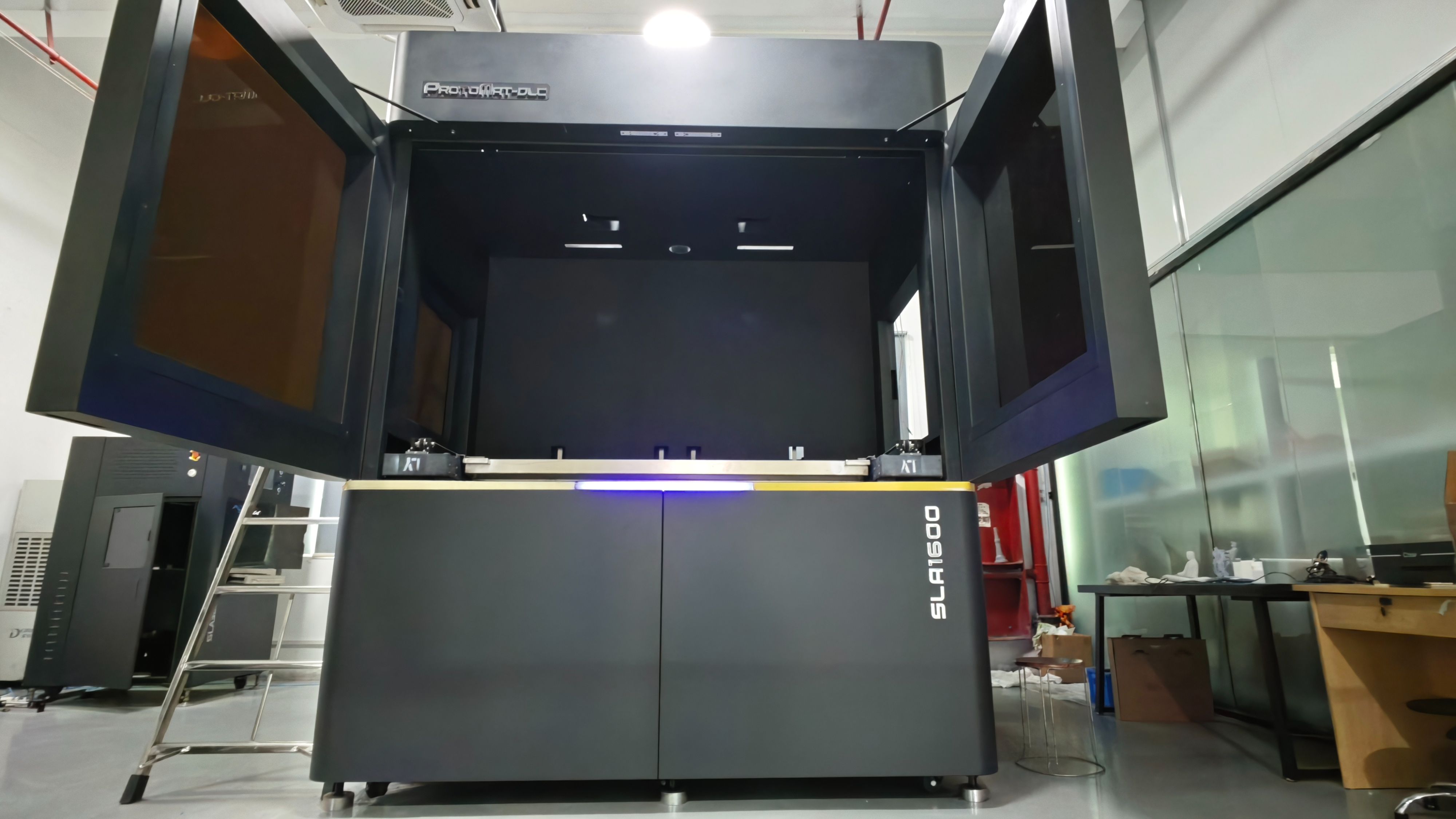
China’s industrial SLA 3D printer market is crowded with claims, but capabilities are rarely as uniform as brochures suggest. Buyers who stop at resolution and price often miss the checks that predict real-world performance—from material handling and thermal stability to after-sales support. That is where a closer look at manufacturers like ProtoMat becomes useful.
Check the Factory Floor, Not Just the Brochure
A glossy brochure can make any workshop look like a precision operation. The real story unfolds when you walk the line—watch how raw material moves, where it waits, and whether the workers are solving problems or just filling time. Grime in the right places tells you the machines actually run. A spotless floor with no work in progress often means no orders, not no defects.
Ask to see the floor during a shift change, not a scheduled tour. Notice whether supervisors carry the same safety gear as the line staff, or if they hover from behind glass. Count how many times someone stops to adjust a fixture without being told. Those small interruptions are either the heartbeat of continuous improvement or the symptom of a process that was never really dialed in.
One overlooked clue is the toolbox. If every drawer is foam-cut and labeled but the foam is worn gray, someone uses those tools every day. If the labels are fresh and the wrenches still have factory oil, you are looking at a stage set. The brochure may promise capability, but the floor shows you consistency—or the lack of it.
Ask for Printed Samples with Unfriendly Geometries
Most suppliers will gladly send a flat, logo-bearing tile that says almost nothing about their real capability. Ask for a sample set built around awkward features instead: thin standalone walls, a steep overhang, a sharp internal corner, and a deep narrow channel. If the shop pushes back or offers only a polished demo piece, treat that reluctance as part of the answer.
Difficult geometries tend to reveal what marketing photos hide. A thin wall may warp or ripple, an overhang can sag just enough to ruin a mating fit, and a sharp corner often shows how well the process maintains detail when the toolpath has to slow down and change direction. Run a fingernail over the surfaces, check the channel width at both ends, and flex any thin web to feel whether the layers actually bonded.
Keep the request specific without scripting the whole part. Name two or three features that resemble your own production geometry and ask the supplier to include them in a single small sample. That turns the exercise into a focused test of attention and process control rather than another generic trinket for a shelf.
Verify the Resin Range Before You Commit
Suppliers tweak resin formulas more often than most people expect, and the version you tested last year may not be what arrives in the next order. Pull the current datasheet and compare the stated viscosity, exposure window, and mechanical properties with your own notes. A small test bottle is cheap insurance against finding out mid-run that the resin no longer behaves the way your profiles assume.
If color or surface finish is part of the design, request cured sample chips rather than relying on images online. The way a translucent shade shifts after post-curing or how a matte finish picks up fingerprints rarely shows in a rendered swatch. Line up the full range under your workspace lighting and look for differences between adjacent options.
Also check whether the whole range is actually kept in stock before you settle on a specialty color or engineering grade. Some options are made in limited batches, and a long backorder can quietly wreck a project timeline. A supplier who can confirm batch consistency and availability for the length of your run is worth holding onto.
Test How the Team Handles Recalibration and Downtime
When a production line halts for recalibration, the real test isn't whether sensors get adjusted—it's how the team keeps momentum without a clear target. Some crews treat downtime as a pause, drifting into side conversations or waiting for instructions. Others use the window to tighten loose ends, double-check alignment logs, or prep the next batch of materials. The difference shows up in the first ten minutes after machines restart: one group spends half an hour re-finding their rhythm, while the other slips back into full speed almost immediately.
Recalibration also exposes how much unspoken knowledge lives in the group. A newer operator might freeze when the usual reference points vanish, while a veteran quietly marks which readings drift and which hold steady. Teams that handle this well tend to pair those two types of workers deliberately, turning a forced pause into a short apprenticeship. The downtime stops being a loss and starts acting like a pressure valve, letting small corrections happen without the noise of a full production run.
What matters most is the handoff afterward. The worst friction happens when someone rushes to restart before sharing what changed or what was left unfinished. A simple note on a whiteboard or a thirty-second verbal rundown can prevent an hour of confusion later. The teams that recover fastest are rarely the ones with the best equipment—they're the ones that treat downtime as part of the work, not an interruption to it.
Look for Evidence of Repeatable Batch Consistency
Checking whether a manufacturer can deliver the same results run after run often reveals more than a polished spec sheet. Start by requesting batch records or production logs that track raw material lots, machine settings, and test outcomes across separate production cycles. If those records are missing or vaguely worded, that gap usually signals trouble. A supplier should be able to show how variables like temperature drift, operator changes, or slight shifts in ingredient sourcing are caught and corrected before they become customer-facing problems.
It also helps to ask for retained samples from two or three non-consecutive batches rather than the best single example. Compare them side by side for physical properties, performance under load, or whatever matters most for the intended application. Small differences in color, viscosity, hardness, or assembly fit may seem minor in isolation, but they tend to compound in final products. Suppliers who openly discuss these variations and explain their control limits usually inspire more confidence than those who claim zero deviation.
Finally, look at how the company responds when a batch does drift outside tolerance. Do they have a clear quarantine and root-cause process, or does every anomaly get handled as a one-off emergency? Repeatable consistency is not the absence of variation; it is the ability to notice, contain, and learn from it quickly. That kind of operational memory, documented across multiple production runs, is often the best evidence that what you approve today will still be what arrives six months from now.
Confirm Spare Parts and Support Response Times
Once a machine is shipped, the real test begins when something goes wrong. Ask the manufacturer to state, in writing, how quickly they can supply common wear parts, circuit boards, motors, and any proprietary components. A vague 'we keep parts in stock' is not enough; request specific lead times for delivery to your region and find out whether emergency air freight is an option.
Then move to service response. Clarify how support requests are handled, whether remote diagnostics come first, and the typical window for an onsite technician to arrive. It helps to pin down response times by severity level, from a full line stoppage to a minor performance issue. If the equipment is critical to production, consider negotiating a guaranteed response target and a backup support plan before signing.
FAQ
Look for documented uptime on existing factory floors, not just print samples. Ask for references where machines run multiple shifts and measure how the company handles maintenance scheduling, spare part stocking, and remote diagnostics under real delivery pressure.
Open material claims are common, but industrial work depends on repeatable parameters. Ask the builder to show validated profiles for specific resins you already use or plan to qualify. If they cannot provide test data for tensile, flexural, or thermal properties from their own lab, the listed range means little.
Laser power alone hides a lot. Request beam profile measurements, spot size stability over long prints, and details about thermal drift compensation. A company that understands industrial SLA will be comfortable sharing calibration logs and explaining how the optical path keeps power density consistent across the whole build area.
Ask about recoating force control, resin temperature management, and how the vat design prevents settling or viscosity changes. If the answer centers only on print speed or build volume, dig further. Multi-day builds fail from small drift, not from a lack of headline specs.
Industrial SLA does not end at the printer. Washing, curing, sanding, and surface finishing affect final tolerances. A capable supplier should be able to recommend or build integrated post-processing steps and show how they keep dimensions stable after curing, rather than leaving you to solve it alone.
Ask for case studies that involve challenging resins such as ceramic-filled, high-temperature, or tough photopolymers. The company should explain how their machine handles higher viscosity, settled fillers, and longer exposure requirements. If they only show standard prototyping resins, assume the industrial claim is unproven.
Request a live remote diagnostic session or a video call showing their support team walking through calibration procedures. Ask what spare parts are held locally, what typical response times are for your region, and whether firmware updates can be deployed without disrupting your process. Vague promises are a risk signal.
Conclusion
Walking a supplier’s production floor usually reveals more than any datasheet. Look at how machines are assembled, how resin is stored, and whether operators track print logs or just rely on memory. Ask for sample parts with thin walls, sharp overhangs, trapped supports, or sudden cross-section changes because simple demo blocks hide a lot. Resin compatibility matters just as much: some factories claim broad material support but only run a handful of standard photopolymers. Push them to show actual stored resin, handling procedures, and printed parts in the specific grades you would use.
Beyond initial quality, judge how the team responds when something drifts. Ask what happens after a failed build or a laser calibration error: who diagnoses it, how downtime is logged, and how quickly they can recover without blaming the file. Batch consistency is another tell. Request records from repeated runs of the same job and compare dimensions, surface finish, and mechanical properties across those batches, not just one golden sample. Finally, confirm spare parts availability and realistic support response times for your region, including whether critical components are stocked locally or shipped from a single warehouse. These checks expose the difference between a factory that can sell one good print and one that can sustain production.
Contact Us
Contact Person: Joe
Email: [email protected]
Tel/WhatsApp: +8613799507208
Website: https://www.3dprotomat.com/