

China Cold Storage Panel Production Line: Advanced Manufacturing for Superior Insulation
2026-10-16
In the race to meet global cold chain demands, the difference between mediocre and exceptional insulation often comes down to the production line behind the panels. At YI ZHOU TECHNOLOGY, we've engineered China's cold storage panel manufacturing to eliminate the thermal leaks and structural weak points that plague conventional methods. What if the next warehouse you build could cut energy loss by double digits—before a single degree of cold escapes? This blog pulls back the curtain on the advanced machinery and precision processes that turn raw steel and foam into a seamless thermal envelope.
From Raw Steel Coil to Finished Cold Storage Panel
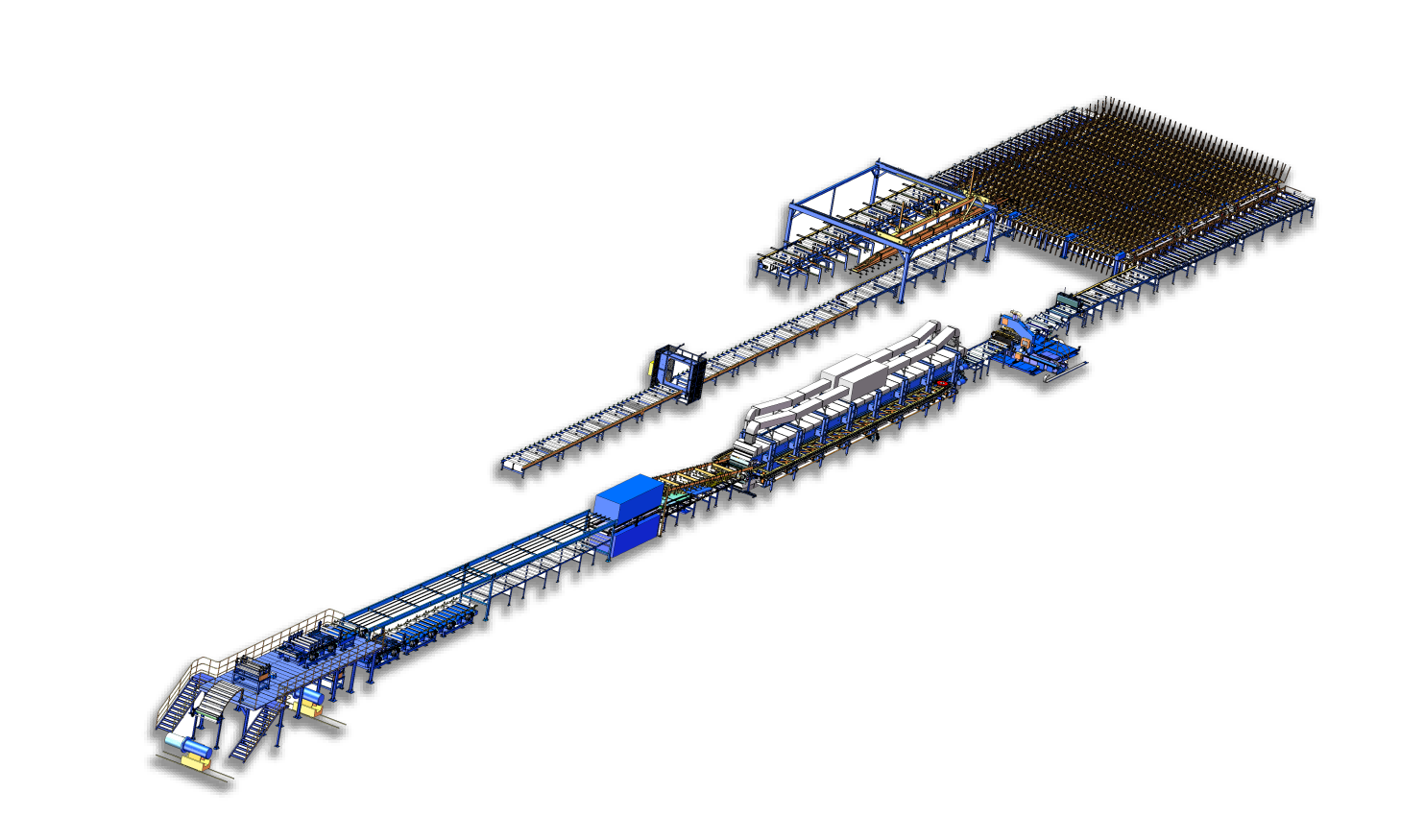
A cold storage panel starts life as a coiled strip of galvanized or stainless steel, often still warm from the rolling mill. The coil is fed through a decoiler and leveler, where built-up stress gets worked out before the strip is cut to width. From there, the steel passes a profiling station that embosses the surface and rolls the edges into a precise tongue-and-groove or cam-lock profile. Any deviation here, even half a millimeter, shows up later as a panel that refuses to sit flush against its neighbor.
Once the metal skins are formed, the line shifts to foam injection. A two-part polyurethane mixture is poured between the top and bottom sheets inside a heated press, expanding to fill every corner of the cavity before it cures. After trimming and cooling, the panels are stacked and wrapped for transport, with each one checked for density, surface flatness, and joint fit. The result is a rigid, insulated panel that can hold its shape and thermal performance for years inside a freezer or cold room.
Why Foam Core Density Determines Insulation Performance
Density directly affects how much air is trapped within the foam matrix. Low-density foams leave larger voids that allow convective currents and radiative heat transfer to sneak through. As density rises, the cell walls become thicker and closer together, reducing the mean free path for gas molecules and driving thermal conductivity down. The sweet spot typically lands between 32 and 48 kg/m³ for rigid polyurethane panels—below that, insulation values start to degrade noticeably.
Beyond thermal resistance, a denser core resists compression under load or temperature cycling. Panels that sit loose or get walked on during installation compress the foam and create thin spots where heat escapes. High-density foam maintains its thickness over decades, keeping the designed R-value intact. That dimensional stability matters especially in roofs and below-grade walls where minor settling can open gaps at joints.
It's not simply a case of more is better, though. Very high densities push material cost up without proportional gains in R-value, and they can make panels harder to cut and handle. Contractors and specifiers often choose mid-range densities for flat commercial roofs, while higher densities go into structural insulated panels that carry real loads. The right choice balances thermal performance, mechanical strength, and installed cost for the specific assembly.
Automated Lamination That Eliminates Thermal Bridging
Traditional layered construction often leaves small gaps or fasteners that create direct paths for heat to escape. Automated lamination changes this by applying continuous, even pressure across the entire surface, bonding insulation directly to structural panels without voids. The result is a single, uninterrupted thermal envelope that removes the weak points where thermal bridging typically occurs.
Precision control is what separates automated lamination from manual methods. Rollers and heating elements are calibrated to maintain consistent adhesive thickness and curing conditions, so the bond line stays uniform from edge to edge. This consistency prevents localized weak spots that would otherwise allow heat to bypass the insulation layer, especially in corners and joints.
By eliminating thermal bridges at the manufacturing stage, buildings need fewer corrective measures on site. Energy loss drops, surface condensation becomes less likely, and the overall assembly remains stable over time because there are no hidden gaps for moisture or air to penetrate. The process turns a common source of inefficiency into a non-issue.
Curing Under Controlled Heat for Maximum Bond Strength
Achieving maximum bond strength rarely comes down to simply cranking up the oven. Instead, it hinges on how evenly and deliberately heat reaches the adhesive line. Too aggressive a ramp causes the outer edges to cure first, trapping uncured material in the center and setting up internal stresses that quietly undermine peel resistance. A controlled rise, paired with a steady dwell at the target temperature, allows polymer chains to crosslink uniformly across the entire joint.
One practical approach is to stage the heating cycle. Start with a lower hold to let any residual solvent or moisture escape without bubbling, then step up to the full cure temperature. Monitor the actual bond line with a thermocouple rather than trusting the oven dial—thermal lag in thick parts can be significant, and under-cured cores are a common source of premature failure. Keeping the temperature stable during the dwell matters as much as reaching the right number.
Cooling deserves just as much attention. Dropping the temperature too quickly creates shrinkage gradients that can crack a freshly formed network or pull the adhesive away from the substrate. A gradual cooldown, often at half the heating rate or slower, gives the material time to relax into its final geometry. The result is a bond that not only measures higher in lab tests but also holds up better under real-world fatigue and thermal cycling.
Custom Panel Dimensions for Complex Cold Chain Layouts
In cold storage facilities where floor plans bend around existing columns, mezzanines, or conveyor runs, off-the-shelf panel sizes rarely line up. Custom dimensions let the insulated envelope follow the actual structural grid instead of forcing a standard module that leaves awkward gaps or demands heavy field cutting. A run might step from 42-1/2 inches down to 12-3/4 inches across a dock wall, then kick back around a corner with a 27-degree factory-mitered edge so the vapor barrier stays continuous.
Beyond lengths and widths, thickness changes matter for rooms sharing a common wall at different temperatures. A 6-inch panel may carry a -10°F freezer on one side and a 35°F dock on the other, while a return air plenum above needs only 4 inches. Specifying those transitions at the factory rather than layering field-applied foam avoids compression points where thermal bridging and frost creep start.
Hardware placement also shifts with custom sizing. Cam-lock receivers, sweep gaskets, and heater wire chases should be located on the panel drawing before fabrication, because relocating a lock after the metal skin is rolled usually means a visible patch and a weaker seal. For irregular layouts, it helps to mark each panel with a sequence number and an installation orientation, so the crew unloading at 2 a.m. doesn't have to guess which side faces the warm aisle.
Quality Testing That Simulates Years of Freezer Use
Instead of waiting a decade to see if a freezer door gasket loses its grip, engineers use accelerated durability chambers that cycle between deep cold and room temperature dozens of times a day. This repeated thermal shock stresses every weld, hinge, and plastic latch far beyond normal use, compressing years of seasonal and daily temperature swings into a few weeks. The goal isn't to make a freezer that merely survives one winter, but one that keeps its seal, smooth drawer glide, and quiet compressor after thousands of door openings and defrost cycles.
Frost itself becomes a test instrument. Lab teams intentionally let ice build up on interior walls and around the evaporator, then measure how quickly the unit recovers temperature after the door has been left open. They also flex the wire shelves under load at minus twenty degrees, because metal and plastic behave differently when cold. Components that pass room-temperature checks often crack at low temperatures, so these cold-soak trials sort out brittle plastics and weak welds before a single freezer ships.
FAQ
The line uses a high-pressure polyurethane injection system with real-time density feedback, ensuring a uniform foam core without voids. Precision CNC trimming and continuous lamination maintain exact panel dimensions, which reduces thermal bridging at the joints.
Automated metering stations control the foam mix down to fractions of a percent, while temperature sensors adjust the curing zones along the conveyor. Panels are then scanned for density variation and surface bonding, so only panels with a fully intact insulating core are approved.
Unlike batch pressing, this line runs a continuous double-belt system with synchronized heating and cooling sections. That allows longer panels, tighter thickness tolerances, and faster cycle times while keeping the metal skins firmly adhered to the polyurethane core.
Skins are usually food-grade stainless steel, galvanized steel, or aluminum for durability and easy sanitation. The core is rigid polyurethane or PIR foam, which offers low thermal conductivity and high compressive strength, both critical for maintaining stable cold room temperatures.
Yes. Width and thickness settings are adjustable during operation, and the cutting station can produce angled ends, door openings, and special lengths without stopping the line. This minimizes on-site cutting and reduces material waste.
Panels undergo ultrasonic thickness scanning, adhesion pull tests, and thermal imaging at the end of the line. Any panel showing density deviation beyond two percent or surface delamination is automatically rejected, ensuring only fully bonded panels leave the factory.
By producing panels with tighter joints and higher insulation values, the line helps facilities hold internal temperatures with less compressor runtime. Fewer thermal leaks lower electricity consumption and extend the service life of refrigeration equipment.
Conclusion
From the moment raw steel coil enters the line, each stage is tuned for insulation integrity. The metal is cleaned, roll-formed, and cut to precise profiles before the polyurethane foam is injected. Foam density is not treated as a minor variable, it is measured and adjusted continuously because it determines how well the panel resists heat transfer and resists delamination over time. Once the liquid foam fills the cavity, automated lamination presses the skins together with uniform force, squeezing out trapped air and preventing the tiny gaps that create thermal bridging.
Panels then move into a heated curing tunnel where controlled temperatures accelerate the chemical reaction inside the foam, building a strong bond with the steel faces without warping the metal. Because cold chain layouts rarely follow standard dimensions, the line supports custom thickness, width, and length, including special edge details for corners and door frames. Before shipping, samples are pulled for testing that replicates years of freezer use through repeated temperature swings, high humidity, and mechanical stress. This combination of process control and rigorous testing is what gives the China cold storage panel production line its reputation for superior insulation performance.
Contact Us
Contact Person: Sophia Jiang
Email: [email protected]
Tel/WhatsApp: +86 17367381818
Website: https://yzwelding.com/