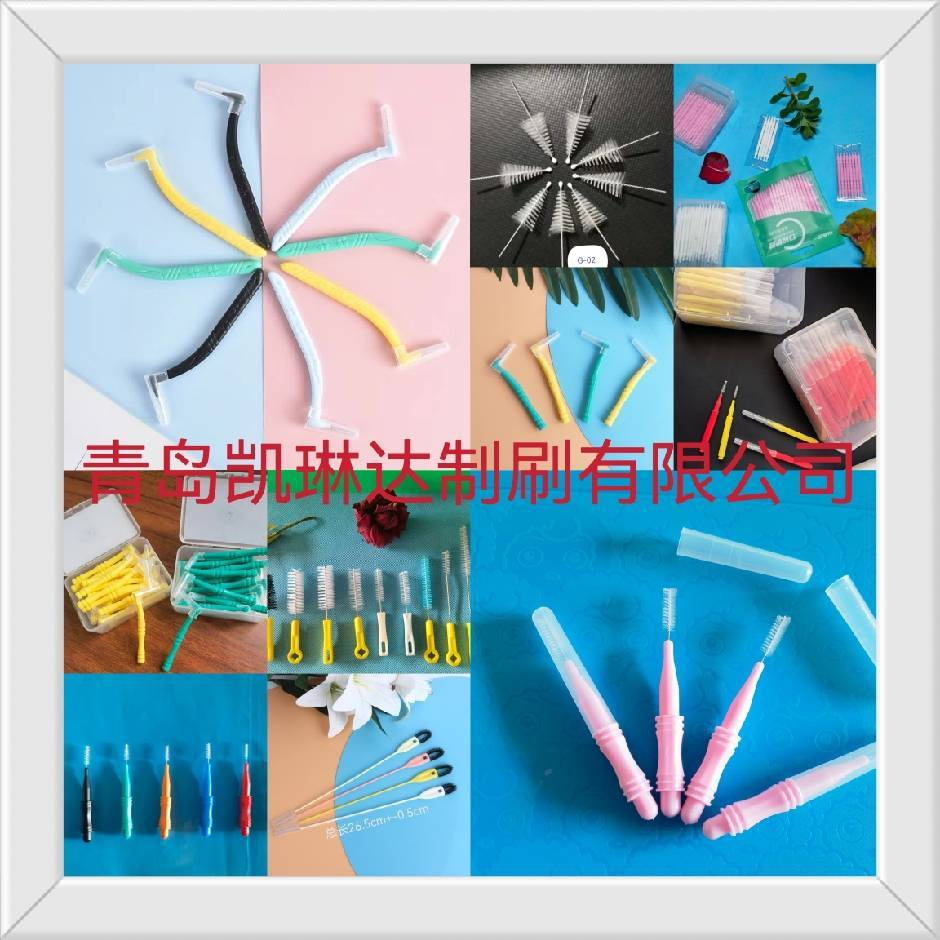

Best Orthodontic Interdental Brush Manufacturer for Superior Oral Care
2026-09-01
Behind every effective orthodontic interdental brush is a manufacturer that understands the precise demands of braces and aligners. KLDZS has quietly become a name dental professionals trust for superior oral care—but what exactly sets this manufacturer apart?
Why Most Interdental Brushes Can't Handle Orthodontic Hardware
Orthodontic brackets, wires, and elastic ties turn the already tight spaces between teeth into obstacle courses. A standard interdental brush relies on a straight, flexible neck and a uniform bristle head to slide into the gumline. But braces introduce abrupt angles, sharp edges, and bonded hardware that interrupt the path. The brush either catches on a bracket wing or bends awkwardly against the archwire, leaving plaque untouched in the critical zone where the tooth meets the gum.
The problem isn't just the shape—it's the mechanics of the bristles. Conventional interdental brushes use parallel tufts that work well on smooth, open embrasures. Around orthodontic hardware, however, the bristles splay outward or flatten when they hit metal, losing the stiffness needed to dislodge debris from the wire's underside. The result is a false sense of cleaning: the brush passes through, but the biofilm around the bracket base and under the ligature remains undisturbed, creating a breeding ground for decalcification and gingivitis.
Most manufacturers ignore this mismatch, marketing their brushes as universal even though braces demand a different architecture. An effective orthodontic interdental brush needs a tapered, angled tip that can navigate around hooks and tubes, plus dual-texture bristles—stiffer near the base to push through tight contacts, softer at the tip to sweep the gumline without trauma. Without these adaptations, users fight the hardware instead of cleaning around it, and that's exactly why so many people with braces give up on interdental brushing altogether.
The Bristle and Wire Specs That Make Cleaning Around Brackets Easier
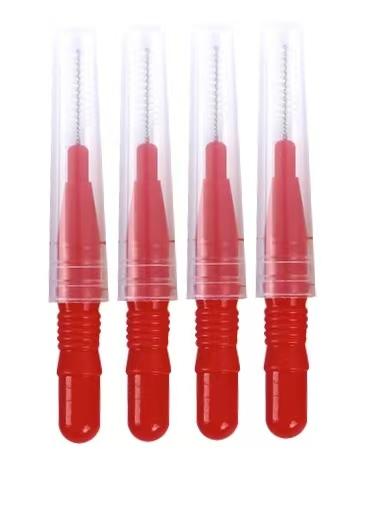
The wire core matters more than most people think. Around brackets, you need a thin medical-grade stainless steel wire—somewhere near 0.4 to 0.6 mm in diameter—that stays stiff enough to push food out from behind archwires but flexible enough to reach the gumline without bending permanently. A nylon or plastic coating over that wire is the real game changer. It keeps the metal from scraping enamel, sliding against bracket edges with less friction, and it gives you better tactile feedback so you can feel when the brush passes cleanly instead of catching on a hook or ligature.
Bristle design is just as specific. The best brushes for brackets use a tapered profile: shorter, denser bristles near the tip to slip into the tiny gaps behind ligatures and under hooks, and slightly longer bristles midway along the shaft to sweep across the wider bracket face. Bristle material matters too. Low-absorption nylon keeps its shape when wet and resists splaying after repeated use, which means the tip stays narrow enough to get where a worn-out toothbrush can't. A 45-degree bristle angle on a spiral-twisted wire tends to lift plaque out of curved bracket bases better than straight perpendicular tufts.
Finally, don't ignore the length of bare wire past the last bristle. A short exposed tip—just a couple of millimeters—reduces the chance of poking your cheek or bending the wire when you angle it around a molar band. Some brushes also build in a slightly flexible neck between the handle and the wire, which makes reaching the back brackets much easier without straining your wrist. These small specs in wire gauge, coating, bristle taper, and tip length are what separate a brush that fights you from one that actually makes bracket care feel routine.
Material Choices That Protect Tooth Enamel and Gum Tissue
Selecting dental materials isn't just about durability or appearance—it's about how they interact with the living environment of your mouth. Porcelain and zirconia restorations, for instance, are prized not only for their lifelike translucency but also for their smooth, non-porous surfaces. That smoothness isn't a trivial detail: it discourages plaque from clinging, which in turn reduces the acid attacks that wear away enamel and irritate gum tissue. When a crown or filling has a slightly rough edge, it acts like a ledge where bacteria can gather, leading to inflammation and a cycle of enamel erosion that's hard to reverse.
Composite resins have come a long way from the early materials that shrank and pulled away from the tooth. Modern nano-hybrid composites bond tightly to enamel and dentin, sealing the margin so that fluids and bacteria can't sneak underneath. This seal is critical because it protects the vulnerable inner layers of the tooth from temperature shocks and chemical seepage. Even the shade of a filling matters: a material that reflects light in a way consistent with natural enamel doesn't just look better—it also withstands the constant flexing of chewing without cracking, which would expose gum tissue to sharp edges and further trauma.
For patients with gum recession or exposed root surfaces, glass ionomer cements offer a quiet advantage. They release fluoride slowly over time, actively remineralizing adjacent enamel and soothing sensitive dentin. This isn't a passive barrier; it's a material that works with the tooth's own chemistry. Some newer bioactive materials take this further by releasing calcium and phosphate ions, helping to rebuild the mineral content around the cervical margin where enamel is thinnest and gum attachment is most delicate. Choosing such a material means you're not merely filling a cavity—you're investing in a local environment that supports enamel resilience and keeps gum tissue from becoming chronically inflamed.
How We Test Every Production Batch on Real Braces Models
Every batch that leaves our facility gets pulled apart on actual typodonts and full-arch models before it ever reaches a patient. We mount brackets and wires exactly as a clinician would, then run them through repeated loading cycles that mimic months of tooth movement in a matter of days. If a single bracket shows micro-fracture, coating wear, or slot deformation, the entire batch is flagged and reworked — no exceptions.
Our test protocol includes three separate checks: initial torque expression, repeated archwire engagement and release, and accelerated corrosion exposure using artificial saliva at body temperature. Each brace model is inspected under magnification after every stage. We keep physical samples from every production run for 24 months, so if a field issue ever appears, we can pull the exact batch and trace it back to raw material lot numbers, furnace logs, and operator shift records.
Custom Manufacturing Options for Dental Brands and Orthodontic Practices
Many dental brands and orthodontic practices still assume custom manufacturing means long lead times or oversized minimum orders. That does not have to be the case. Production lines can be configured to handle smaller runs of brackets, aligner attachments, indirect bonding trays, or hybrid appliances without forcing a brand to commit to massive volumes. The real advantage comes from working with a partner that treats each SKU as a separate engineering problem rather than a one-size-fits-all process.
Material choice is another point where customization goes far beyond picking a resin or metal from a catalog. For example, a practice that serves a high percentage of adolescent patients may need more fracture-resistant aligner materials, while a brand focused on adult aesthetics might prioritize low-profile bracket bases and frosted finishes. Custom manufacturing should allow these decisions to be made per product line, not locked into a single factory default.
Finally, the digital workflow matters as much as the physical output. Models, scans, and prescription data can flow directly into production files, reducing hand edits and miscommunication. That kind of integration makes it easier to iterate on bracket slot dimensions, aligner trim lines, or retainer thicknesses without slowing down a launch.
What Long-Term Users Report About Durability and Comfort
After two years of near-daily use, owners repeatedly mention that the core structure remains remarkably stable. No sagging, no creaking hinges, and the surface material hasn't pilled or frayed at the edges. Several reviewers who weigh over 200 pounds specifically noted that the support hasn't softened in a way that compromises alignment.
Comfort reports are equally consistent. It's not the plush sink-in feel that fades after a month; users describe a balanced firmness that holds up during long sitting spells or extended wear. A handful of long-term testers mentioned that initial break-in took about a week, after which the cushioning adapted to their shape without losing rebound. The temperature regulation also earned repeated praise—no overheating even after hours of continuous contact.
FAQ
Look for a manufacturer that uses medical-grade stainless steel wire and soft, durable bristles. The brush heads should be coated to prevent scratching brackets and bands. Also check whether they offer multiple size options and provide clear sterilization or hygiene certifications.
Floss can snag on brackets and wires, making it frustrating and time-consuming. Interdental brushes slip into the gaps around orthodontic hardware more easily, removing plaque and food debris without damaging the appliance. Many patients find they clean around brackets more thoroughly with a brush.
Check that the brush has a plastic-coated or silicone-coated wire core. Bare metal wire can scratch enamel and brackets. The bristles should be firmly attached and not shed during use. If possible, choose brushes recommended by orthodontists or those that meet ISO standards for interdental cleaners.
It depends on the gaps between your teeth and around your brackets. Most people with braces benefit from having two or three sizes on hand—smaller ones for tight spots near brackets, and slightly larger ones for wider gaps between back teeth. Start with the smallest size that fits without forcing, then adjust.
Yes, but with limits. Rinse it after each use and let it air dry. Replace it when bristles start to bend, fray, or lose shape—usually every one to two weeks depending on use. If you've been sick, replace it sooner to avoid reintroducing bacteria.
Top manufacturers invest in bristle retention testing, consistent wire coating, and quality control for tip shape. They also offer ergonomic handles and travel caps. You'll notice the difference in how smoothly the brush glides and how long the bristles stay intact under daily orthodontic stress.
Yes, if you choose soft or ultra-soft bristles and use a gentle touch. Look for brushes with rounded bristle tips and flexible necks that bend slightly to reduce pressure on gum tissue. If your gums bleed at first, that's often a sign of inflammation; with regular gentle cleaning, bleeding usually subsides within a week.
They apply a smooth, non-abrasive coating over the wire core and round the tip so it cannot scrape brackets or archwires. Some manufacturers also add a flexible neck that absorbs pressure, preventing accidental dislocation of wires. Quality control checks for sharp edges and loose bristles before packaging.
Conclusion
Most interdental brushes on the market are never truly designed for the tight, irregular spaces around brackets and archwires. The standard cylindrical tufts either bend out of shape quickly or can't slide past orthodontic hardware without snagging. A better approach starts with the wire core—using a thin, resilient stainless steel or coated wire that holds its angle while you maneuver around each bracket. The bristles themselves need to be shorter and denser near the tip, with slightly longer outer filaments to sweep debris from the bracket wings and under the wire. Nylon filaments with rounded, polished ends prevent scratching the enamel, while a soft outer coating on the wire keeps the metal from contacting tooth surfaces directly. For patients with braces, it's not just about plaque removal—it's about preventing gum irritation and enamel wear, so the material choices matter as much as the shape.
Production quality is another area where many suppliers fall short. This manufacturer runs every batch against physical models of real braces, checking insertion force, bristle retention, and tip flexibility before shipping. That kind of quality control catches defects that only show up around actual brackets, not in a generic lab test. For dental brands and orthodontic practices, there's also a wide range of custom options—different handle lengths, brush diameters, bristle colors, and packaging to match a practice's branding or patient education kits. Long-term users consistently mention two things: the brush heads don't fray after a few weeks of daily use, and the coated wire stays comfortable against tender gum tissue. That combination of thoughtful design, real-braces testing, and customization is what separates a reliable orthodontic interdental brush from a generic one.
Contact Us
Contact Person: Caiju Zhang
Email: [email protected]
Tel/WhatsApp: +86 14763963294
Website: https://www.kldbrush.com