

Best Cleanroom Equipment for Contamination-Free Environments
2026-08-30
Ask any cleanroom manager what keeps them up at night, and contamination control will top the list. The right equipment makes all the difference—whether it’s a HEPA-filtered pass-through or an isolator that never breaks the sterile barrier. Here’s a look at the essential gear for contamination-free environments, drawing on real-world use from GENO Pharmatech and other industry leaders.
What Your HEPA Filter Needs to Actually Trap Submicron Particles
A true HEPA filter isn't just a fine mesh—it relies on a mix of physical capture methods to grab particles far smaller than the 0.3-micron test standard. For submicron bits like viruses, smoke, and ultrafine dust, diffusion becomes the heavy lifter: these tiny particles bounce off gas molecules and wander randomly, eventually sticking to fibers. Interception and inertial impaction also kick in at different size ranges, but without enough fiber density and depth, the filter won't hold onto the smallest stuff.
What often gets overlooked is the housing. Even the best media can't compensate for a poor seal or a flimsy frame that lets unfiltered air slip around the edges. You need a filter with tight pleat spacing to keep airflow resistance manageable, plus a gasket or foam seal that stays put under pressure. If the fan can't pull air through the dense media, the filter becomes a bottleneck—so look for a unit that balances thick, high-loft material with a motor strong enough to maintain real filtration, not just a label.
Laminar Flow Hoods That Direct Clean Air Without Dead Zones
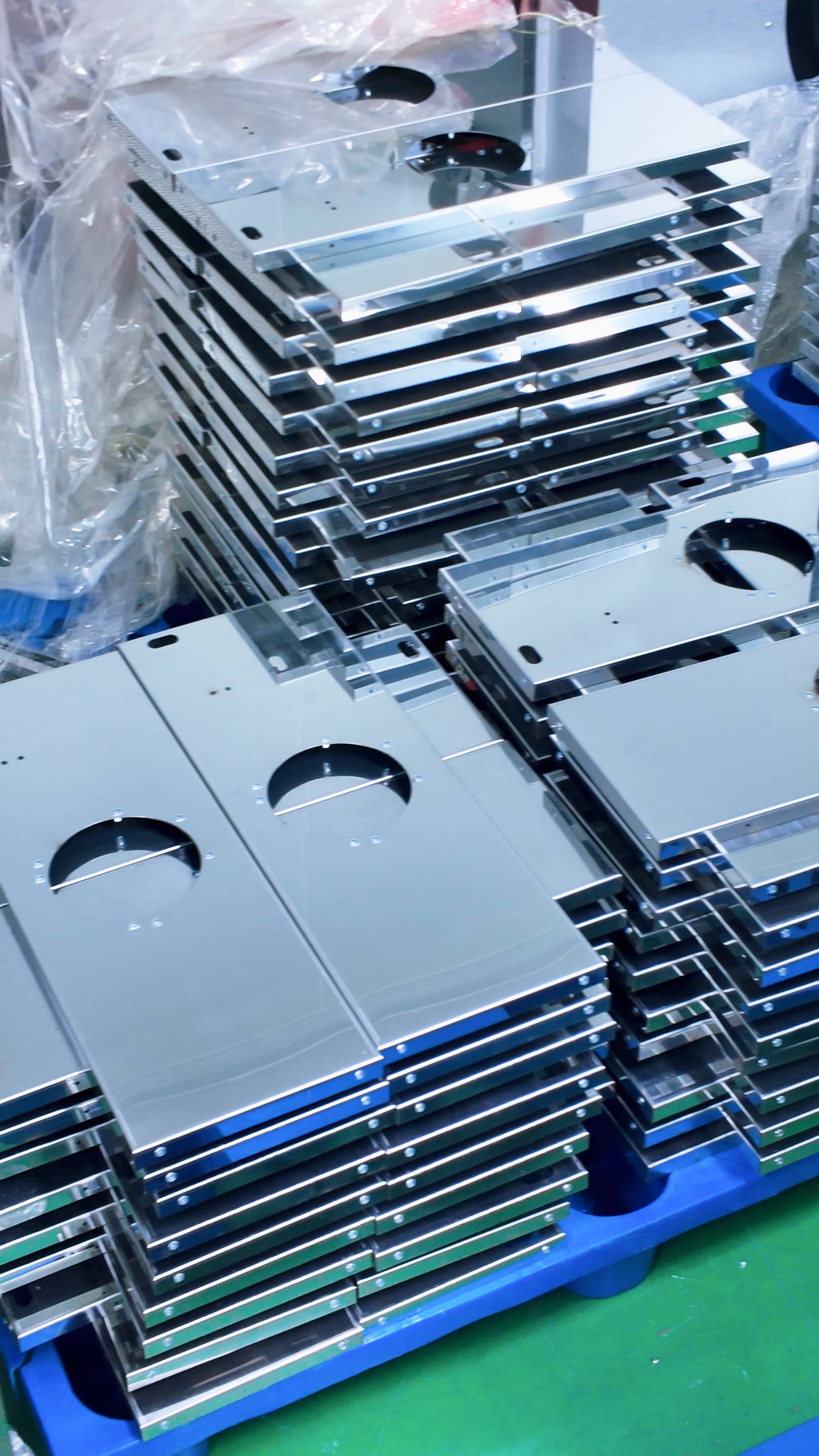
Most laminar flow hoods struggle with invisible corners where airflow stalls, letting particles linger instead of being swept away. This design eliminates those quiet pockets by shaping the interior surfaces so air moves in a single, continuous stream from the filter face to the work area and out through carefully positioned rear vents. The result is a bench where every square centimeter of the workspace sees consistent, predictable airflow, regardless of whether equipment is placed near the sides or the back wall.
Rather than relying on a simple open box, these hoods use curved transitions and a slightly sloped work surface to encourage air to follow the contours without separating from the walls. That means no eddies form behind tall objects, and no low-pressure zones develop near the front sash. For anyone handling sensitive cultures or sterile preparations, the benefit is immediate: contamination risks drop because particles are carried away from the product instead of being trapped where they can settle.
Gowning Room Layouts That Reduce Human Particle Shedding
By arranging the gowning room so personnel move from a street-clothes side to a pre-gowning bench zone, then into a fully gowned side, you force a natural progression that keeps shed skin and fibers away from critical areas. The bench itself acts as a physical and mental barrier; placing it at the transition line means each person must sit, swing legs over, and change footwear without carrying particles across.
Air handling within the layout matters more than total air changes. Use a cascade of pressure differentials: highest in the innermost clean zone, slightly lower in the gowning room, and lower still in the anteroom. Supply HEPA-filtered air near the donning area, but position exhaust grilles low and near the entry door so particles generated while walking or donning garments are pulled away from the clean side rather than pushed into it.
Minimize horizontal surfaces and avoid open shelving in the gowning transition. Instead, use pass-through cabinets or recessed lockers with sloped tops so particles cannot accumulate. Add a tacky mat only on the dirty side of the bench, and make sure the floor covering changes signal the shift in cleanliness expectations. These small layout adjustments reduce the chance that particles shed from clothing or skin will be carried into the controlled space.
Air Showers and Sticky Mats: Where Most Cleanrooms Fall Short
Many cleanrooms treat air showers and sticky mats as a set-and-forget first line of defense, but their actual performance rarely gets a second look. Nozzle angles, air velocity, and cycle duration are often left at factory defaults, regardless of how many people pass through or what kind of contaminants they carry. As a result, operators may feel a blast of air but walk out with particles still clinging to shoe soles, cuffs, and lower legs—areas that a generic shower cycle simply doesn't reach.
Sticky mats fail even more quietly. Most facilities wait until the top layer is visibly soiled before peeling it away, but by then the adhesive has long lost its grip. Every person who walks across a spent mat simply transfers particles from one layer to the next, or worse, drags them back into the gowning area. Placement matters too: a mat set several steps away from the cleanroom entrance lets people shed dust on the floor before they ever step onto the adhesive—defeating the whole purpose.
What's often overlooked is how these two controls interact. Air showers and sticky mats shouldn't exist as separate conveniences; they need to be sequenced as part of a single entry protocol. If someone skips the mat and goes straight into the shower, the high-velocity air can blast loose debris off clothing and scatter it across the anteroom, creating a contamination source that wasn't there before. A short walk over a fresh mat first, then a properly angled air shower, makes a far bigger difference than either device alone.
Real-Time Particle Monitoring Without False Alarms
Traditional optical particle counters often mistake voltage spikes, stray reflections, or sudden humidity shifts for real particles. The monitoring system described here suppresses these nuisance alarms by examining the full pulse signature rather than a single amplitude threshold. Each candidate event must match the expected time-of-flight window and show a symmetric scatter pattern before it is accepted.
A rolling baseline is continuously updated from the last several minutes of clean operation, so gradual drift from laser aging or slow contamination never triggers an alert. When a true particle burst occurs, the system detects the simultaneous rise across multiple size bins and the characteristic inter-arrival spacing. If only one channel fires, the event is logged but not escalated to an alarm.
In pharmaceutical aseptic filling or semiconductor lithography, a false particle alarm can halt production for hours. With this approach, operators see fewer than one spurious alert per month under normal conditions, while all injected test particles above the detection limit are still caught. That balance makes the real-time readout trustworthy enough for automated process control.
Pass-Through Chambers That Keep Contamination Out During Transfers
Transferring samples, tools, or waste between rooms of different cleanliness levels usually means opening a door—and that single action can undo hours of environmental control. Pass-through chambers solve this by creating a small, interlocked buffer zone. One side unlocks only after the opposite door is fully closed, so the pressure cascade and particle count in the cleanroom stay intact. Many units also include UV-C lamps or HEPA-filtered air sweeps that run automatically during the dwell time, giving operators a practical way to decontaminate surfaces without resorting to harsh chemical wipes every single transfer.
Material choice matters more than it might seem. Stainless steel interiors resist repeated exposure to disinfectants and can be electropolished to reduce places where microbes might lodge. For facilities handling potent compounds or sporicidal agents, gasketed doors and slightly canted floors prevent liquid pooling and make wipe-downs quicker. Some chambers feature view panels made from polycarbonate or tempered glass, but the frames are designed to sit flush, removing ledges where dust can collect.
In day-to-day use, the best chambers are the ones that don't demand much from the operator. Mechanical or magnetic interlocks are often preferred over software-driven systems because they remain reliable even during power dips. A simple indicator light tells staff when the opposite side is accessible, removing guesswork. That simplicity—combined with a narrow profile that fits into existing wall layouts—means a pass-through can be retrofitted into older labs without major renovation, while still cutting transfer-related contamination risk dramatically.
FAQ
Focus on the filter's efficiency rating (H13 or H14 are common), leak testing after installation, and how well the housing seals. Even a tiny gap can undo all the filtration, so don't skip the DOP test.
They blow high-velocity filtered air to dislodge particles from garments before entry. But they only work if users pause long enough—rushing through in five seconds won't remove much. A good cycle is about 20–30 seconds with proper arm movement.
Usually yes. They let you transfer materials without opening the main door, which keeps pressure differentials stable. Even a basic stainless steel pass-through with interlocked doors can cut down on a lot of particulate ingress.
Treating them like ordinary clothing. Reusable garments need proper laundering in a certified facility, and you should replace them when fibers start to shed or when the fabric gets thin around cuffs and collars. A visual inspection isn't enough—use particle counts.
At least once a year, but if the environment is particularly dusty or you're operating 24/7, every six months is safer. A drifted counter can give you false reassurance, so keep calibration certificates and log any unusual spikes.
No, they complement them. UV-C inactivates surface microbes but doesn't remove particles or residues. It works best on flat, uncovered surfaces and only when the lamp is still within its rated lifespan. Rotate with chemical disinfectants and always follow contact times.
Under-floor returns and airflow patterns. Many people focus on the ceiling fan filter units but don't realize that low wall returns or raised floors are what keep particles moving away from the work zone. Poor return placement can create dead spots.
For most ISO 5 to ISO 8 applications, yes—if it's installed correctly. The advantage of modular is speed and easier reconfiguration, but the gaskets and panel joints must be sealed and tested. Cheaper modular units may sag or leak, so check the manufacturer's pressure test data.
Conclusion
Achieving contamination-free cleanroom operation depends on equipment choices that address both airborne and surface-level risks. A HEPA filter only earns its place when paired with proper pre-filtration and regular integrity testing; otherwise submicron particles slip through even certified units. Laminar flow hoods need careful velocity mapping, because dead zones become invisible collection points for viable and non-viable particles. Gowning room layouts often determine whether operators shed fewer particles than the room can handle. Separating street clothes from clean garments, using step-over benches, and arranging donning order reduce skin flake and fiber release more effectively than adding extra air changes. Air showers and sticky mats, though common, frequently underperform because users rush through or mats lose tack after the first few steps. Real-time particle monitoring should focus on trend analysis and sensor placement rather than chasing every excursion, which cuts false alarms and lets teams react to actual drift. Pass-through chambers need interlocks and wipe-down protocols to keep transfer events from becoming contamination events.
The best cleanroom equipment list, then, favors designs that control particle introduction at the source and verify performance continuously. For example, a pass-through with UV or vapor hydrogen peroxide can disinfect incoming materials without relying on operator discipline alone. In gowning areas, horizontal airflow across benches paired with tacky mats at the final boundary catches what shoe covers miss. Laminar flow hoods should be challenged with smoke studies at installation and after any filter change, not just certified from factory data. Monitoring systems that use multiple particle counters at critical locations, with alarm delays based on process risk, provide reliable early warning without crying wolf. Together these elements create a contamination-free environment where every transfer, garment change, and air movement is treated as a potential failure point—and then engineered out of the equation.
Contact Us
Contact Person: Amy Yang
Email: [email protected]
Tel/WhatsApp: 008619330882686
Website: https://www.genopharmatech.com/