

Best Air Circuit Breaker Choices for Modern Electrical Systems
2026-08-28
Every modern electrical system depends on a component that rarely gets the spotlight: the air circuit breaker. But choosing the right one is less about ticking spec boxes and more about answering a harder question—what happens when the unexpected hits? With a market flooded by lookalike options, finding a breaker that truly holds the line isn't straightforward. That's where Chang Song enters the picture, offering a blend of tested durability and forward-thinking design that cuts through the noise. What makes their approach different might just reshape how you think about protection.
Air Circuit Breakers Still Earn Their Place in Today’s Panels
Air circuit breakers rarely get the same attention as their molded-case cousins, but they hold their own in switchgear where high current ratings and adjustable trip settings matter more than saving a few inches of panel space. In facilities with large chillers, backup generators, or heavy motor control centers, ACBs handle fault currents that would weld smaller breakers shut. Their open-frame construction lets technicians inspect contacts, arc chutes, and operating mechanisms without pulling the entire unit from the bus.
What keeps them relevant isn't nostalgia or spec inertia. Modern ACBs accept solid-state trip units with long-time, short-time, instantaneous, and ground-fault protection, so one frame can serve anything from a 400 A feeder to a 4000 A main. That flexibility means fewer spare parts on the shelf and less custom engineering when a facility adds loads. They do demand more space and periodic maintenance, but for main and tie breakers where downtime is measured in thousands of dollars per minute, that trade-off still makes sense.
There's also a practical side often lost in datasheets. Because ACB contacts are visibly separated when racked out, lockout/tagout becomes simpler and safer. Maintenance crews can ground the bus and verify isolation at a glance, something harder with sealed-case designs. In an era of digital monitoring, the ACB's exposed architecture actually pairs well with thermal cameras and IR windows, letting facilities catch loose connections before they become arc flash incidents.
The Numbers That Matter: Breaking Capacity, Frame Size, and More
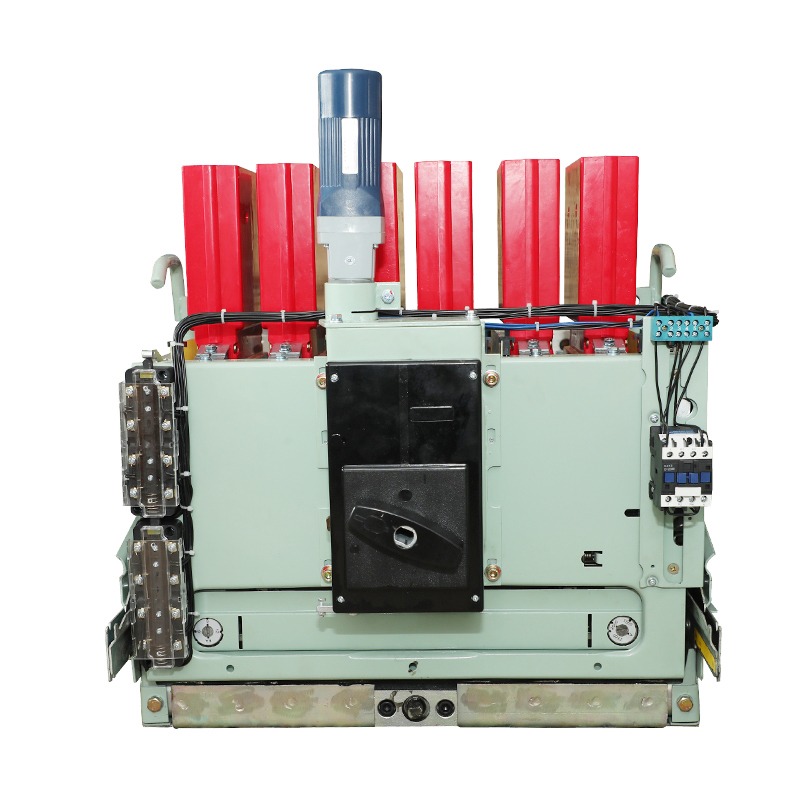
When it comes to selecting electrical equipment, the specifications printed on a nameplate often hold the key to reliable performance. Breaking capacity, for instance, tells you the maximum fault current a device can safely interrupt without destroying itself. This number isn't just a theoretical limit—it's a real-world safeguard that prevents equipment damage and potential safety hazards during short circuits. Frame size, on the other hand, refers to the physical dimensions and structural rating of a component like a circuit breaker or motor starter. It dictates what can fit into your existing panel and how much heat dissipation you can expect. Ignoring either figure can lead to undersized installations that trip unexpectedly or oversized ones that waste space and budget.
Beyond those two, there are other numbers that quietly shape design decisions. The interrupting rating, sometimes confused with breaking capacity, applies to different voltage levels and must be checked against the available fault current at the installation point. The trip unit settings, the number of poles, the rated operational voltage, and even the endurance cycles all matter when you're trying to avoid nuisance trips or premature failure. A breaker with a high breaking capacity but a frame size too large for the enclosure is just as problematic as one with the right physical footprint but an underestimated short-circuit rating. The trick is to read these numbers as a system rather than isolated values.
Experience shows that the most common field mistakes come from focusing on just one spec—usually the amp rating—while overlooking the surrounding context. Breaking capacity depends on the upstream impedance and the transformer size; frame size must account for future expansion and ambient temperature. A thorough selection process compares the calculated fault current with the device's rated breaking capacity at the specific voltage, then confirms that the frame size allows proper ventilation and wiring space. It's this layered reading of the numbers that separates a dependable installation from one that works on paper but struggles in practice.
Built-In Brains: What Modern Trip Units Actually Do
Modern trip units have evolved far beyond simple thermal-magnetic overcurrent devices. At their core, they now function as real-time microprocessors that continuously sample current, voltage, and sometimes temperature or frequency. This constant stream of data lets them distinguish between harmless transient spikes—like a motor starting—and genuinely dangerous fault conditions that require an instantaneous trip. Unlike older electromechanical breakers that relied on fixed bimetallic strips, today's trip units can adapt their response curves on the fly, adjusting for ambient temperature, harmonic distortion, or even load type.
What often surprises facility managers is the sheer amount of decision-making packed into a package the size of a paperback novel. Beyond basic overcurrent protection, a digital trip unit may also handle ground-fault detection, phase-loss monitoring, and even predictive diagnostics. For example, some models track the wear on contacts and flag a breaker for maintenance before it fails during a critical operation. Others log event histories with millisecond timestamps, allowing engineers to reconstruct exactly what happened during a cascading fault—information that older systems simply could not provide.
The real value, however, lies in coordination. In a large facility, a single fault should trip only the nearest upstream breaker, not the main incoming device. Modern trip units use precise time-current curves and zone-selective interlocking to achieve this selectivity without guesswork. By communicating with each other over simple twisted-pair wiring or even network protocols, they ensure that a short circuit in a branch panel doesn't plunge an entire hospital wing into darkness. This built-in intelligence turns a humble breaker into a first line of defense that thinks before it acts.
Keeping Them Reliable Without Overdoing Maintenance
Reliability doesn't have to mean constant tinkering. In fact, many systems wear out faster from excessive adjustments than from regular use. The trick is knowing what actually needs attention and what can be left alone until a clear signal appears. A machine that runs smoothly at the right temperature, with stable output, rarely benefits from being opened up for preventive part swaps on a fixed schedule. Instead, watch for changes in behavior—slight vibrations, unusual sounds, or a dip in efficiency. These signs tell you more than a calendar ever will.
One practical approach is to set condition-based triggers rather than time-based ones. For example, check bearing temperatures only when a sensor shows a rise above the norm, or inspect filters when pressure differentials creep past a set point. This way, you aren't replacing perfectly good parts out of habit. Another common mistake is over-lubricating, which can push grease into places it shouldn't go and cause overheating. A thin, even layer is often enough. The goal is to match the upkeep to the actual workload, not to an idealized maintenance log.
Owners and operators who step back and let the equipment run quietly often find they save both time and money. They also extend the life of components that would otherwise be disturbed during unnecessary service. Trust the built-in indicators and your own observations. When everything is performing within its normal range, leave it alone. The most reliable machines are usually the ones that nobody fusses over.
Matching the Breaker to the Job: Not Every Panel Needs the Same Thing
Walk into any electrical supply aisle and you'll see dozens of breakers that look nearly identical. It's easy to assume one standard unit will work for every panel, but that assumption leads to nuisance tripping, overheating, or even code violations. The reality is that breaker selection depends on the specific load, the panel's design, and the environment where it operates. A residential bedroom circuit doesn't face the same demands as a commercial kitchen's refrigeration line or a workshop's table saw. Matching the breaker to the job means reading the panel's label, understanding the connected equipment's inrush current, and choosing a trip curve that allows normal operation while still protecting the wire.
Different breakers carry different interrupting ratings, voltage ratings, and trip characteristics. A standard 15-amp breaker may be perfect for lighting, but a motor with high startup current needs a breaker with a slower magnetic trip, such as a Type D curve, to avoid tripping every time the motor spins up. Likewise, a panel fed by a long run of wire may require a breaker with a higher interrupting capacity because the available fault current at the panel is lower. Panel manufacturers also list approved breaker types; using a breaker that physically fits but isn't listed for that panel can void warranties and create serious safety risks. The job isn't finished simply because the breaker clicks into place—it has to be the right class, rating, and curve for the circuit it protects.
Environmental factors matter as well. A breaker in an unconditioned attic sees temperature swings that affect its thermal trip element, while one near a saltwater coast faces corrosion on terminals. Some panels need breakers rated for high ambient temperatures, others for frequent switching, and a few for DC applications like solar arrays. Before swapping a breaker, check the load schedule, the wire size, and the manufacturer's compatibility list. The goal isn't just to restore power—it's to make sure the breaker and the job are truly matched, so the circuit runs safely for years without nuisance trips or hidden risks.
Beyond Basic Protection: Arc Flash and Connectivity Features Worth Considering
Many facilities treat arc flash protection as a checklist item—flame-resistant clothing, face shields, warning labels. But equipment-level mitigation often gets overlooked. Breakers with integrated arc flash detection can clear a fault in a few milliseconds, dramatically lowering incident energy. That speed means less severe burns, reduced blast pressure, and far less damage to busbars and enclosures. If your site still relies solely on overcurrent protection for arc flash, you're leaving a critical safety margin on the table.
Connectivity is not about adding Wi-Fi for its own sake. A breaker or relay that reports its own health—temperature, contact wear, trip history—lets technicians make decisions without opening a live panel. Bluetooth or Ethernet interfaces feed that data to a phone or control room, reducing unnecessary exposure to energized parts. Some advanced units also monitor partial discharge or abnormal heating patterns that often precede an arc flash event. Early warning shifts maintenance from reactive to planned.
The real value comes from combining these two capabilities. Arc flash mitigation limits the damage when something goes wrong; connectivity helps you spot trouble before it happens. Together they turn a passive safety system into active risk management. During incident reviews, stored event data provides a clear sequence of operations without relying on memory or handwritten logs. Just be selective: not all connected devices talk to each other, and closed protocols can create more headaches than they solve.
FAQ
Modern ACBs include microprocessor-based trip units, communication modules, and remote diagnostics. Older units rely on thermal-magnetic trips and require manual checks. You get finer protection curves, energy metering, and integration with facility monitoring without extra transducers.
Start with your actual load profile, not just the transformer kVA. Look at peak demand, future expansion, and fault current at the point of installation. Choose a frame that covers the required continuous current plus a safety margin, but avoid going too large because it can reduce sensitivity of settings and increase cost. Manufacturer sizing tools can help, but a site-specific short-circuit study is more reliable.
Schneider Electric's Masterpact MTZ, ABB's Emax 2, Siemens 3WL, and Eaton's IZMX/Series NRX are solid choices. Each brings different communication protocols—MTZ has native Ethernet and Bluetooth; Emax 2 has good arc flash protection integration; Siemens 3WL is known for configurable I/O; Eaton focuses on compact footprints. Pick based on existing control system and service support in your area rather than just product specs.
Yes, but only if you use the data. Smart trip units log events, temperature, wear, and load trends. Teams that set up alerts for abnormal patterns—like repeated overload trips or rising contact wear—can schedule maintenance before failure. Without someone reviewing the data, the smart features add little beyond a conventional breaker.
Selective coordination ensures only the downstream breaker closest to a fault trips, keeping the rest of the system energized. To achieve this, you need to match trip curves and time delays between the ACB and downstream devices. Modern adjustable trip units make this much easier than older fixed-curve breakers, but you still have to verify settings through a coordination study, not just rely on default values.
Yes. Mechanical components still need lubrication, contact inspection, and occasional exercising. Electronic trip units require firmware updates, battery checks for the trip unit display, and verification of communication connections. A thermal scan under load is useful to catch loose connections. Many modern ACBs have self-diagnostics that can flag issues, but a yearly visual and operational test is still recommended.
Some ACBs include dedicated arc flash reduction maintenance switches or faster instantaneous settings that lower incident energy during live work. If your facility has high incident energy levels, choose a breaker with a maintenance mode that temporarily tightens trip delays. This can significantly reduce PPE requirements for downstream work while maintaining normal protection at other times.
Often yes if the switchgear structure is still sound. You can replace just the ACB and trip unit, gaining smart monitoring and improved protection without the cost and downtime of replacing busbars and enclosures. However, you need to check compatibility of breaker connections, communication wiring, and whether the existing frame can accommodate the new unit's physical dimensions and ventilation.
Conclusion
Air circuit breakers remain a sensible choice in modern switchgear, but the best options earn their place through a mix of measurable performance and practical extras. Look closely at breaking capacity and frame size before anything else; a breaker that cannot interrupt the available fault current is a liability no matter how smart its electronics are. Modern trip units have moved well beyond simple thermal-magnetic response. They now offer adjustable long-time, short-time, and instantaneous settings, ground-fault protection, and even zone-selective interlocking that lets upstream and downstream devices coordinate instead of tripping blindly. This built-in intelligence reduces nuisance outages and makes selective coordination far easier to achieve in crowded distribution panels.
Reliability comes from matching the breaker to the actual job, not from over-maintaining every unit on the same rigid schedule. A lightly loaded feeder breaker in a clean room needs far less attention than one switching heavy motor loads or working in a dusty factory. Use sensor data and trip logs from connected breakers to target maintenance where wear is real. Beyond basic overcurrent protection, arc flash mitigation features such as maintenance switches and energy-reducing maintenance settings have become deciding factors. Connectivity, whether through Modbus, Ethernet, or wireless gateways, allows remote monitoring of load profiles and event records. That visibility helps facility teams spot developing problems before they cause downtime, making the best air circuit breaker choice one that fits both the electrical demands and the way the building is actually operated.
Contact Us
Contact Person: Tonglun Chen
Email: [email protected]
Tel/WhatsApp: 8618906642555
Website: https://www.cncsele.com