

Automated Guided Vehicle Recommendations: Top Tips for Choosing the Right AGV System
2026-08-29
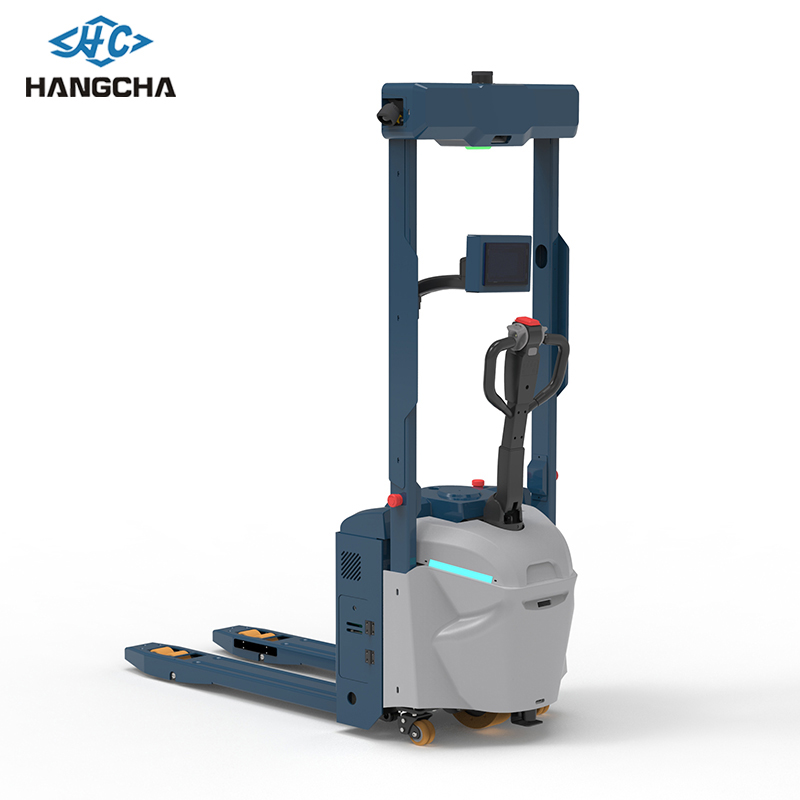
Most AGV shortlists fail before a single vehicle is purchased. The reason? Buyers focus on top speed and payload, then overlook the integration details that make or break daily operations. This guide cuts through that noise. You'll find the questions worth asking—about navigation reliability, traffic management, and after-sales support—before you sign off. If you want a benchmark for how these systems should perform in the field, look at how HANGCHA approaches AGV design, where uptime and operator safety are built in from the start.
Match the AGV to Your Heaviest Real-World Load, Not the Brochure Spec
Most AGV datasheets list a rated load under near-perfect conditions: centered weight, smooth floor, gentle acceleration. Your actual payload rarely behaves that way. A custom fixture, a slightly off-center pallet, or a top-heavy tool can shift the effective load moment far beyond what the raw kilogram number suggests. If you size the AGV to the brochure spec alone, you may end up with a vehicle that faults out, wears drive wheels prematurely, or tips on a ramp.
The right way is to create a worst-case real-world load profile. Take the heaviest item you will ever move, add the weight of any rack, tray, or lifting mechanism, then note how that combined mass sits on the AGV. A 1,200 kg load cantilevered 400 mm forward of the load center can demand more from the drive motors than a 1,500 kg load placed perfectly. Also factor in floor unevenness, doorway thresholds, and any short ramp or dock plate on the route.
Before buying, run a physical test with the actual AGV or a close demo unit carrying that exact worst-case load over your most demanding path. Watch for error codes, steering drift, or excessive motor temperature. Then leave at least a 15–20 percent margin between your measured peak demand and the AGV's continuous rating. That margin is not wasted capacity; it is what keeps the vehicle reliable when a load shifts slightly or a floor section wears down.
Pick a Navigation Method That Works with Your Floors, Not Against Them
A laser-based mapping system might seem like the obvious choice, but if your home has large expanses of glossy tile or dark hardwood, that same laser can bounce off the surface and create ghost walls or phantom obstacles. In those spaces, a camera-driven visual navigation system often reads the room more reliably because it relies on textures and edges rather than reflected light. Matching the sensor type to the floor's reflectivity keeps the machine moving instead of second-guessing itself.
Floor transitions are another quiet source of trouble. A robot that handles wall-to-wall carpet beautifully may choke on the raised metal strip between the hallway and the kitchen. Look for navigation that includes climb detection and adjustable suspension, especially if you have thick area rugs over hardwood or uneven tile grout lines. Some units let you tweak cliff-sensor sensitivity, which helps on very dark floors that can otherwise be mistaken for a drop-off.
Older homes with slightly sloped or uneven flooring put extra strain on wheel odometry. If the wheels slip even a little, the map drifts and the robot starts missing spots or repeating others. Choosing a navigation method that combines gyroscope data with visual landmarks or top-mounted LiDAR can correct those small errors in real time. The goal is to let your floors guide the decision, not to force a one-size-fits-all mapping approach onto surfaces that fight back.
Safety Features Matter More Than Speed—Here’s What to Check
A car that accelerates like a rocket means little if it can't keep you out of a ditch on a rainy evening. Before falling for horsepower numbers, look at the less glamorous side of the spec sheet: tire pressure monitoring, adaptive headlights that bend into corners, and a braking system that doesn't fade after two hard stops. These details rarely make the brochure's front page, but they're the ones you'll be grateful for when a deer jumps out at dusk.
Ask yourself how the vehicle handles the unexpected. Does it offer blind-spot warnings that work in heavy downpours, or lane-keeping assist that doesn't yank the wheel on narrow country roads? Check the crash-test ratings, but go further—read owner forums about real-world emergency braking and how the stability control behaves on gravel or ice. A five-star score is a starting point, not a blank check.
Finally, sit in the driver's seat and assess outward visibility. Thick roof pillars and tiny rear windows can hide a cyclist or a child. If you have to crane your neck constantly or rely solely on cameras, that's a warning sign. The safest car isn't the one with the biggest engine—it's the one that helps you avoid the crash in the first place.
Make Sure It Plays Nice with Your Existing WMS and ERP
Integration should not be a box you tick after signing. When evaluating a new system, ask the vendor to show you exactly how it connects to your current WMS and ERP. Do not accept a simple “we have an API” as proof. Push for a walkthrough of actual data flow: orders moving from the ERP into the new platform, inventory counts syncing back to the WMS, and no duplicate entry or nightly CSV uploads required.
Look beyond pre-built connectors and ask about maintenance overhead. Some systems claim flexibility but fall apart every time your ERP gets a minor version update. Find out how errors are handled, what happens when a sync fails, and whether you get alerts or just silent data loss. Favor platforms that use a dedicated middleware layer or event-driven webhooks over brittle point-to-point scripts that need constant babysitting.
Run a real pilot with your IT staff and warehouse operators before committing. Test edge cases like partial shipments, returns, and inventory adjustments that rarely show up in polished demos. Watch for sync delays, field mapping gaps, and permission conflicts between systems. If the integration only works in ideal conditions, it will cost you hours of manual reconciliation later. Make the vendor prove it under your workload, not theirs.
Calculate the Real Cost: Batteries, Maintenance, and Downtime Add Up
A sticker price never tells the full story, especially when batteries are involved. Most electric equipment relies on battery packs that degrade with every charge cycle. After roughly 500 to 800 cycles—often just two to three years of daily use—the pack may hold only 70% of its original capacity. That means shorter runtimes, slower performance, and eventually a full replacement. Replacement packs can cost a third to half of the original equipment price, not counting the labor to install them or the fees to recycle old cells. If you ignore this line item, your budget will feel the pinch long before the machine wears out.
Maintenance is another expense that hides in plain sight. Routine tasks like cleaning terminals, checking cable insulation, and updating firmware seem minor, but they add up in both parts and skilled labor. Skipping them doesn't save money—it simply moves the cost to emergency repairs. A failed connector or a worn drive belt can halt an entire shift. The repair bill might be a few hundred dollars, but the idle operators, missed order deadlines, and overtime wages can dwarf that figure. Smart buyers map out a maintenance calendar and budget for it the same way they budget for fuel or electricity.
Downtime is the quiet budget killer. When a machine stops, the business doesn't just lose the machine's output; it loses the productivity of every person waiting on it. In a warehouse, one dead forklift can delay loading, idling trucks and drivers. In a workshop, a broken tool can stall a project and push back delivery dates. Those ripple effects are hard to see on a purchase order, but they show up clearly in quarterly profit margins. Calculating the real cost means adding battery replacement, scheduled upkeep, and worst-case downtime to the initial price. Only then can you compare options honestly.
Look for a Vendor That Sticks Around After the Sale
Too many purchasing decisions focus on the moment the invoice gets paid, but the real work starts after that. Plenty of vendors become nearly impossible to reach once the money has cleared, leaving you alone to deal with installation quirks, software glitches, or unexpected downtime. If you don't want to be stuck flipping through a manual at 2 a.m., look for a supplier who still picks up the phone weeks or months after delivery.
A genuinely reliable vendor treats after-sales support as more than a checkbox. They check in on how the equipment or system is performing, send reminders for maintenance windows, and flag small issues before they become expensive failures. One supplier we worked with delivered a custom machine and then sent a brief email every couple of months asking whether the operating temperatures were still within range. That kind of small, consistent follow-up tells you they actually care about the outcome, not just the sale.
A low upfront price often hides the real cost of ownership. A vendor who keeps showing up after the sale is essentially helping you avoid downtime, emergency repair bills, and staff frustration. They might offer free operator training, fast replacement part shipments, or remote diagnostics without charging you every time you call. Before you compare quotes side by side, ask yourself a simpler question: after this deal closes, will they still return your call?
FAQ
Start with the physical constraints of your site: aisle widths, door openings, floor load ratings, and the maximum weight you need to move. A vehicle that can't physically navigate your space or handle your heaviest load will fail no matter how smart its software is. After that, look at how easily the system can adapt to layout changes without a full reprogramming.
Many buyers focus on upfront cost and ignore that laser-based systems depend on clean sightlines and reflective markers, which can be knocked out of alignment in busy warehouses. Vision-based or natural feature navigation tends to handle dynamic environments better, but it may need more computing power and periodic map updates. The real question is who will maintain the navigation map when your floor plan shifts.
AGVs are not forklifts; small cracks, uneven expansion joints, or glossy epoxy coatings can confuse sensors, cause wheel slip, or trigger constant safety stops. You should request a floor survey before selecting a drive wheel type and suspension. In older facilities, the cost of repairing a few hundred meters of floor often outweighs the premium for a more forgiving drive system.
Battery swapping sounds simple but creates hidden labour and storage requirements. Opportunity charging with lithium batteries lets vehicles top up during natural dwell times, like loading or waiting at a conveyor. Compare not just battery runtime but how long a full charge takes and whether the charging process requires operator supervision.
Don't assume a vendor's API will match your WMS without testing. Ask for a reference site that uses the same WMS version as you, and demand a written integration timeline that includes error handling for dropped orders. A good vendor will provide a sandbox environment so you can simulate real traffic and order flows before go-live.
Look past generic laser scanners and ask how the vehicle behaves at blind corners, around pedestrians, and during emergency stops. Features like speed reduction zones, sound alerts with adjustable volume, and automatic braking under load shift can prevent serious incidents. Also check if the safety system fails in a safe state when sensors get dirty or blocked.
Yes, if your product mix changes seasonally or you expect frequent layout tweaks. Many suppliers lock route editing behind service contracts, which creates a dependency that gets expensive over time. A user-friendly traffic manager lets your own staff adjust pickup and drop-off points, but verify that the interface is actually usable by warehouse operators, not just engineers.
Break down costs for energy, spare parts, preventive maintenance visits, software licences, and expected battery replacement cycles over five to seven years. Then add the hidden cost of system downtime: every hour an AGV fleet is idle due to a software bug or missing part can quickly erase the initial savings. Ask the vendor for service level agreements with specific response times and local spare parts availability.
Conclusion
A spec sheet rarely tells the whole story, so before you commit to an AGV, load it with the heaviest pallet or fixture you actually move on a bad day, not the ideal weight listed in the brochure. Floors matter just as much: if your facility has uneven concrete, ramps, or shiny epoxy patches, skip navigation methods that rely on perfect magnetic tape or ultra-clean reflectors, and look for natural feature or LiDAR-based systems that handle real-world imperfections without a headache. Speed is often the first number buyers fixate on, but a fast AGV that can't stop safely around pedestrians or blind corners is a liability, so dig into the safety sensor coverage, emergency stop logic, and how the vehicle behaves when someone steps into its path. Integration is where productivity either multiplies or stalls: if the AGV can't talk to your existing WMS and ERP without a pile of custom middleware, you're buying a project, not a solution.
The sticker price is just the starting point. Batteries alone can vary wildly in lifespan depending on chemistry and charging habits, and maintenance contracts often hide exclusions that leave you paying for downtime you thought was covered. Ask the vendor to show you a three-year total cost model with realistic duty cycles, including replacement parts, software updates, and labor for troubleshooting. Then look past the sales pitch: a vendor that disappears after installation leaves you stranded when a sensor drifts or a route needs adjusting. Check references from customers who have run the same model for at least a year, and ask how quickly the vendor responds to a production-stopping fault on a Friday afternoon. Choose a partner that treats the sale as the beginning of the relationship, not the end.
Contact Us
Contact Person: Liuxue
Email: [email protected]
Tel/WhatsApp: +86-19084200370
Website: https://www.hf-ec.com/